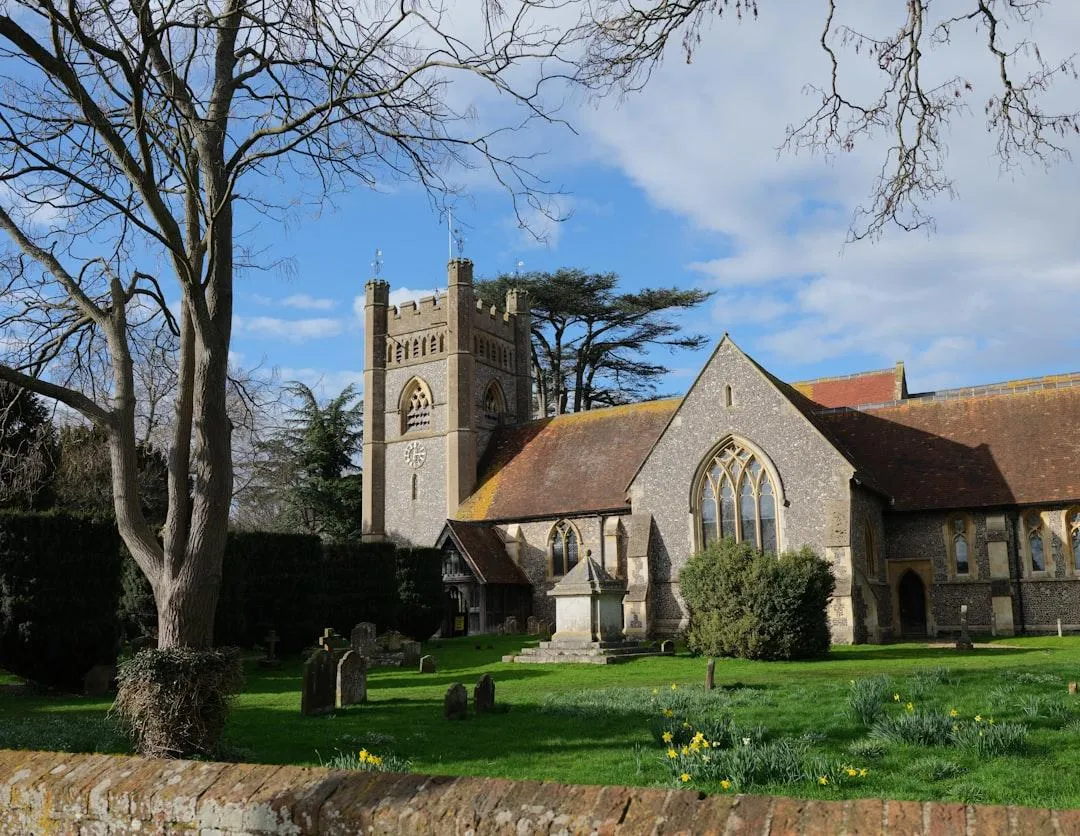
A Traveller’s Introduction to English Churches
I am not a particularly religious person, although I was brought up in a church-going family. Indeed, my paternal grandfather and both my parents served as churchwardens at various times. I am, however, passionate about the churches of England. I’m talking about the physical buildings, rather than the institution that is the Church of England.
This article introduces the subject of English churches – their different architectural styles through the ages and their role in society.
In the future, I’ll be publishing a series of posts about individual English churches.
English churches are among the most fascinating historic buildings to visit when travelling around England. From small village parish churches to great abbeys and medieval cathedrals, these buildings tell the story of the country’s history, architecture, and local communities. Many date back hundreds of years and contain remarkable details — from ancient stonework and stained glass to memorials that reveal the lives of people who once lived there.
Explore This Guide
English churches are full of history, stories, and beautiful architecture. If you’d like to jump to a particular section, use the quick links below.
Why Write About English Churches?
The History of English Churches
Main Architectural Styles of English Churches
Decline and Reuse in the Twentieth Century
Examples of Beautiful English Churches
Why Visit English Churches When Travelling?
Can You Visit Churches in England?
Many of England’s most fascinating stories are hidden inside its parish churches — sometimes in the stonework, sometimes in the stained glass, and sometimes in the memorials to people long forgotten.
Why Write About English Churches?
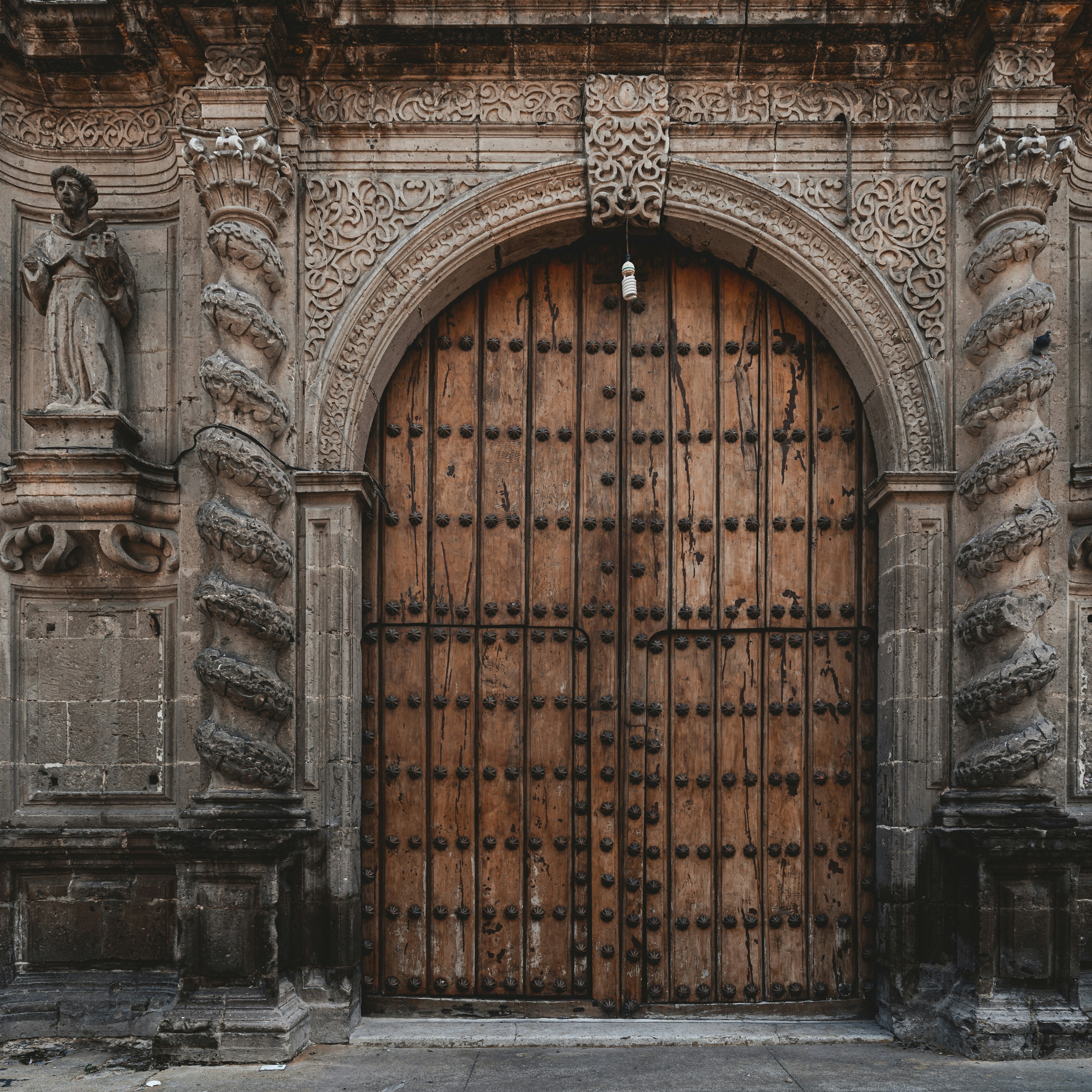
I love to visit churches. In fact, I can’t pass one by without going in. If it’s locked, I’ll happily wander around the graveyard for an hour or two, reading inscriptions and taking photos of the church’s exterior. If I’m lucky enough to find an open church, I’ll creep in (preferably through a large, heavy oak door with a huge round metal handle!) and spend time studying any works of art or (my favourite) stained glass windows. I might find a pew and sit for a while, not praying, you understand, but thinking and absorbing the atmosphere.
I see real beauty in the fabric of the buildings. I love the sound of church bells. I am fascinated by the insights into local, national and family history which churches give us. Just imagine how many life-changing events have taken place within their walls. How many christenings, marriages, and funerals? I find peace in the familiar musty smell of an old church. It’s not important whether it’s a humble parish church or a grand cathedral – the feelings are the same.
I have to say, Mark did not share my love of English churches! Like his Dad before him, he would wait in a local pub while I indulged this particular passion!
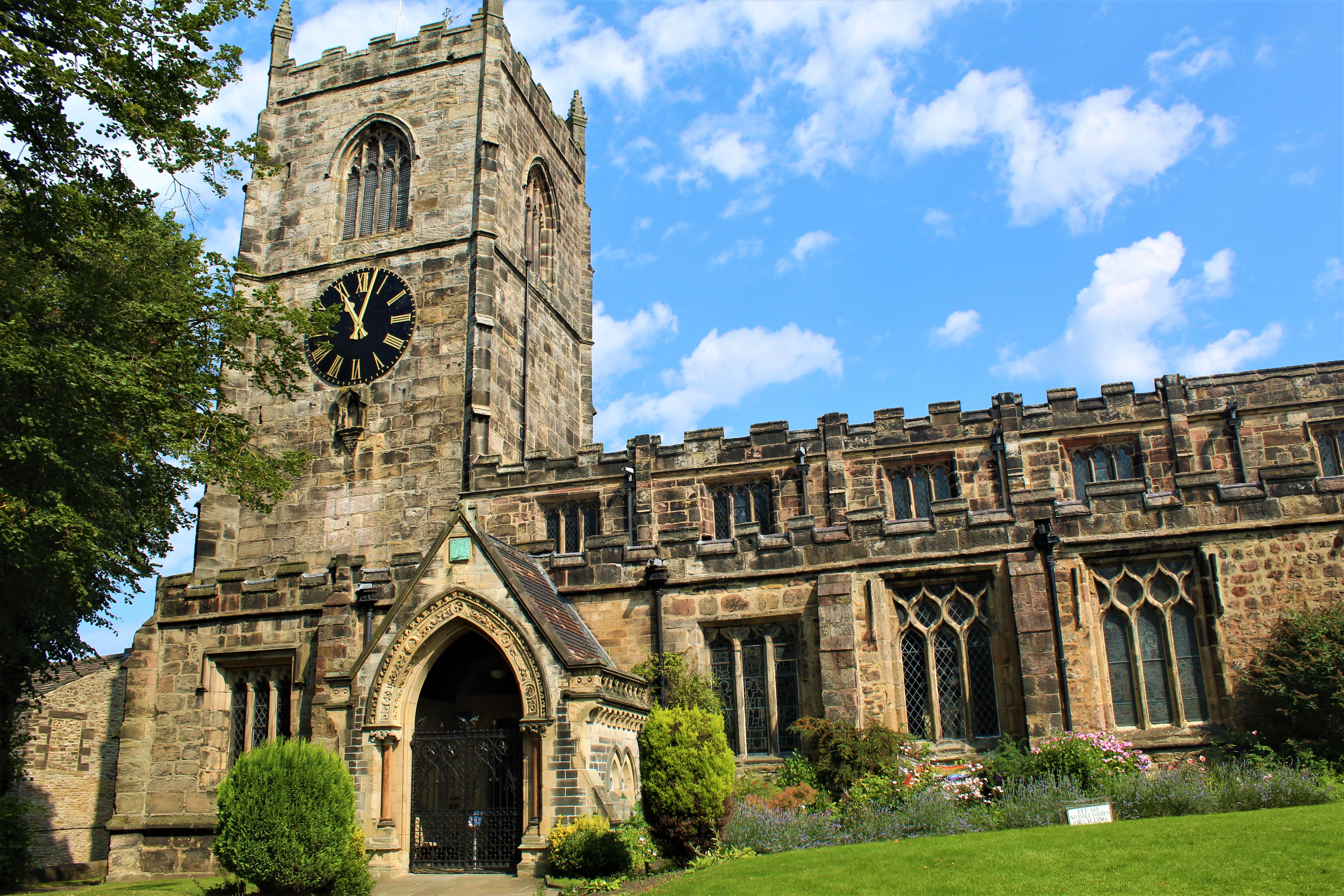
Holy Trinity Church, Skipton
The History of English Churches
Thanks to explorechurches.org and buildinghistory.org for much of the following information.
You could argue that all architecture has its origins in religion. The oldest man-made structures are generally believed to be holy places or burial sites. Hunter-gatherers erected large standing stones as places of worship, even though they had no permanent dwellings. When humans built their first family houses, they built even more substantial homes for their gods.
With the coming of Christianity and the building of permanent churches, the same pattern applied. The impressive medieval English churches we see today were originally surrounded by crude wood and thatch buildings where the parishioners lived.
Most ancient parish churches in England today have undergone a series of redevelopments through the centuries, to take account of new architectural styles, growing congregations and necessary repairs. We can often estimate the evolution of old churches from the style of their arches, doorways and windows.
Many English churches claim to be the oldest surviving parish church in the country, but it is usually thought that the earliest examples date from around 590AD. These include Stow Minster, in Lincolnshire, my home county, and St. Martin’s Church in Canterbury.
Manorial Lords
In the early days, a parish church was often built by the lord of the manor, who would generally site it close to his house. The lord had the right to choose the rector. As time went by and the lords acquired more wealth, churches were rebuilt, enlarged, and embellished to reflect this. From the 12th century, when heraldry developed, this work could be marked with the lord’s coat of arms. Today, these decorations can help us with dating a church. Many manorial records still survive, too.
Main Architectural Styles of English Churches
Saxon - 597 to 1066
Saxon church architecture is characterised by semicircular arches over doors and windows, and tall narrow doorways. Windows have small external openings, but are deeply splayed through to the inside. Walls are no more than 90cm thick. Herringbone-style stonework can be found in the late Saxon/early Norman period.
Watch this video for a full description of Saxon church architecture.
Norman - 1066 to 1200
Norman church architecture is characterised by powerful and masculine semicircular arches, deeply recessed doorways, thick walls, massive round pillars, vaulted ceilings, and ornaments such as zigzag moulding and bird and animal forms.
Watch this video to see what happened to church architecture when the Normans arrived in England.
Early English - 1200 to 1290
Otherwise known as the first Gothic period, early English church architecture is a unique style, not found anywhere else. Rounded arches give way to lighter pointed arches in windows, doorways and arcades.
Decorated - 1290 to 1350
The second Gothic period is characterised by large stained glass windows, pointed arches, ribbed vaults, flying buttresses, and ornate decoration.
Perpendicular - 1350 to 1530
Also known as the third Gothic period, perpendicular church architecture is recognised by its vertical lines. Intricate shapes gave way to more regular and rectangular shapes.
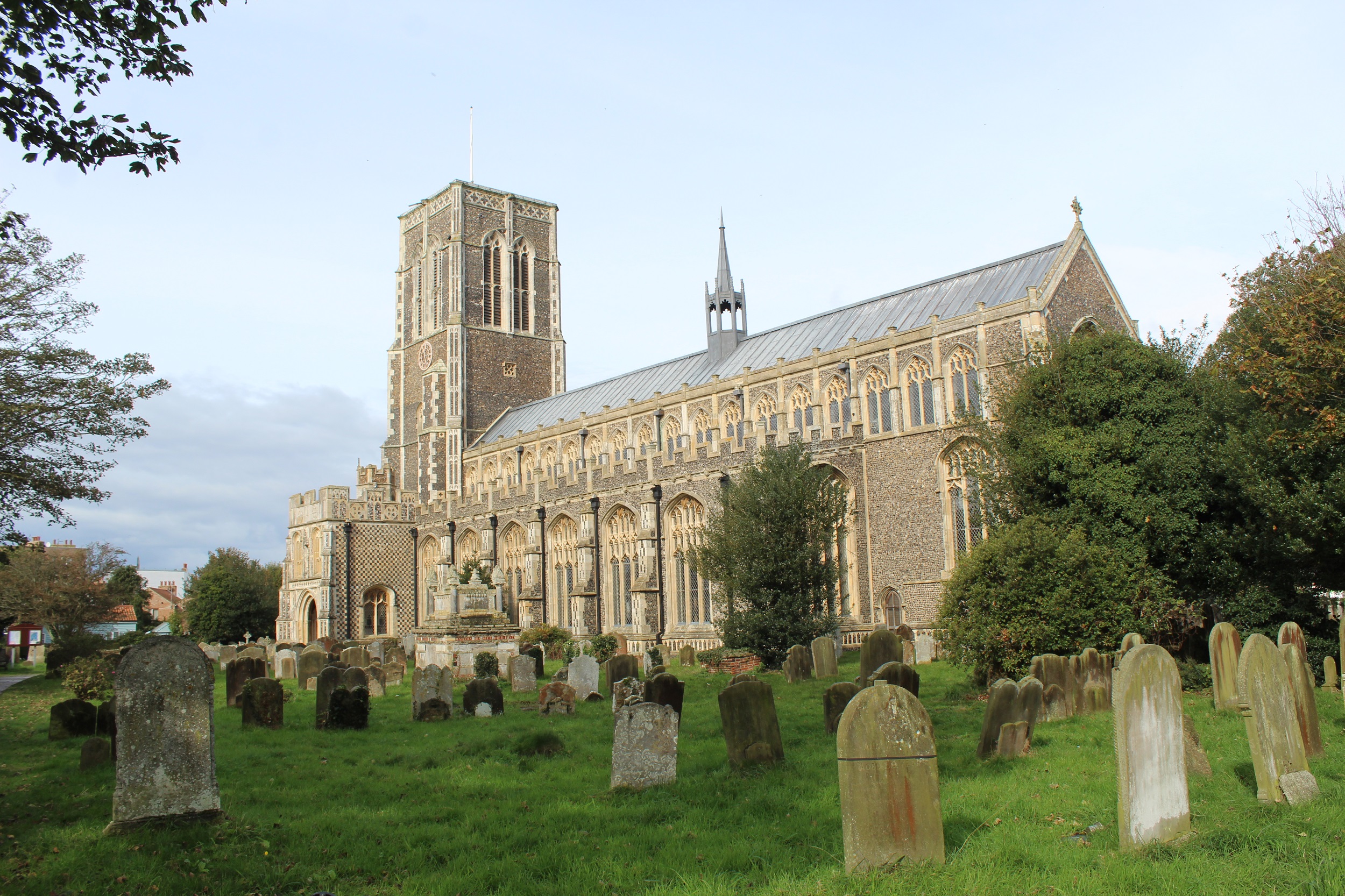
The Church of St Edmund King and Martyr, Southwold, built in the perpendicular style
Watch this video, which explains the three Gothic periods of English church architecture.
19th Century English Churches
The huge rise in population in 19th-century England generated an explosion of church building. By1858, over 3,000 new churches had been built. Several hundred were funded by the public purse. Anxious to counter the rise of non-conformity, in 1818 the government allocated £1,000,000 towards the building and enlargement of Anglican churches throughout England and Wales.
Meanwhile, the Act of Toleration in 1829 made possible a wave of Roman Catholic church building. The style of choice for these churches was Gothic Revival.
Decline and Reuse in the Twentieth Century
There was a massive decline in church attendance among the British in the latter decades of the 20th century. Meanwhile, evangelical Christianity and other faiths, such as Islam, Hinduism, and Sikhism, arrived in force with Commonwealth immigrants. The result has been the closure of an increasing number of parish churches or their conversion to other uses. Some redundant urban churches have been converted into mosques or transferred from the Church of England to evangelical use. A variety of non-religious uses have also been found for disused urban and rural parish churches.
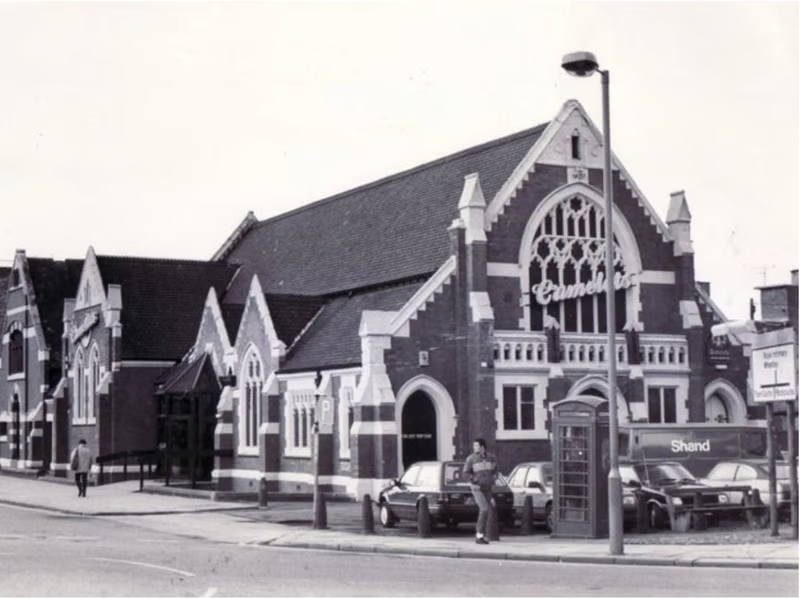
When I was in my late teens, a church in my local town was converted into a nightclub called Camelot’s. The DJ worked in the pulpit, and the old pews were built into the bar. I went a few times with friends, but I never felt comfortable there. It was unheard of back in those days. I never told my Mum and Dad I’d been! Now, churches are converted into pubs, restaurants, clubs, and private homes in every town in England!
Examples of Beautiful English Churches
There are hundreds, if not thousands, of stunning English churches with fascinating histories. My aim is to bring you images and stories about some of them in the coming months.
In the meantime, watch this video, which showcases some lovely examples.
Church Bells
Another reason I love English churches is the sound of the bells. Traditional bell-ringing is a dying art, which means it’s even more special when I hear it.
Check out this video of a spectacular peel rung to celebrate the Diamond Jubilee of Queen Elizabeth II in 2012:
Why Visit English Churches When Travelling?
One of the simplest ways to discover the history of a place in England is to step inside its parish church.
Many English churches have stood at the heart of their communities for hundreds of years. Some date back to medieval times, while others were rebuilt or expanded during later centuries. Inside, you’ll often find layers of history — ancient fonts, carved stonework, stained glass windows, memorial plaques, and sometimes even traces of medieval wall paintings.
Even if you’re not religious, these buildings offer a quiet place to pause while travelling. They can reveal fascinating details about the people who once lived there and the stories that shaped the town or village around them.
For me, visiting the local church has become a small travel ritual. Wherever I go in England, I like to step inside and see what stories the building holds.
Can You Visit Churches in England?
Yes — many churches in England are open to visitors during the day. Parish churches are often at the heart of towns and villages and have welcomed travellers for centuries. Even small rural churches frequently leave their doors unlocked so people can step inside to admire the architecture, learn about the local history, or simply enjoy a quiet moment of reflection.
Most churches are free to enter, although donations are usually appreciated to help with the upkeep of these historic buildings.
Historic English Churches I’ve Visited on My Travels
One of my favourite ways to discover the history of a place is simply to step inside its parish church. Over the years, I’ve visited many churches while travelling around England, each with its own stories, architecture, and character.
Here are a few churches I’ve written about after visiting them. I’ll continue adding to this list as I visit more churches and write more articles about them.
St Mary’s Church, Whitby
Perched high above the harbour and reached by Whitby’s famous 199 steps, St Mary’s Church is one of the most atmospheric churches in England. Its hilltop position, historic interior, and connection to Whitby’s maritime past make it a fascinating place to explore.
➡️ Read my guide to St Mary’s Church, Whitby
St Edmund’s Church, Southwold
Located close to the seafront in the charming Suffolk town of Southwold, this impressive parish church dates back to the 15th century and is known for its beautiful interior and historic memorials.
➡️ Read my guide to Southwold Parish Church
St Oswald’s Church, Grasmere
In the heart of the Lake District, this beautiful, simple church is the final resting place of William Wordsworth, one of England's greatest poets.
➡️ Read my guide to Grasmere Parish Church
Whitby Abbey
Dramatically perched on the clifftop above the town, Whitby Abbey is one of England’s most striking historic religious sites. Founded in the 7th century and later rebuilt as a Gothic abbey, its atmospheric ruins have inspired writers, artists, and visitors for centuries — and the views over Whitby harbour are unforgettable.
➡️ Read my guide to Whitby Abbey
Tewkesbury Abbey
Although technically an abbey rather than a parish church, Tewkesbury Abbey is one of the finest examples of Norman architecture in England and is filled with centuries of history.
➡️ Read my guide to Tewkesbury Abbey
If you’re travelling soon, please use these links!
Are you travelling soon? Use these links when making your bookings. These are the companies we use. It won’t cost you any extra, but we will earn a few pennies to help keep Happy Days Travel Blog going. Thank you!!
Make sure you take out travel insurance. If you are a digital nomad or long-term traveller, try the specialist provider SafetyWing. (Never leave home without protecting yourself, your trip and your belongings!)
Book your flight with Skyscanner
Book your accommodation with Booking.com
Book a tour with Tour Radar
Book city tours and activities with Viator or Get Your Guide
Check out our Resource Page for more companies we recommend.
Disclosure: This post contains affiliate links. If you click through for more information, or to make a purchase, it may result in a small commission coming my way. Please note that there is no extra cost to you associated with this. Thank you so much for supporting my site.
