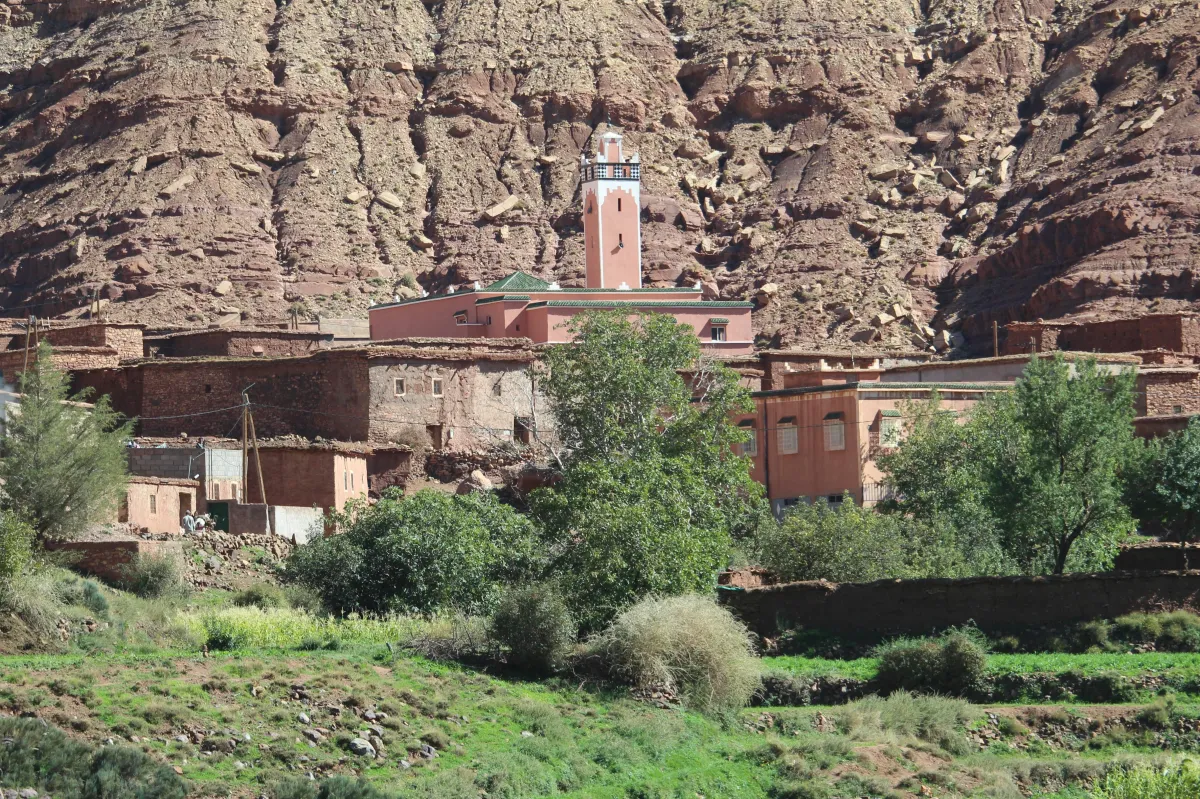
High Atlas Mountains, Morocco: Best Places to Visit and Things to Do
Morocco is a country of contrasts. Yes, I know it's a cliché, but sometimes clichés exist because they're true.
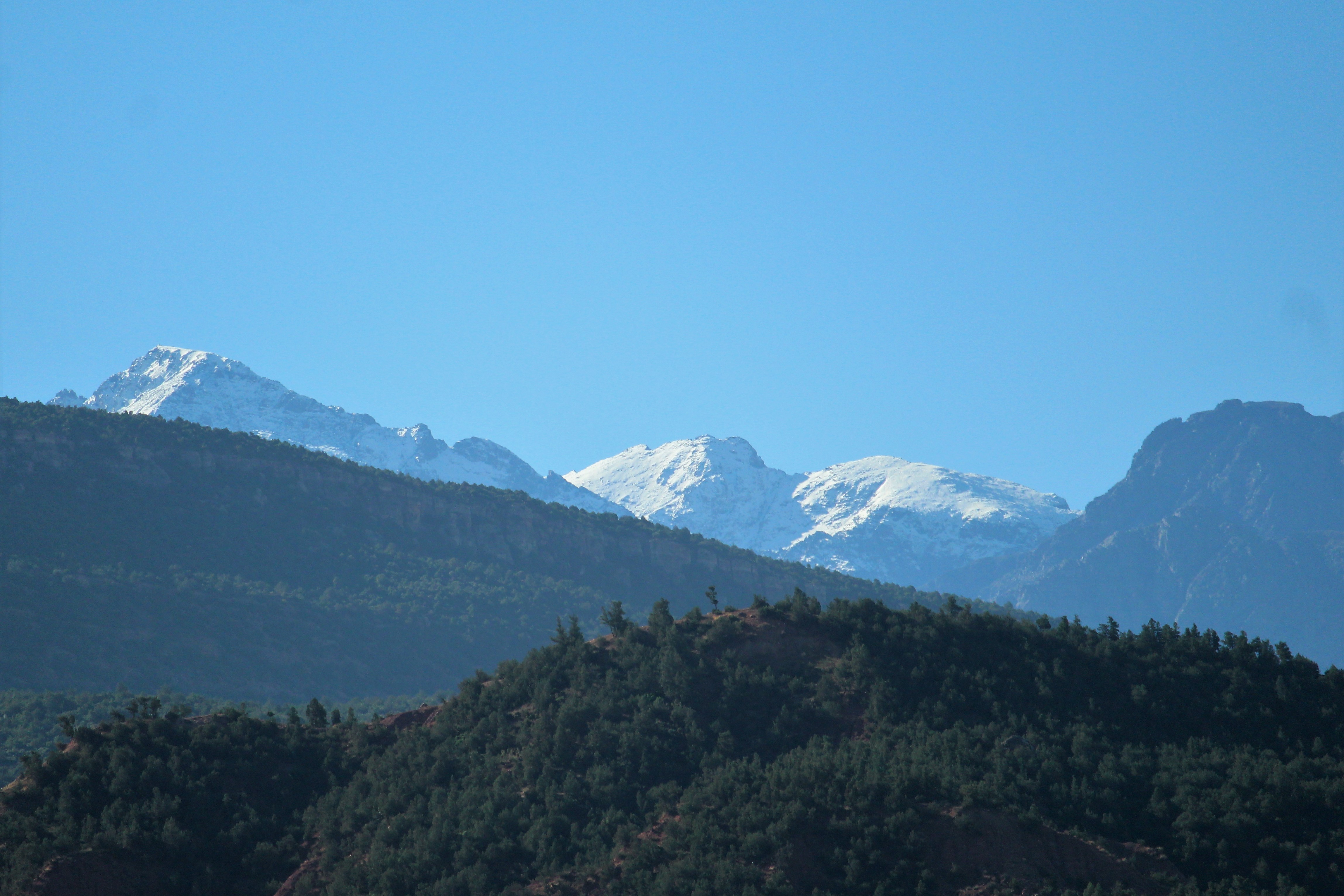
One day you can be navigating the frenetic streets of Marrakech; the next, you can be surrounded by snow-capped mountains, walking between tiny Amazigh villages where the temperature drops so sharply you suddenly find yourself reaching for clothes you never expected to need in Morocco.
The High Atlas Mountains were one of the most memorable parts of the month Mark and I spent travelling around Morocco.
We left Marrakech shortly after sunrise and headed towards Imlil, where we abandoned our main luggage and walked into the mountains to spend the night in the village of Aroumd. The following day, we continued across the High Atlas via the spectacular Tizi n'Tichka pass before emerging into the completely different landscapes of southern Morocco.
Our journey eventually took us to Aït Benhaddou, Ouarzazate and onwards towards the Drâa Valley.
You certainly don't need to be a serious hiker to enjoy this part of Morocco. I'm definitely not!
Whether you want to trek to the summit of Mount Toubkal, walk between mountain villages, take a day trip from Marrakech or simply experience the extraordinary journey across the High Atlas towards southern Morocco, I'd recommend making room for the mountains in your itinerary.
To jump to a particular section of this article, please use these links:
Are the High Atlas Mountains Worth Visiting?
How Long Do You Need in the High Atlas Mountains?
Understanding the High Atlas Mountains
A Note About the 2023 High Atlas Earthquake
Our Route Through the High Atlas Mountains
Leave Marrakech and Head into the High Atlas
Visit Imlil – Gateway to Mount Toubkal
Spend a Night in an Amazigh Mountain Village
Cross the High Atlas via Tizi n'Tichka
Visit Atlas Studios near Ouarzazate
Explore Ouarzazate and Taourirt Kasbah
Continue South into the Drâa Valley
How to Visit the High Atlas Mountains from Marrakech
Stay Overnight in Imlil or Aroumd
Cross the High Atlas Towards Ouarzazate
Where to Stay in the High Atlas Mountains
Imlil – Best for Convenience and Trekking
Aroumd – Best for a Village Experience
Aït Benhaddou – Best for Sunset and Sunrise
Ouarzazate – Best for Facilities and Film Fans
Best Time to Visit the High Atlas Mountains
Final Thoughts: Are the High Atlas Mountains Worth Adding to Your Morocco Itinerary?
Are the High Atlas Mountains Worth Visiting?
Absolutely.
The High Atlas gives you a completely different experience from Morocco's imperial cities, Atlantic coast and desert landscapes.
For me, much of the appeal was simply the journey itself.
Within a relatively short distance of leaving Marrakech, busy streets and buildings gave way to fields, orchards, mountain villages and increasingly dramatic scenery. Then came our first sight of snow-capped peaks – something that seemed almost impossible when we'd so recently left the warmth of Marrakech.
You don't have to climb mountains to appreciate the High Atlas either.
We did some walking, including the climb from Imlil to Aroumd, but some of my strongest memories are of eating wonderful home-cooked food in our mountain guesthouse, watching everyday village life, and travelling along roads that seemed to twist endlessly through the mountains.
If your Morocco itinerary allows it, I think the High Atlas deserves far more than simply being scenery glimpsed from the window on the way somewhere else.
How Long Do You Need in the High Atlas Mountains?
It's possible to experience a taste of the High Atlas on a day trip from Marrakech, particularly if you visit Imlil and the surrounding valleys.
However, if you have time, I'd recommend spending at least one or two nights in the mountains.
Staying overnight allowed us to walk from Imlil to Aroumd, experience a small mountain village after the day visitors had gone and enjoy the wonderful hospitality – and food – at our family-run guesthouse.
If you're using the High Atlas as part of a longer journey towards Aït Benhaddou, Ouarzazate and the desert, allow several days. The journey is far too beautiful to rush.
Understanding the High Atlas Mountains
The High Atlas is the highest section of Morocco's Atlas mountain system and stretches for around 750 kilometres across the country.
Its highest point is Jebel Toubkal, which rises to 4,167 metres and is the highest mountain in North Africa.
The mountains form a dramatic natural divide between different parts of Morocco. Travel south from Marrakech and you'll gradually leave the greener landscapes of the north behind before descending towards the much drier pre-Saharan landscapes beyond the mountains.
The High Atlas is also home to many Amazigh communities. You may still see the word Berber used widely in guidebooks and throughout Morocco – and it was certainly the term we encountered when we travelled – but Amazigh is increasingly the preferred term.
A Note About the 2023 High Atlas Earthquake
On 8 September 2023, a devastating earthquake struck Morocco, with mountain communities in the High Atlas among the worst affected. Thousands of people lost their lives, and many homes, villages and roads were badly damaged.
Reconstruction has continued in the years since the earthquake, but some communities have faced a long recovery.
Our journey described in this article took place before the earthquake, so some places may have changed since we visited. If you're travelling into smaller mountain communities, check current local conditions before setting out and remember that tourism can provide valuable income to people living in the region.
Our Route Through the High Atlas Mountains
Our journey took us:
Marrakech → Imlil → Aroumd → Imlil → Tizi n'Tichka → Aït Benhaddou → Ouarzazate → Drâa Valley
The first part took us right into the High Atlas. Once we'd crossed Tizi n'Tichka, we descended towards the pre-Saharan landscapes of southern Morocco.
That distinction is worth making because places such as Aït Benhaddou, Ouarzazate and the Drâa Valley are often bundled into High Atlas itineraries even though they lie beyond the main mountain range.
For us, though, they formed one continuous and unforgettable journey.
Leave Marrakech and Head into the High Atlas
We left the hustle and bustle of Marrakech shortly after sunrise.
It wasn't long before the city disappeared behind us and we began climbing into the foothills of the High Atlas. The scenery changed remarkably quickly. Concrete gave way to lush green fields and, in the villages we passed through, local people were busy gathering olives and apples.
Then we caught our first glimpse of the snow-capped mountains. It was breathtaking – and completely unexpected after the heat we'd experienced in Marrakech.
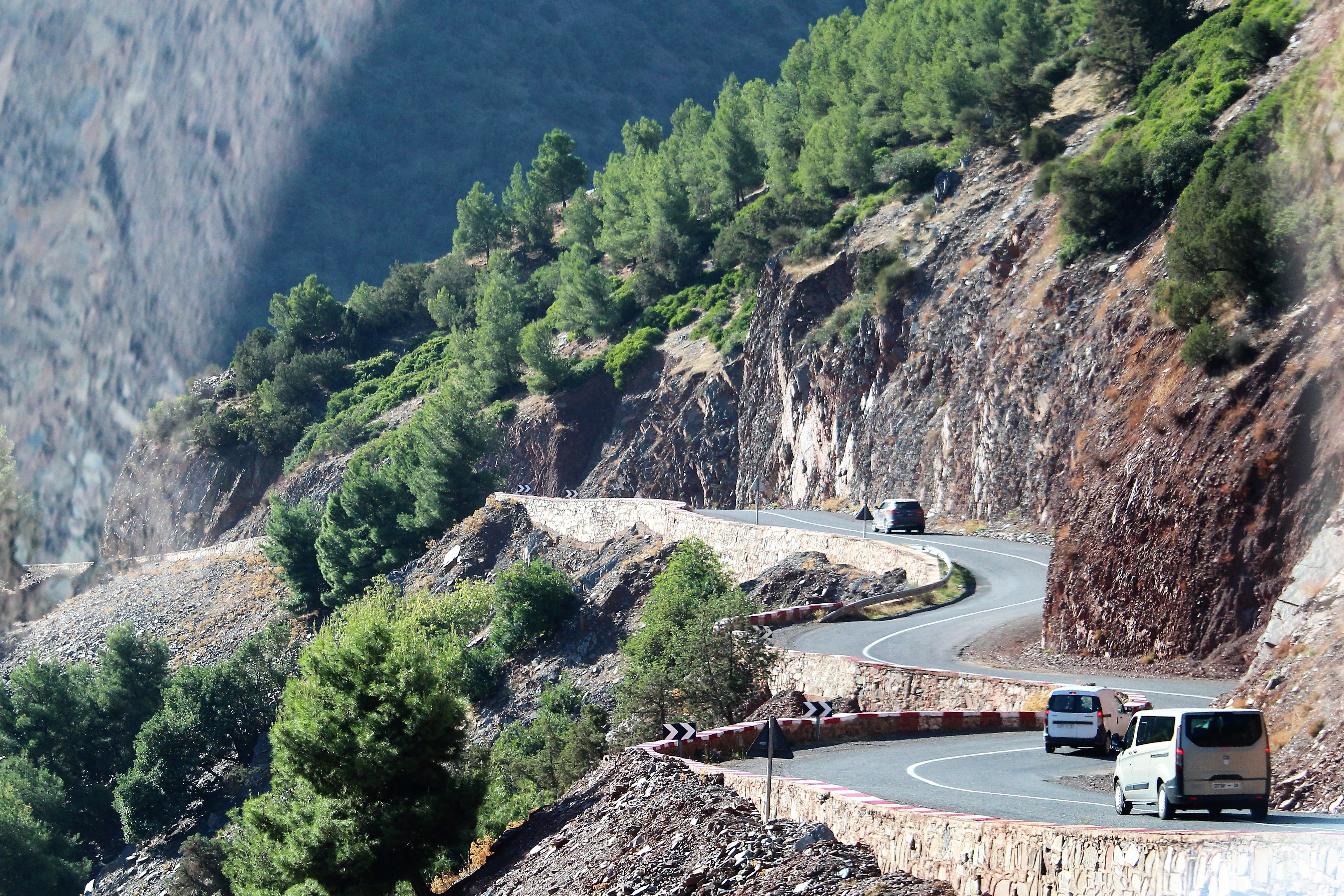
The higher we climbed, the more spectacular the scenery became. Roads twisted around the mountainsides and small communities appeared in places where it seemed almost impossible that anyone could live.
At one point we drove past Kasbah Tamadot, the luxury mountain retreat created by Richard Branson. Hamid, our guide throughout our Morocco trip, told us that celebrity guests sometimes arrived by helicopter and barely left the property during their stay. He also said that the hotel was regarded positively locally because it provided employment and supported surrounding communities.
Visit Imlil – Gateway to Mount Toubkal
The mountain village of Imlil is one of the principal bases for exploring this part of the High Atlas and a popular starting point for trekkers heading towards Mount Toubkal.
At 4,167 metres, Toubkal is North Africa's highest mountain, and climbing it is a serious undertaking. That wasn't what we were there to do. Instead, Imlil was the starting point for our much more manageable walk to the village of Aroumd.
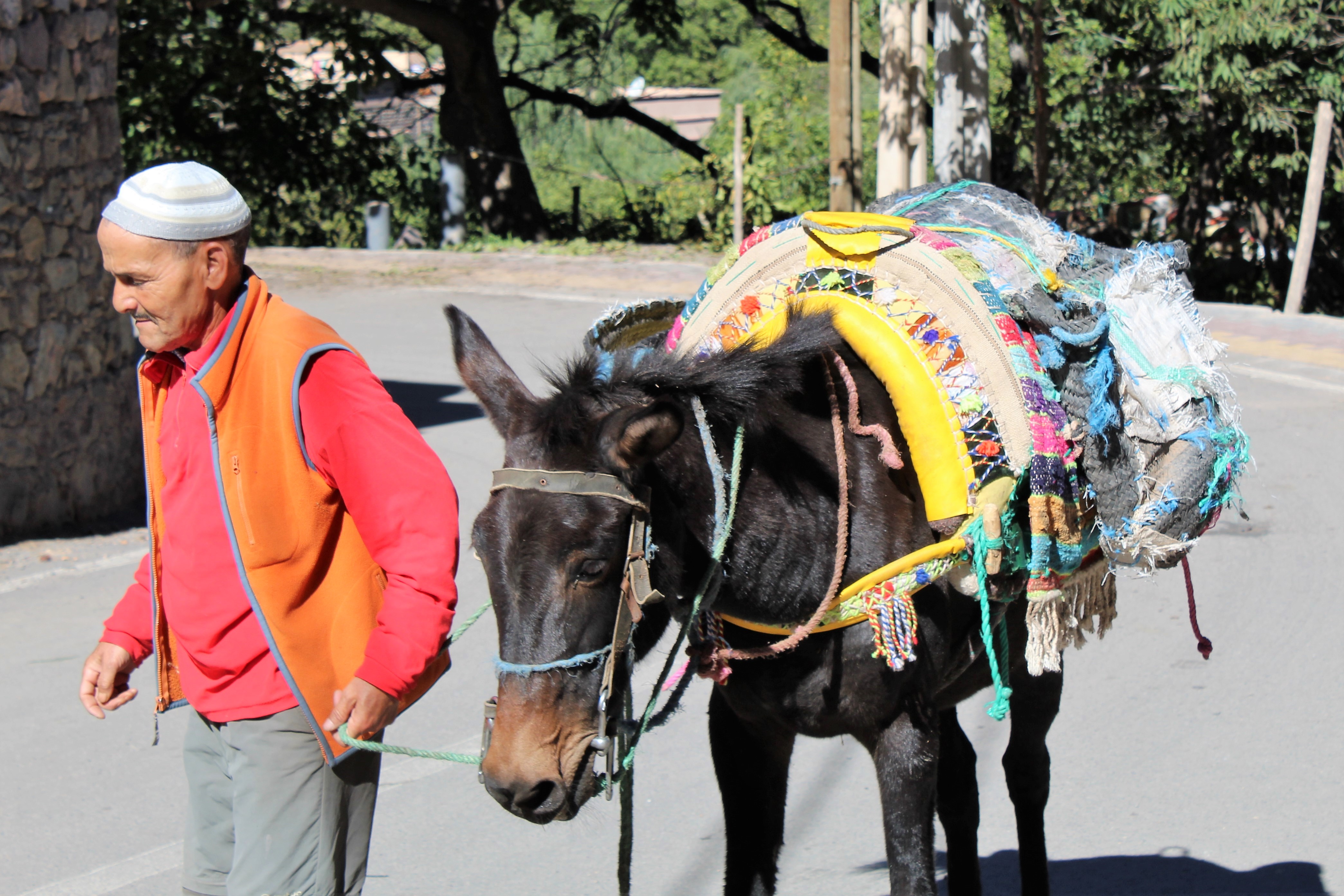
We left our minibus in Imlil and stored our main luggage in a local restaurant, taking only what we needed for our overnight stay in the mountains. There was an option to have a mule carry our day packs – or even to ride one if we didn't feel up to the walk. Only one member of our group chose to ride. The rest of us decided to walk.
Walk from Imlil to Aroumd
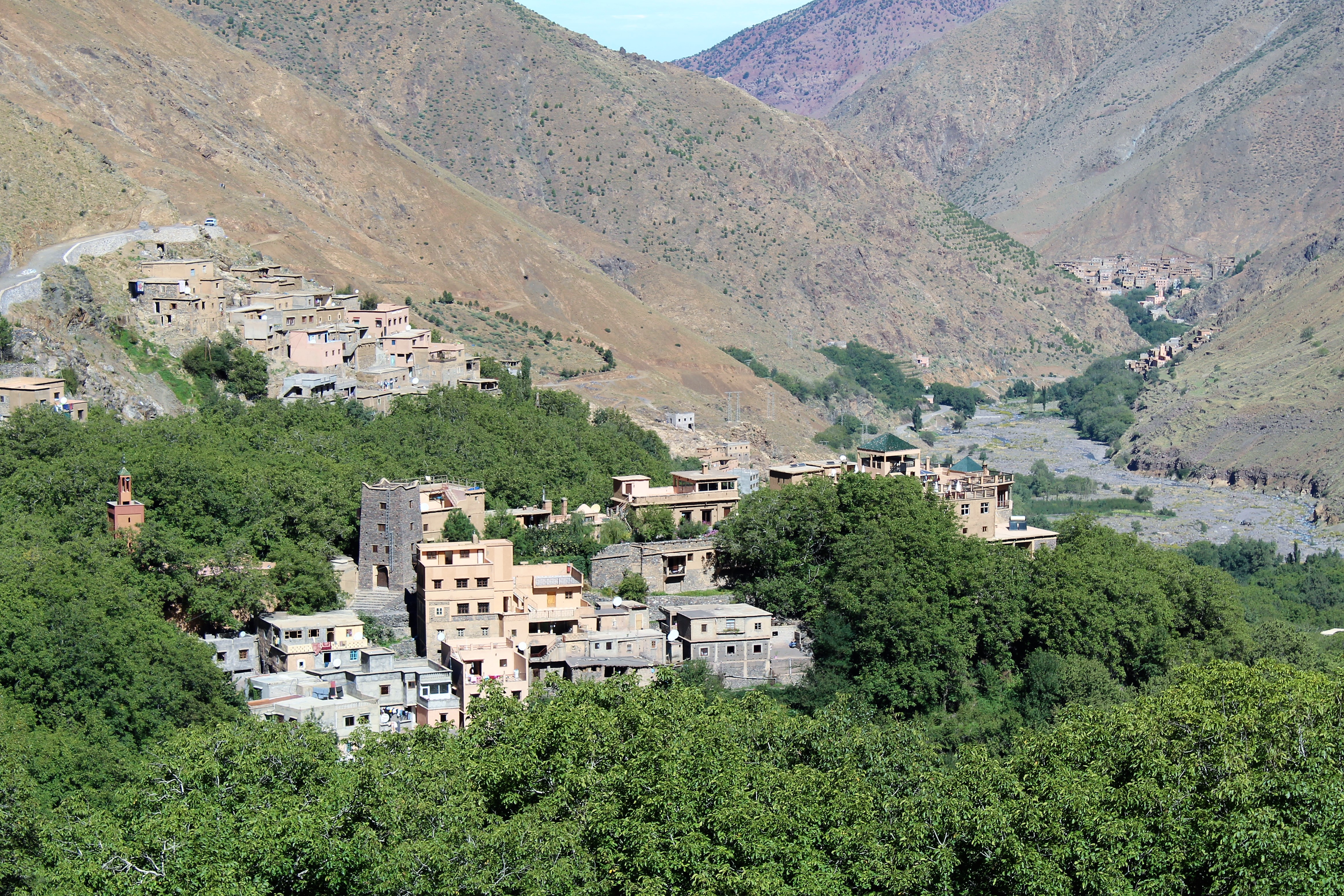
Our destination was the mountain village of Aroumd, around three kilometres uphill from Imlil. Three kilometres doesn't sound very far, but it felt considerably further when we were climbing!
As we ascended, the temperature dropped, and I found the walk increasingly hard going. I was definitely bringing up the rear.
But the scenery was spectacular.
And despite struggling, I was glad I'd decided to walk rather than ride a mule – particularly when I realised that the man leading one of the animals was about 75 and was coping with the mountain far better than I was.
It was one of those moments that rather puts your own complaints into perspective.
Eventually we reached Aroumd, ready for a rest and, as it turned out, an enormous amount of food.
Spend a Night in an Amazigh Mountain Village
Aroumd is a traditional mountain village above Imlil and makes a useful base for walking in the surrounding area.
Our accommodation was at Gîte le Toubkal Armed, a family-run guesthouse with dormitory-style rooms and shared bathrooms. It was basic, but clean and comfortable. Our group were the only guests, so Mark and I ended up with a three-bed dormitory to ourselves.
Almost as soon as we arrived, our hosts welcomed us with sage tea and homemade biscuits in the courtyard.
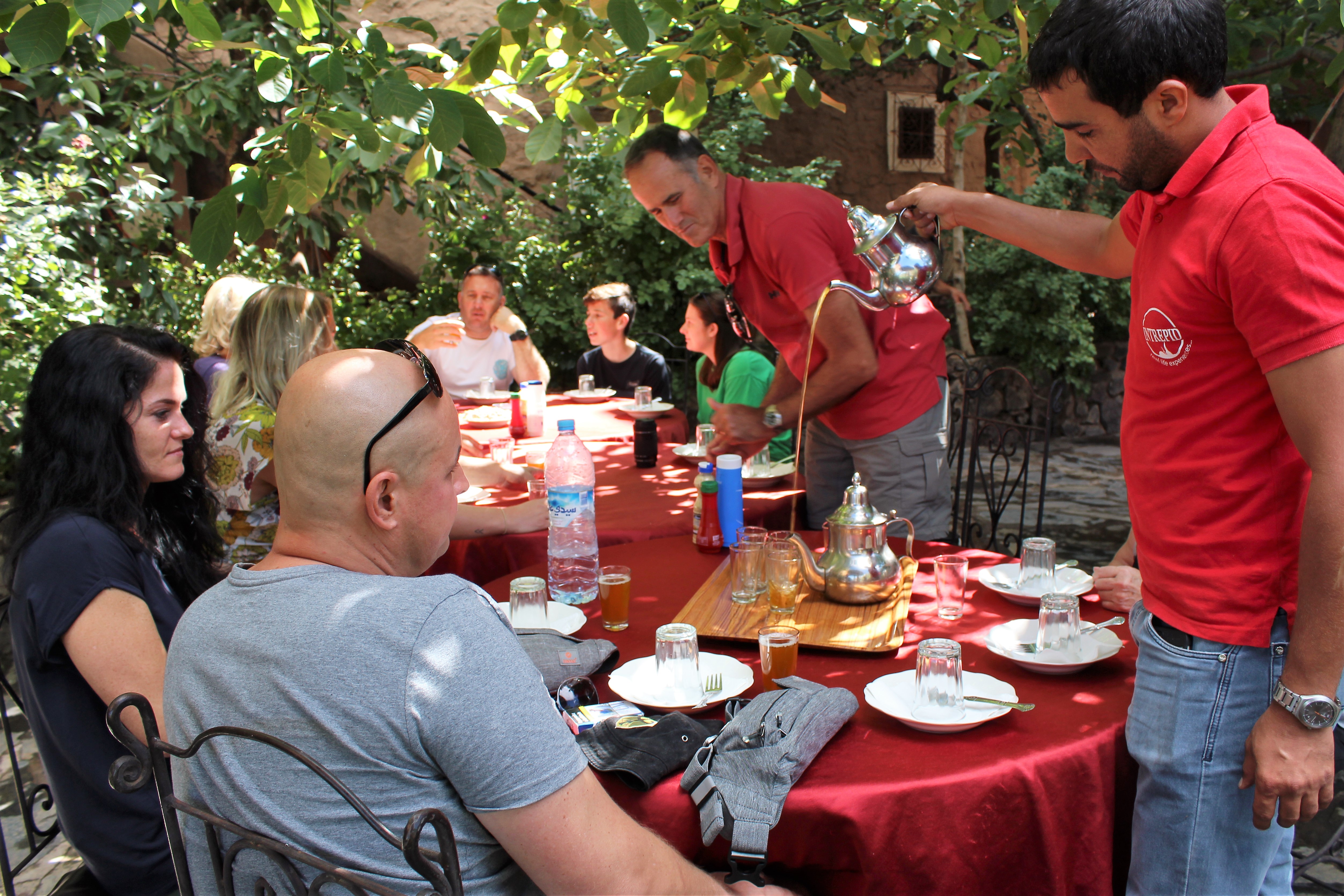
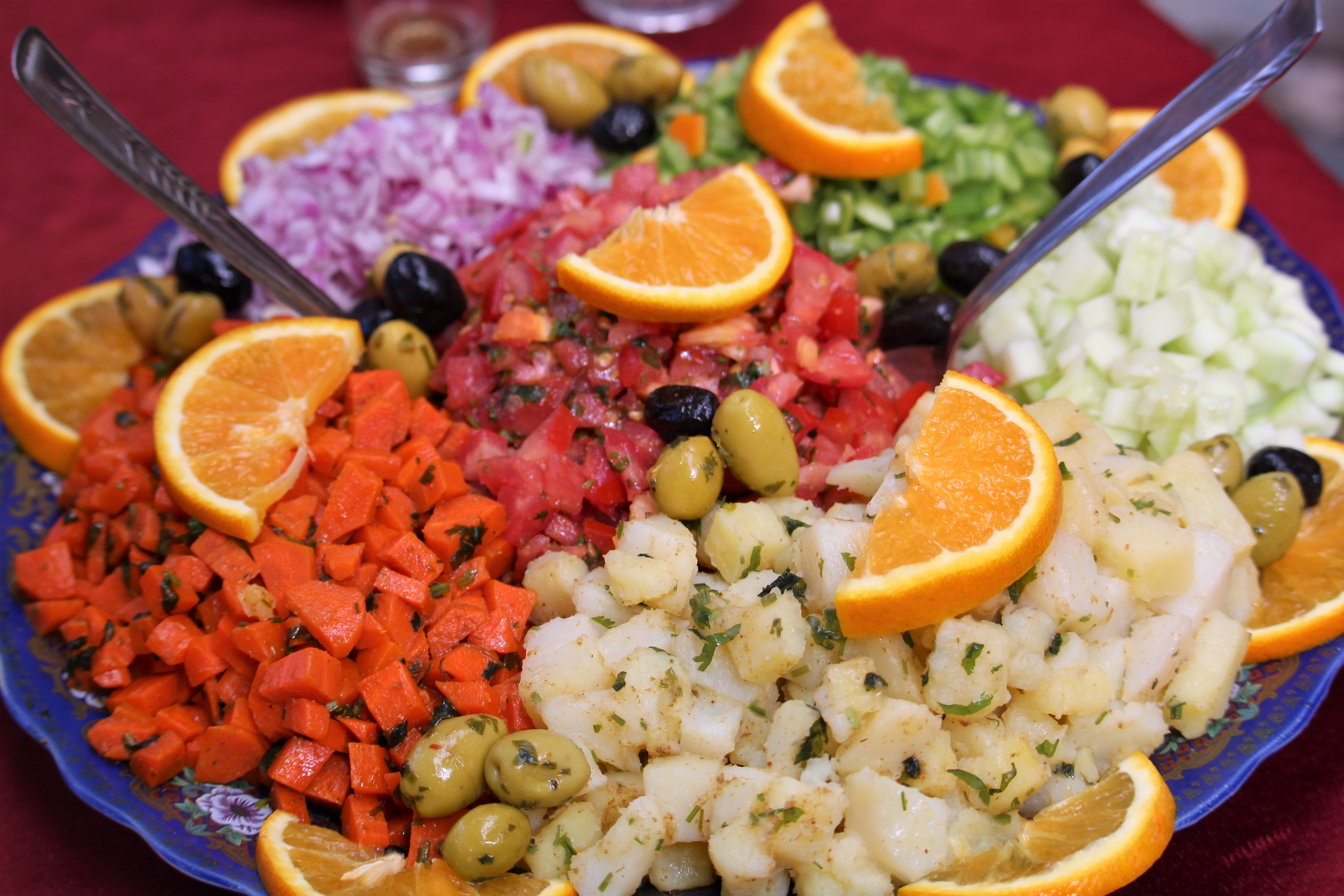
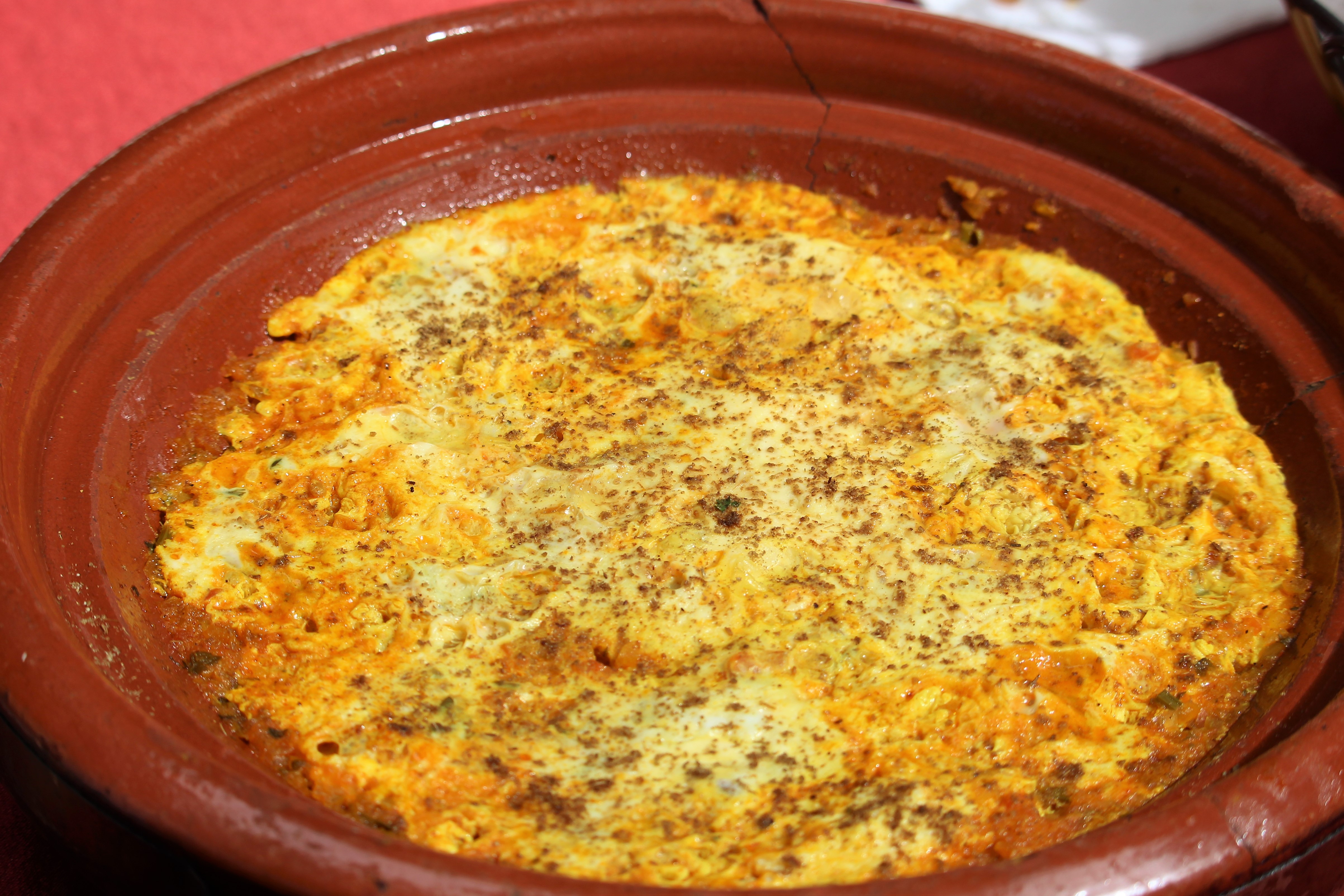
Then came lunch. And what a lunch. Perhaps it was the mountain air – or perhaps we'd simply earned it after the climb – but the food tasted incredible. We shared a huge plate of colourful crudités followed by Berber omelette, spicy eggs cooked in a tagine, along with rice, chicken skewers, lentils and fresh flatbread still warm from the oven. We finished with juicy orange segments.
We did manage to fit in some more walking. A few people from our group headed off on a strenuous four-hour hike up the nearest mountain. Mark and I opted for something rather gentler and wandered around the village instead.
But if I'm completely truthful, the thing I remember most clearly about Aroumd is the food. Later that afternoon came tea and Moroccan doughnuts. Not long afterwards, it was time to eat again: harira soup, beef tagine and slices of melon. We certainly weren't going hungry in the High Atlas.
That night was also the only time during our month in Morocco that we really needed blankets. The temperature had dropped dramatically once the sun disappeared behind the mountains.
The following morning, after breakfast, we walked back down to Imlil and rejoined our minibus.
It was time to cross the High Atlas.
Cross the High Atlas via Tizi n'Tichka
From the Marrakech side of the mountains, the Tizi n'Tichka pass provides one of Morocco's great road journeys. The pass reaches approximately 2,260 metres above sea level, and the N9 winds through an increasingly dramatic landscape as it crosses the High Atlas towards Ouarzazate.
The road twists and turns relentlessly.
At times we were surrounded by bare mountains; at others we could see tiny isolated communities seemingly clinging to the slopes. Eventually we climbed so high that we found ourselves among the clouds.
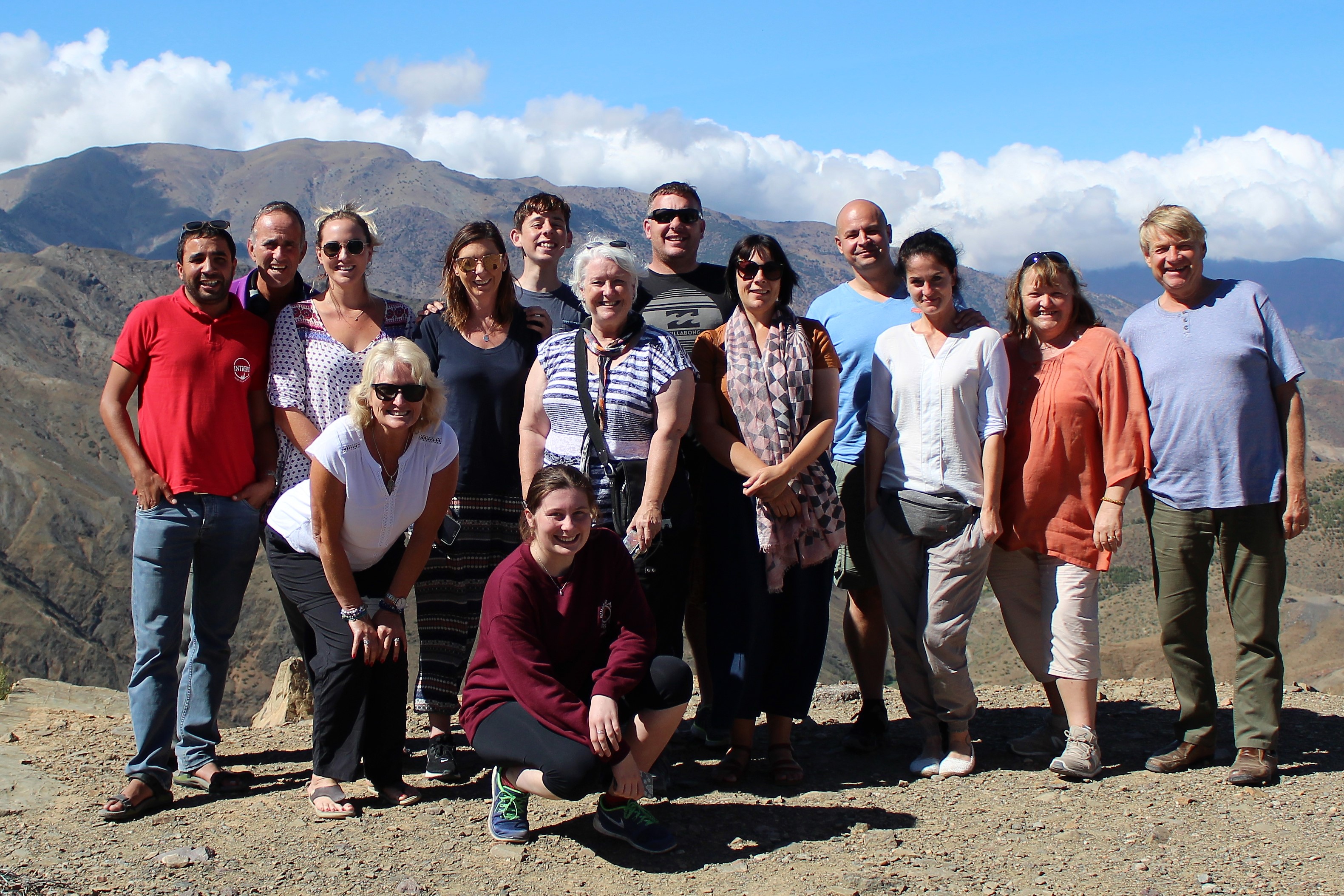
We stopped at the pass itself for the obligatory photographs beside the sign – proof that we'd made it.
If you're driving this route independently, don't underestimate mountain conditions. Weather can affect the pass, particularly in winter, and journey times can be considerably longer than the distance on a map might suggest. But don't rush it.
For me, the drive across the High Atlas wasn't simply a way of getting from Marrakech to southern Morocco. It was one of the experiences of the trip.
Continue to Aït Benhaddou
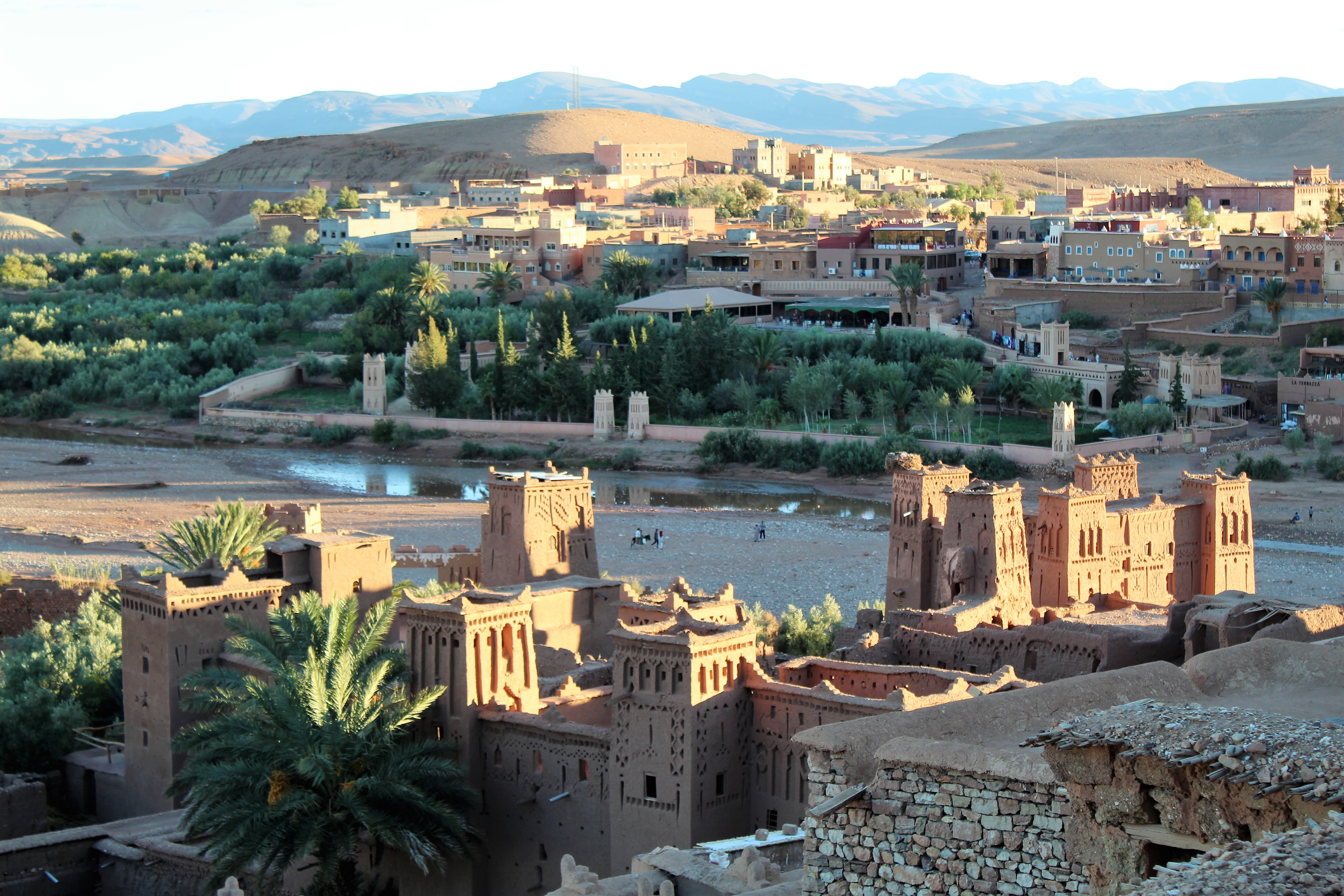
Once you've crossed the High Atlas, the landscape begins to change again. One of the great highlights on the southern side of the mountains is Aït Benhaddou.
Aït Benhaddou is sometimes described as a kasbah, but it is actually a ksar – a fortified village made up of closely packed earthen buildings surrounded by defensive walls and towers. It stands in the Ounila Valley on an old trading route linking Marrakech with the pre-Saharan regions further south and has been a UNESCO World Heritage Site since 1987. Although the building traditions are much older, UNESCO says that the oldest structures still standing probably date no earlier than the 17th century.
Aït Benhaddou has also become famous as a filming location. Its extraordinary mud-brick architecture and surrounding landscape have appeared on screen many times, helping make it one of the most recognisable places in southern Morocco. I was slightly worried that all that fame might have turned it into something resembling a film-set theme park. Thankfully, it hadn't. Yes, there were souvenir shops and other visitors, but it was still possible to wander through the narrow lanes and imagine how life might once have looked here.
We visited in the late afternoon and gradually climbed towards the top. Then we waited for sunset. It was glorious. As the sun dropped, the earthen walls seemed to change colour, glowing in rich shades of orange and red. We stayed to enjoy every last ray. Possibly a little too long. By the time we finally made our way back down, it was dark, and we had to use the torches on our phones to illuminate the rather precarious route back towards our hotel.
But do you know what? I'd do exactly the same again!
Visit Atlas Studios near Ouarzazate
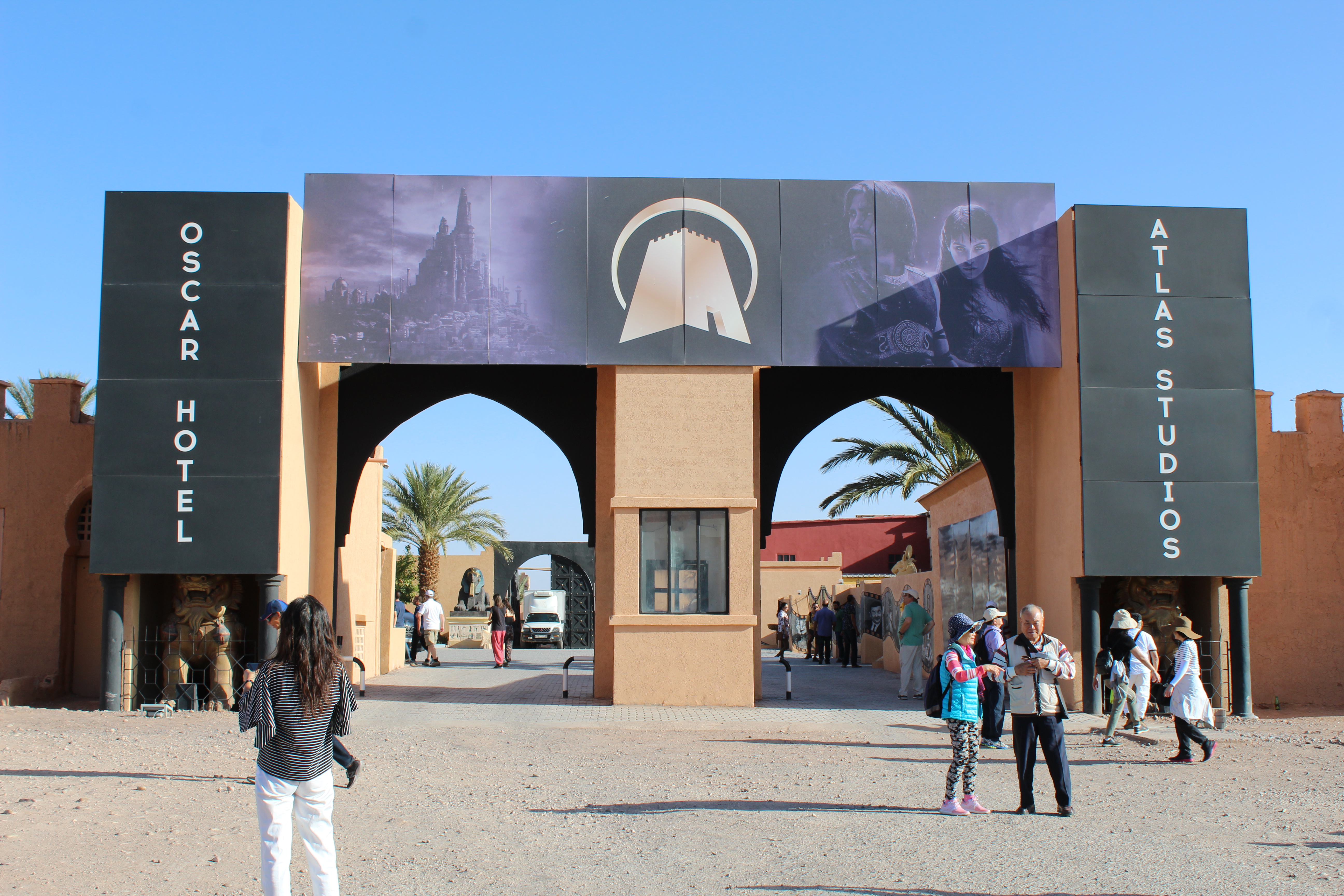
If you enjoy films as I do, make time for Atlas Studios, just outside Ouarzazate.
Ouarzazate and the surrounding region have been used by filmmakers for decades, earning the area various nicknames along the lines of Morocco's Hollywood.
Atlas Studios itself opened in 1983 and has hosted more than 200 film and television productions. Sets associated with productions including Gladiator, Kingdom of Heaven, The Mummy, Asterix & Obelix: Mission Cleopatra and Game of Thrones have all been found here.
Nobody else in our group wanted to visit, so Mark and I got a taxi and went by ourselves. I'm very glad we did. Our admission included a guided tour in English, and we were added to a large group of Japanese visitors. I'm not convinced everyone understood everything our guide was telling us, but whenever he mentioned the name of a famous Hollywood actor, there would be a wonderful chorus of enthusiastic oohs and aahs.
Their reactions certainly made Mark and me smile.
I loved seeing how the sets worked. Structures that look enormous on screen can be surprisingly small in real life, while clever camera angles and filmmaking techniques completely transform them. It's one of those attractions that slightly ruins the illusion of cinema while simultaneously making you appreciate it much more.
The studios are still working studios, so tours and access can change when filming is taking place. Check current opening arrangements and prices before visiting.
Explore Ouarzazate and Taourirt Kasbah
From Atlas Studios, we continued into Ouarzazate, a city that has become closely associated with Morocco's film industry.
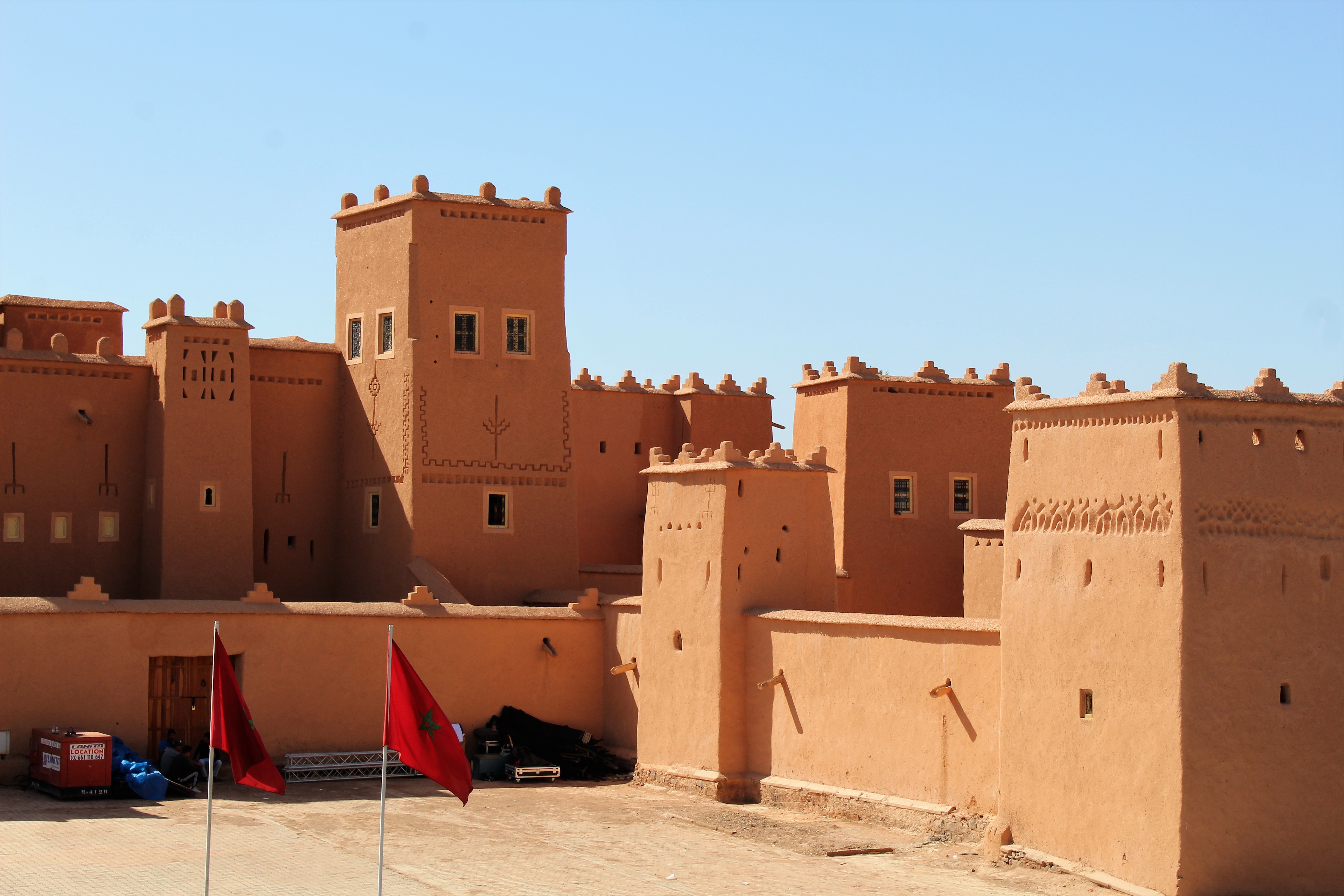
But cinema isn't the only reason to stop. One of its most distinctive landmarks is Taourirt Kasbah, an enormous complex of earthen buildings and towers. Dating largely from the 19th century, Taourirt was associated with the powerful Glaoui family and is an impressive example of the fortified architecture found throughout southern Morocco. Its maze of rooms, passageways, courtyards and decorated interiors gives some sense of just how substantial these kasbah complexes could be.
Afterwards, we stopped at a small souk for coffee before continuing south.
By this stage, the lush landscapes we'd seen on the Marrakech side of the High Atlas seemed a very long way away.
Continue South into the Drâa Valley
Our journey then continued through the Drâa Valley towards Zagora and Tamegroute.
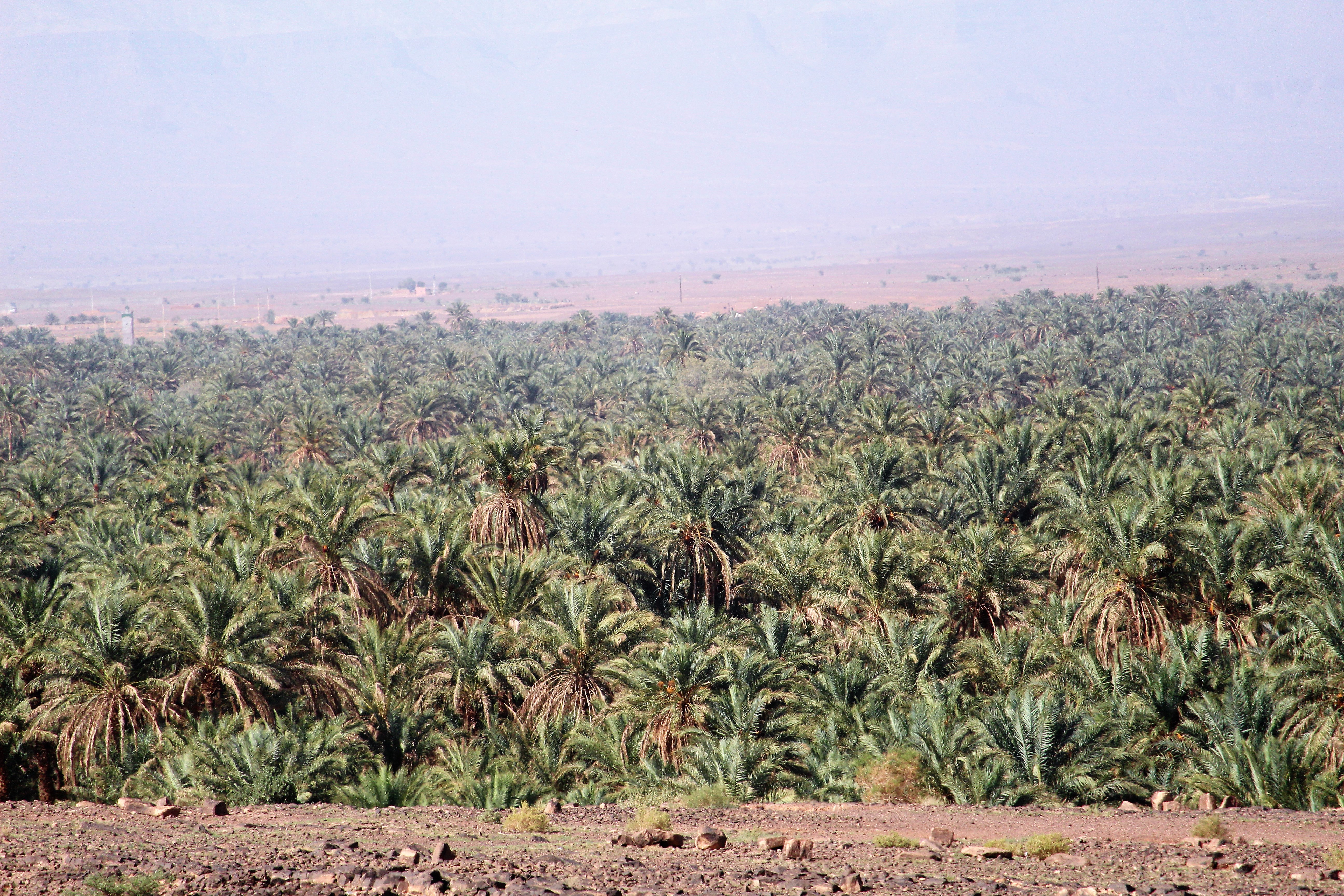
By this point, we'd left the High Atlas behind. The scenery was dry, rocky and increasingly desert-like, but cutting through that harsh landscape were ribbons of brilliant green.
These were the oases of the Drâa Valley, filled with date palms and cultivated land.
We stopped at one for a picnic lunch.
It was one of those landscapes that was almost impossible to capture properly in a photograph. You could take a picture of the palms, another of the mountains, and another of the rocky valley, but none really conveyed the enormous scale of the place or the extraordinary contrast between the fertile green oasis and the barren land surrounding it.
For us, the Drâa Valley marked the beginning of the next stage of our Moroccan adventure as we continued towards the desert.
How to Visit the High Atlas Mountains from Marrakech
There are several ways to experience the High Atlas from Marrakech, depending on how much time you have and how independently you want to travel.
Take a Day Trip
If you're short on time, a day trip from Marrakech can give you an introduction to the mountains.
Many trips head towards Imlil and the surrounding valleys and combine scenic driving with a village visit and a relatively easy walk.
It's a good option if the mountains aren't a major focus of your trip, although you'll miss the experience of waking up in the High Atlas.
Stay Overnight in Imlil or Aroumd
This would be my choice if you can spare the time.
An overnight stay lets you experience the mountains at a much slower pace and gives you more opportunities for walking. You also get to experience the temperature changing after sunset and the atmosphere once the day visitors have gone.
And, based on our experience, you may be extremely well fed.
Cross the High Atlas Towards Ouarzazate
If your Morocco itinerary continues towards Aït Benhaddou, Ouarzazate, the Drâa Valley or the Sahara, travelling across the mountains rather than returning to Marrakech makes perfect sense.
This was the route we took, and I'd highly recommend it. The gradual transformation of the landscape is part of the experience.
Where to Stay in the High Atlas Mountains
Where you stay depends on what you want from your visit.
Imlil – Best for Convenience and Trekking
Imlil is the obvious base if you want easy access to walking routes and Mount Toubkal.
You'll find everything from simple guesthouses to more comfortable accommodation, along with guides and other trekking services.
It's also accessible enough from Marrakech to work for a short mountain break.
Aroumd – Best for a Village Experience
If you'd prefer to get away from the main trekking centre, consider staying higher in the mountains around Aroumd.
Our night at Gîte le Toubkal Armed was one of the most memorable parts of our visit. Don't expect luxury. For us, the appeal was precisely the opposite: simple accommodation, mountain scenery, generous hospitality and wonderful home-cooked food.
Aït Benhaddou – Best for Sunset and Sunrise
If you're continuing south across the mountains, staying around Aït Benhaddou allows you to experience the ksar outside the busiest part of the day.
Our sunset visit was magical, and I'd happily stay nearby again simply to be able to wander around in the softer early-morning or late-afternoon light.
Ouarzazate – Best for Facilities and Film Fans
Ouarzazate offers a larger selection of hotels and restaurants and is a convenient base for Atlas Studios, Taourirt Kasbah and excursions around the surrounding region.
It's a practical choice if you'd rather have more facilities than you'll find in a small mountain village.
Best Time to Visit the High Atlas Mountains
The best time depends very much on what you want to do.
Spring and autumn are generally good seasons for walking, with more comfortable temperatures than the height of summer.
Summer can be very hot at lower elevations, although temperatures become cooler as you climb higher into the mountains.
Winter brings snow to the higher peaks and can transform the landscape, but it can also make roads and trekking routes more difficult.
Conditions in the mountains can change quickly at any time of year, so check the forecast and local advice before setting out, particularly if you're planning a serious trek or driving across a high pass. And don't assume Morocco will always be warm. Our freezing night in Aroumd taught us that lesson rather effectively.
Final Thoughts: Are the High Atlas Mountains Worth Adding to Your Morocco Itinerary?
When I think about our time in the High Atlas, I don't remember one particular sight above everything else.
I remember the journey.
I remember leaving Marrakech just after sunrise and watching the city disappear behind us.
I remember our first glimpse of snow-capped mountains, struggling uphill from Imlil while an elderly mule handler made the climb look effortless, and arriving in Aroumd to sage tea, homemade biscuits and what seemed like an endless succession of wonderful food.
I remember wrapping ourselves in blankets that night because, for the first and only time during our month in Morocco, we were genuinely cold.
Then came the twisting roads across Tizi n'Tichka, the landscape changing once again as we descended towards southern Morocco.
And, finally, there was Mark and me lingering at Aït Benhaddou to watch the last of the sunlight turn the earthen walls orange and red – and then discovering we'd left it so late that we needed our phone torches to find our way back.
You can visit the High Atlas on a day trip from Marrakech.
But if you have the time, don't just look at the mountains.
Stay in them.
Walk through them.
And, if it fits your route, travel right across them.
For us, crossing the High Atlas wasn't simply a way of getting from one part of Morocco to another.
It was one of the highlights of the journey.
Watch this Video for More About the Atlas Mountains
If you’re travelling soon, please use these links!
Are you travelling soon? Use these links when making your bookings. These are the companies we use. It won’t cost you any extra, but we will earn a few pennies to help keep Happy Days Travel Blog going. Thank you!!
Make sure you take out travel insurance. If you are a digital nomad or long-term traveller, try the specialist provider SafetyWing. (Never leave home without protecting yourself, your trip and your belongings!)
Book your flight with Skyscanner
Book your accommodation with Booking.com
Book a tour with TourRadar
Book city tours and activities with Viator or GetYourGuide
Check out my Resource Page for more companies I recommend.
Disclosure: This post contains affiliate links. If you click through for more information, or to make a purchase, it may result in a small commission coming my way. Please note that there is no extra cost to you associated with this. Thank you so much for supporting my site.
