Best Things to Do in Kochi, Kerala: A Gentle Introduction to India
This post was fully updated in April 2026.
First Impressions of Kochi
Before we embarked on our first trip to India, everyone told us that Kochi (formerly known as Cochin), in the state of Kerala in southern India, would be the perfect gentle introduction to the subcontinent.
And so it proved to be.
From the moment we stepped off the plane, Kochi and its people gave us every reason to fall in love with India.
As is our usual habit when arriving in an Asian or African airport after a long flight, we lingered airside after collecting our bags - quietly preparing ourselves. Money sorted. Bags adjusted. A plan forming in our heads for how we would handle the inevitable onslaught of taxi drivers, porters, and “helpful” strangers waiting just beyond the doors.
Except… there was none of this.
When we stepped out into the heat of the day, there was nobody there. No chaos. No pressure. No one calling out to us. Just a calm, slightly sleepy arrival area.
In the end, we found ourselves asking a taxi driver where to catch the service bus to Fort Kochi. He pointed us in the right direction with a smile - and didn’t once suggest that we might prefer his taxi instead.
It was our first small surprise in India.
And it wouldn’t be the last.
To jump to a particular section of this article, please use these links:
Getting Lost… and Finding Joseph
A Day Exploring Kochi with a Local
The Dhobi (Laundry) Experience
Spices, Ginger, and Local Co-operatives
The Reality of “Air-Conditioning Stops”
Jew Town and the Pardesi Synagogue
Chinese Fishing Nets and the Seafront
Experiencing Kathakali in Fort Kochi
Final Thoughts: Why Kochi is the Perfect Introduction to India
A Brief History of Kochi
Kochi’s history is as layered as the cultures that have passed through it. For centuries, this small coastal city was at the heart of the global spice trade, drawing merchants from across the world in search of pepper, cinnamon, and other prized goods. The Portuguese were the first Europeans to establish a foothold here in the early 16th century, followed by the Dutch, and later the British - all of whom left their mark on the city’s architecture, religion, and way of life.
Long before that, Kochi was already home to Arab traders and a thriving Jewish community, whose presence can still be felt in places like Jew Town and the Pardesi Synagogue. Today, that mix of influences is what gives Kochi its unique character - a place where churches, temples, mosques, and colonial buildings sit side by side, quietly telling the story of a city shaped by centuries of connection with the wider world.
The Journey to Fort Kochi
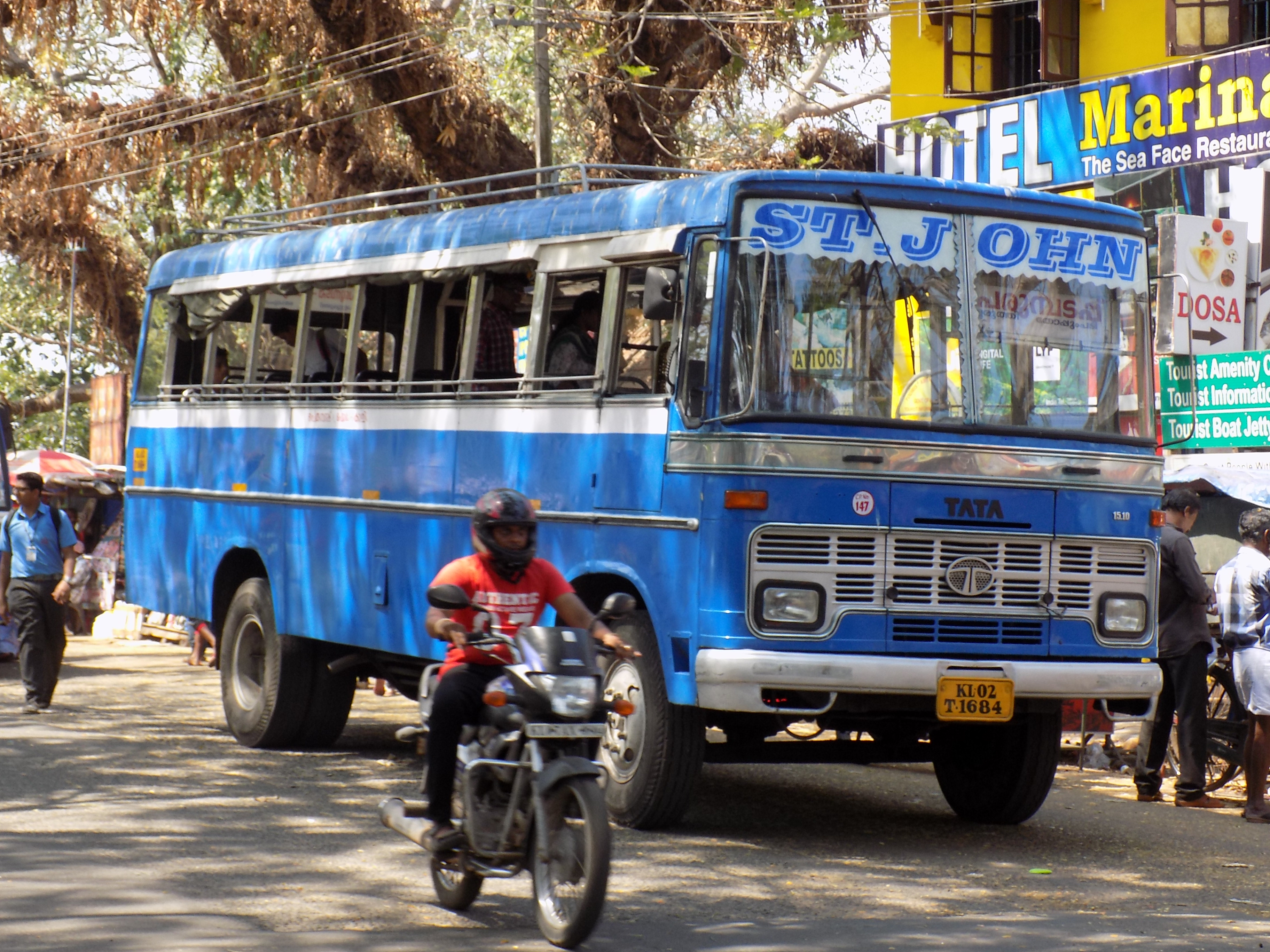
The bus journey to Fort Kochi, where we’d booked a hotel for our first few nights, was around 46 kilometres and took about 90 minutes. The cost? Just over £3 for the two of us.
As we made our way through the city, so much felt instantly familiar. The noise, the heat, the constant honking of horns, the swirl of people and colour - it all reminded us of other Asian cities we’d visited.
But Kochi had its own rhythm.
There was greenery everywhere - trees, plants, bursts of colour softening the edges of the city. The saris were brighter, the pace somehow calmer. And then there were the lungis - men in what looked, at first glance, like very short skirts - adding another layer of curiosity to our first impressions.
Crossing the bridge into Fort Kochi, the atmosphere shifted again.
Suddenly, it felt like a place on holiday.
Bright flowers spilled over walls, children wandered past with vivid pink candy floss, and there was a sense of ease in the air. First impressions matter, and ours of Fort Kochi couldn’t have been better.
Getting Lost… and Finding Joseph
We asked the bus conductor to let us know where to get off for our hotel. He confidently assured us he knew exactly where it was.
When the time came, he waved us off the bus and pointed us down a nearby road. “Just 200 metres,” he said.
As the bus disappeared into the distance, we quickly realised the road name didn’t match the address we had.
Our first lesson in India: directions are often given with confidence and optimism, but with no basis in reality. It's not done with a sense of mischief or malice. It happens because everyone wants to please. Nobody want to say they don't know.
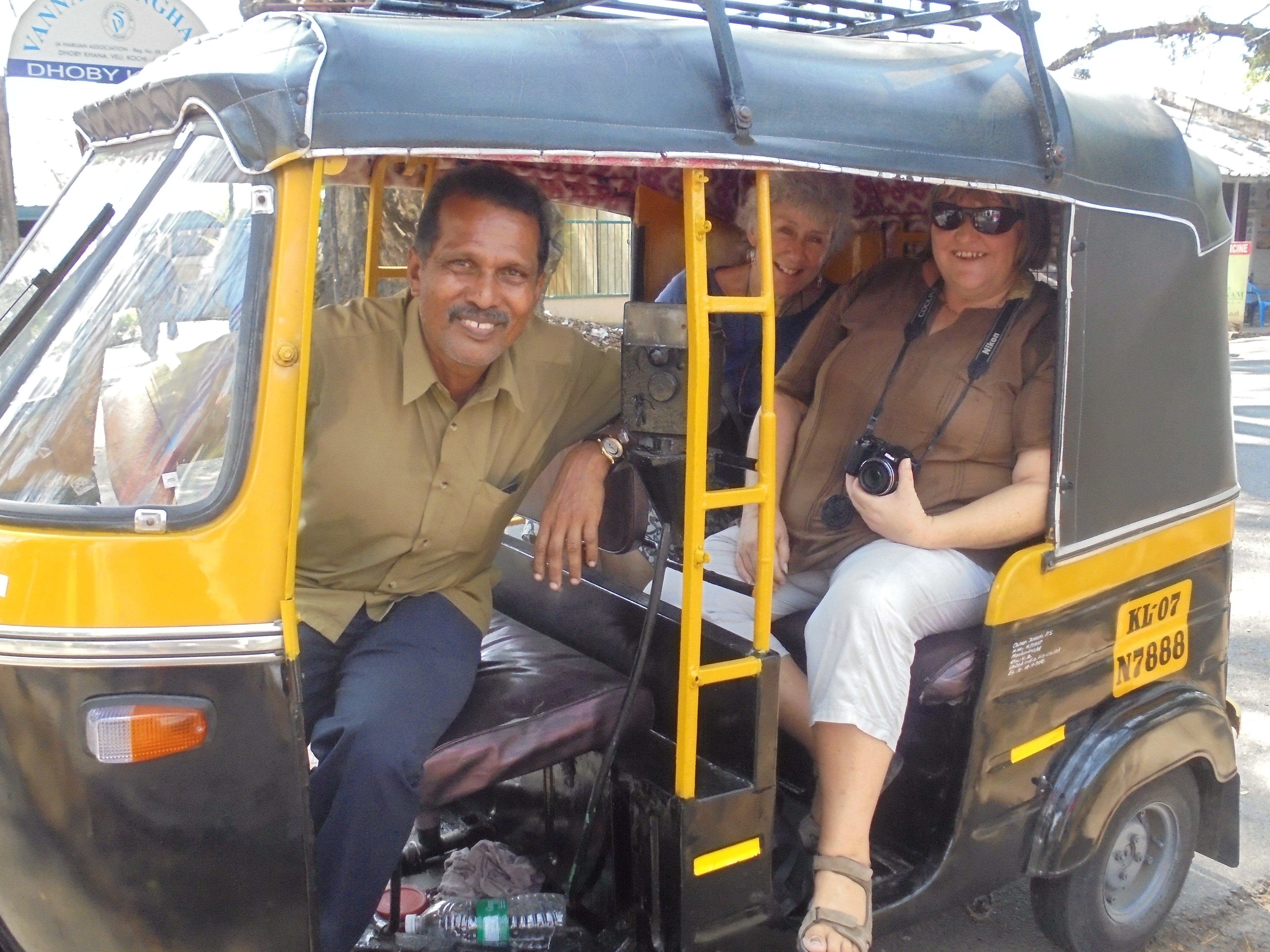
A nearby auto-rickshaw driver pointed us back the way we had come. We asked him to take us, but he refused - apparently, he was on his break.
And then, just as we were wondering what to do next, along came Joseph.
Within minutes, he had agreed to take us to our hotel. By the time we arrived, we knew his life story, the story of our hotel owner, and the fact that his brother-in-law owned a shop just two doors down.
And just like that, Joseph became our driver for our time in Kochi.
If you’re starting to plan your own trip to Kerala and want help putting it all together, I’ve created a simple, step-by-step guide based on my own journey.
A Day Exploring Kochi with a Local
If you’re wondering about the best things to do in Kochi, I’d honestly say this:
Start by spending a day exploring with a local.
For us, that meant Joseph.
What followed wasn’t just sightseeing—it was an introduction to the layers of history, culture, and everyday life that make Kochi so fascinating. The day was made even more special as we met up with Jan, our travel hero, whom we had first met in Ethiopia the year before.
The Dhobi (Laundry) Experience
Our first stop was a traditional dhobi, or laundry.
Outside, Joseph pointed out the huge rain trees - planted, he told us, by the Portuguese during their time here in the 16th and 17th centuries.
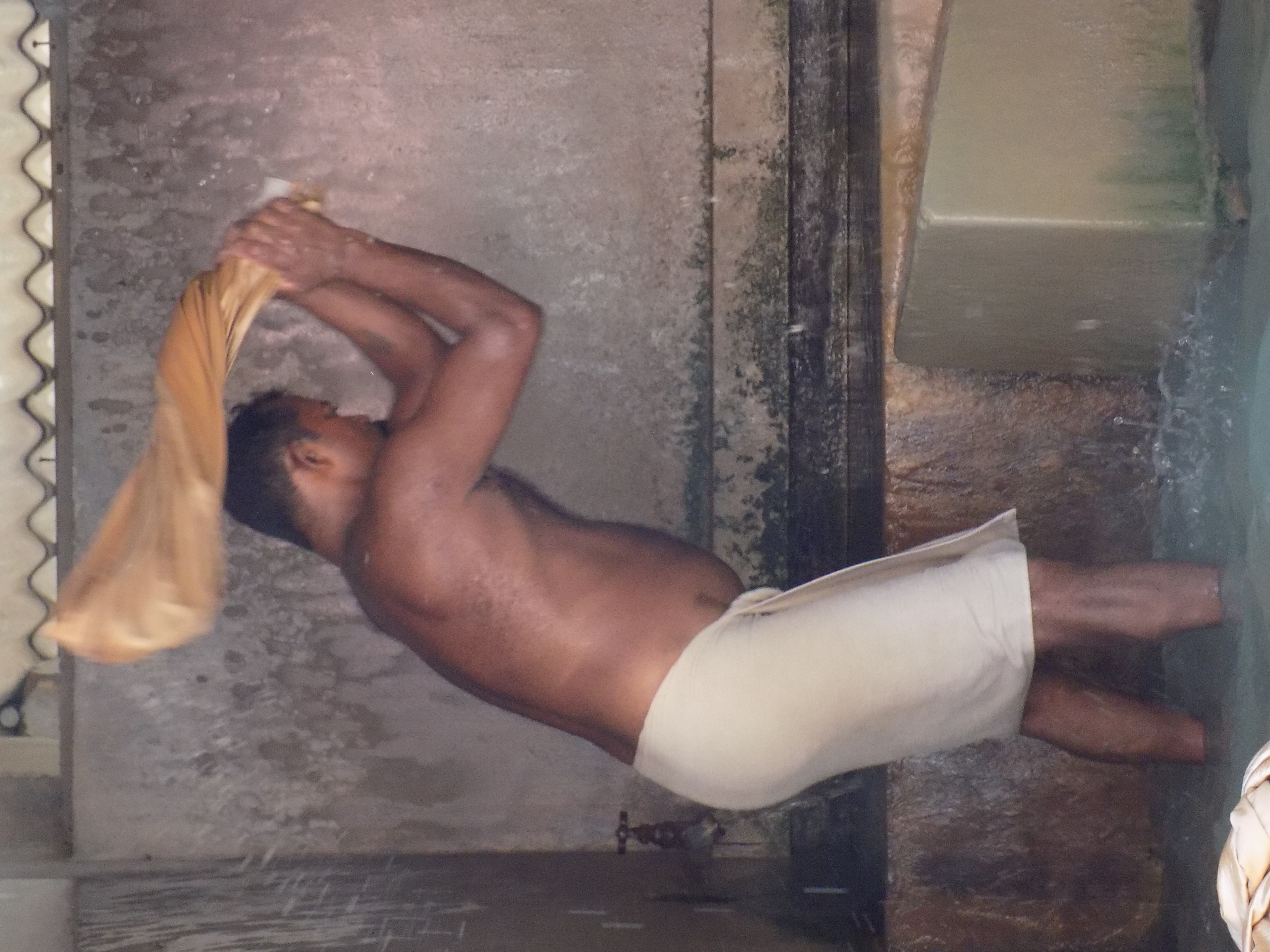
Inside, around 50 men and women worked together in a cooperative, washing clothes and linens entirely by hand. The work was relentless, carried out in the heat of the day, and it was impossible not to feel a deep respect for the effort involved.
Each worker had their own stretch of washing line - up to 500 metres long - to ensure nothing was lost. Clothes were beaten, scrubbed, rinsed, and then hung on thick ropes rather than pegged, speeding up the process.
In the ironing area, some used electric irons, but others still worked with heavy, coal-filled ones.
It was hard work. Honest work. And utterly fascinating to witness.
Spices, Ginger, and Local Co-operatives
From the laundry, we moved on to a ginger warehouse, where we saw more fresh ginger than we ever thought possible in one place.
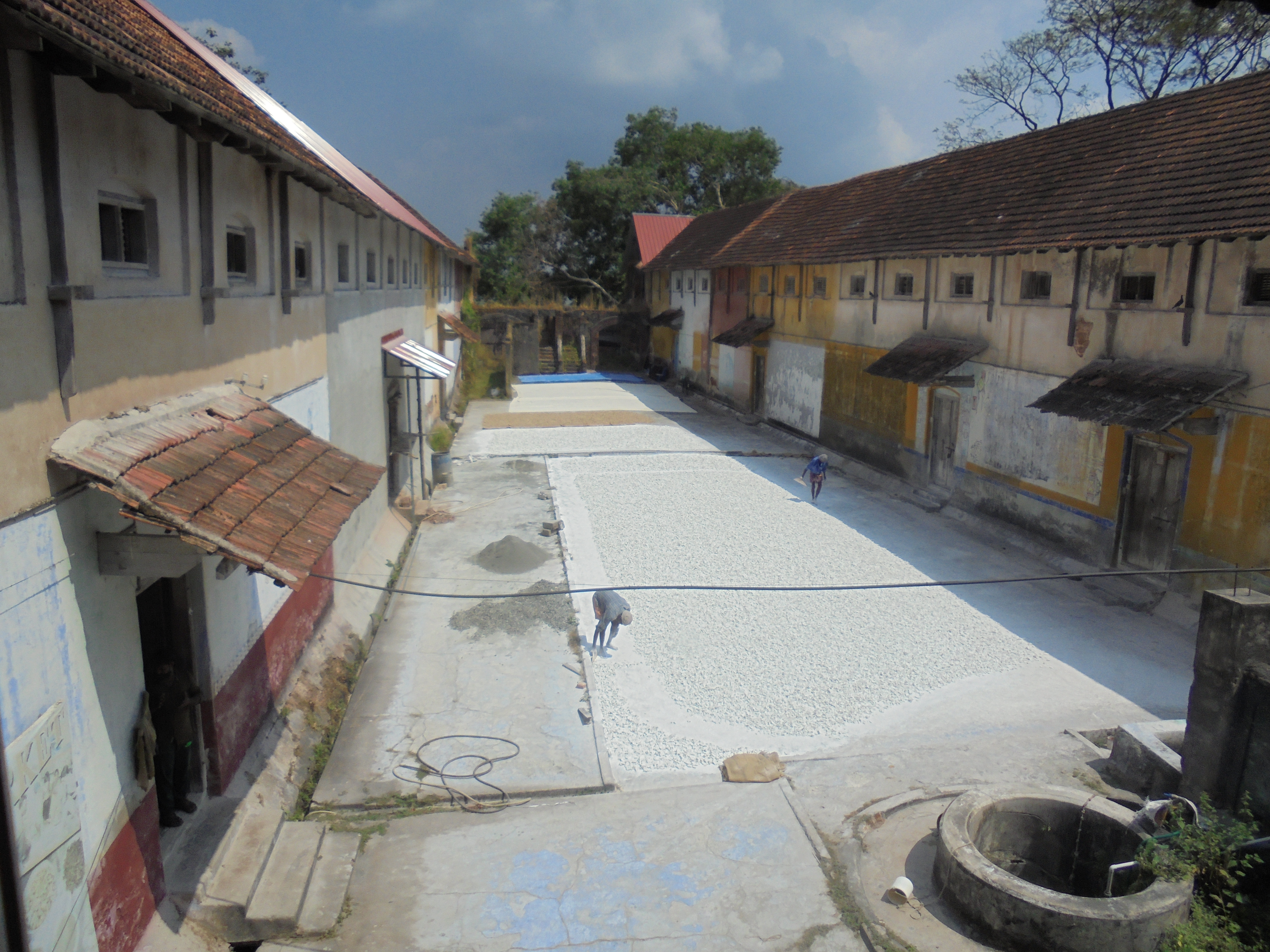
We watched as it was preserved using lime paste and calcium carbonate - an age-old process still in use today. The photo below shows the preserved ginger drying in the sun at the warehouse.
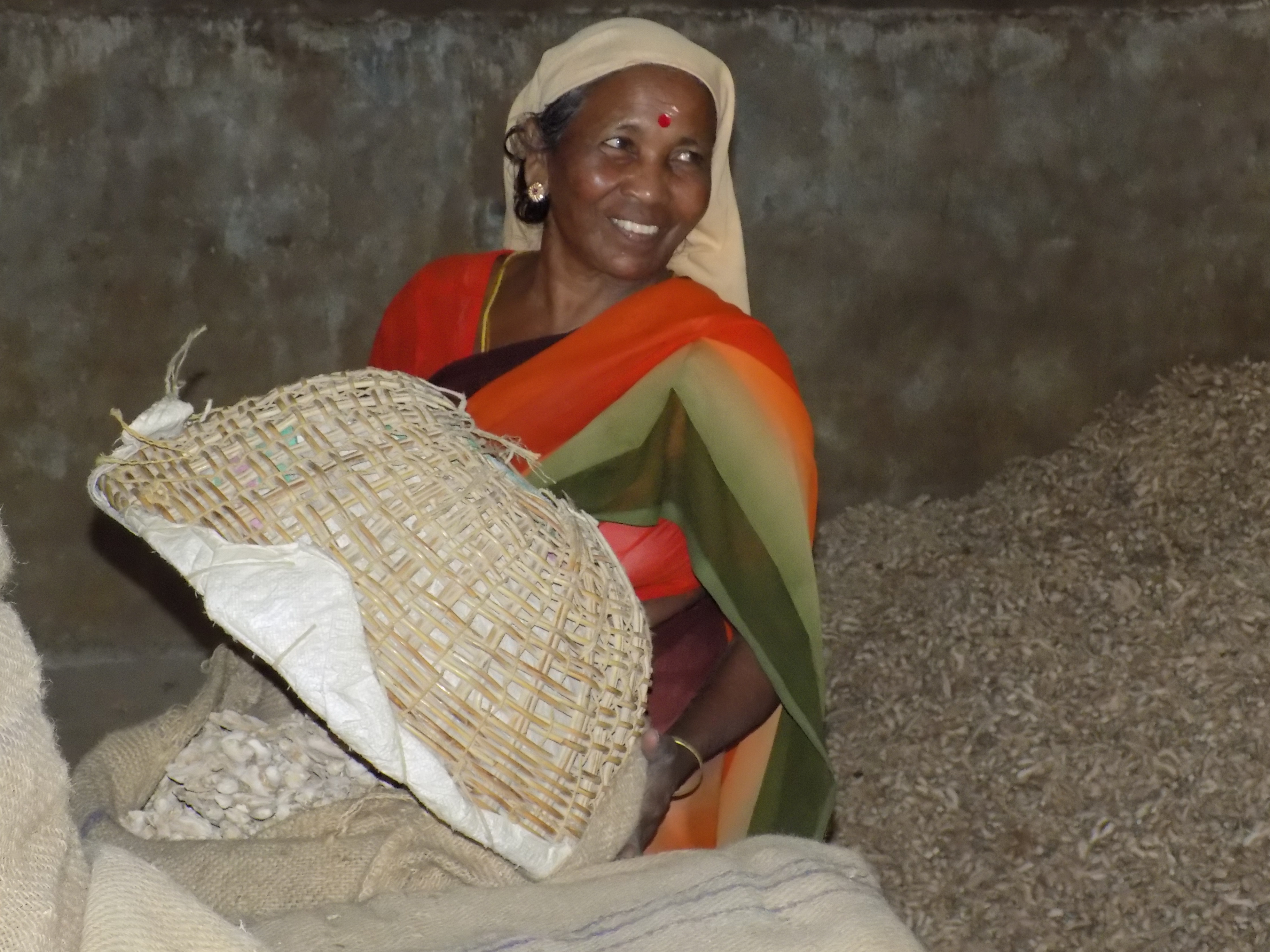
Upstairs, a women’s co-operative ran a small spice shop, filled with the rich, warm scent of Kerala’s most famous exports. We bought a few things, promising ourselves we’d return at the end of our trip.
The Reality of “Air-Conditioning Stops”
Of course, no day with a driver would be complete without what Joseph cheerfully called “air-conditioning stops”.
These were visits to shops selling everything from saris to jewellery to carved wooden furniture.
We weren’t interested in buying, but we went along with it. These stops, we learned, earned Joseph petrol coupons - part of the informal economy that supports many local drivers.
It was just part of the experience.
Mattancherry Palace
One of the highlights of the day was a visit to Mattancherry Palace.
Built by the Portuguese in the 16th century and later renovated by the Dutch, it’s a relatively modest building from the outside. But inside, the walls are covered in beautifully preserved Hindu murals.
Photography isn’t allowed, which somehow makes the experience feel even more special - something to be seen and remembered, rather than captured.
Jew Town and the Pardesi Synagogue
From there, we headed to Jew Town, an area rich in history.
Once home to a thriving Jewish community, today only a handful of elderly residents remain. The Pardesi Synagogue, dating back to 1568, stands as a quiet reminder of that past.
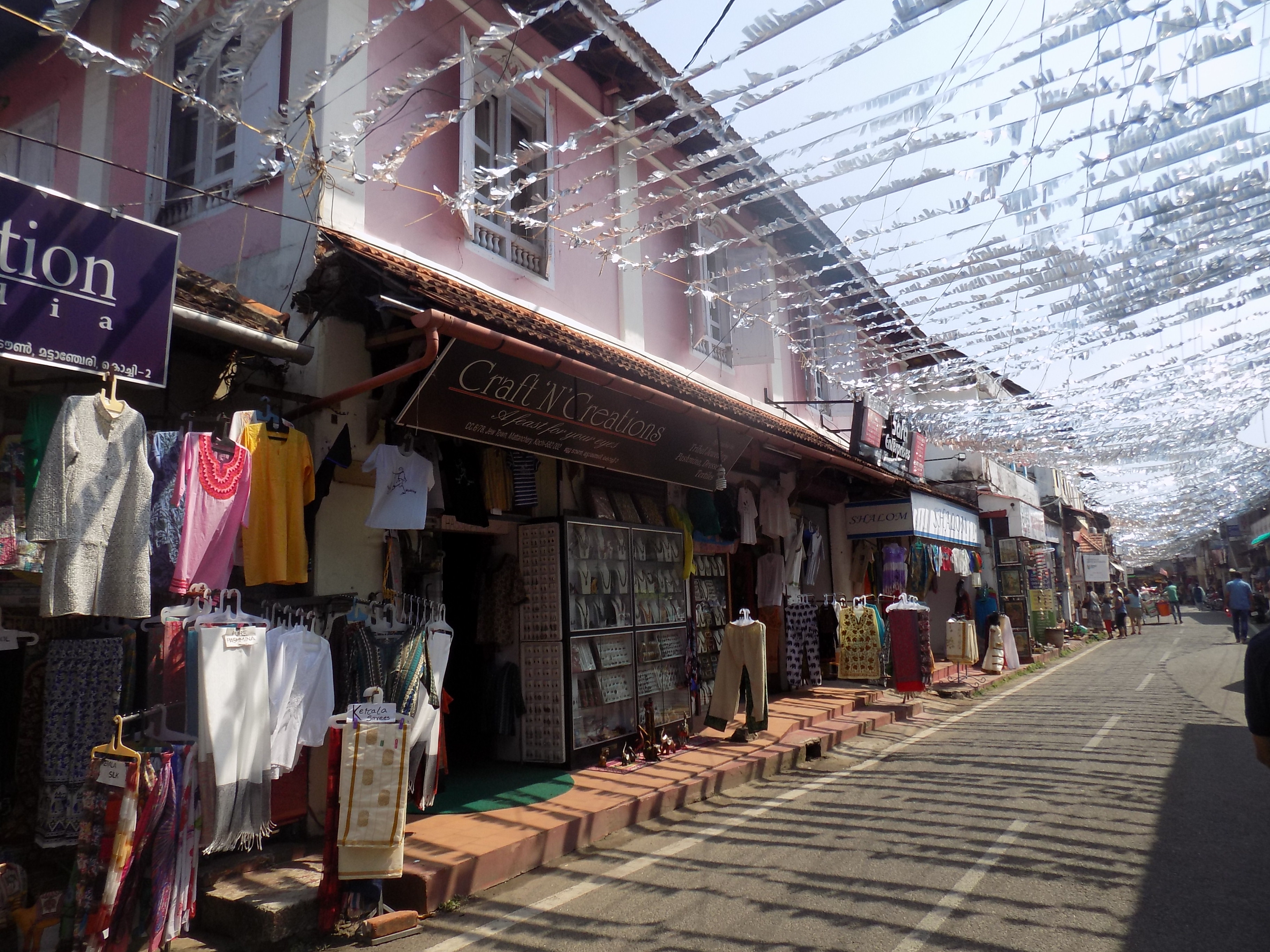
The surrounding streets are full of character - lined with shops selling antiques, textiles, oils, and spices. Some feel authentic, others more geared toward tourists, but all of it adds to the atmosphere.
It’s a place that invites you to wander slowly.
Chinese Fishing Nets and the Seafront
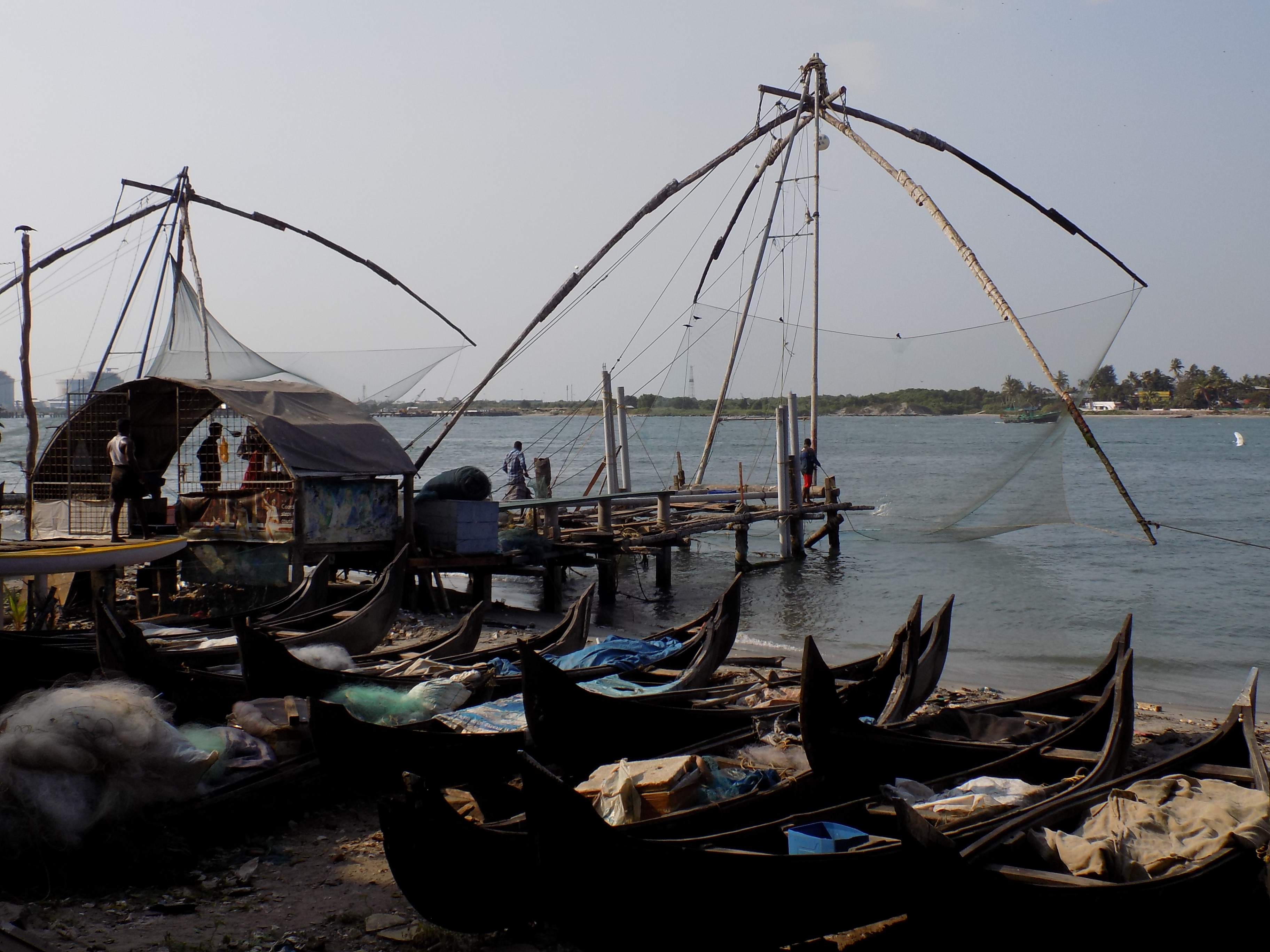
Joseph dropped us at the seafront so we could walk along and see Kochi’s famous Chinese fishing nets.

These iconic structures, believed to have been introduced by Chinese traders centuries ago, stretch out over the water like giant mechanical sculptures.
The experience was slightly marred by litter along parts of the shoreline - a reminder that even the most beautiful places face modern challenges.
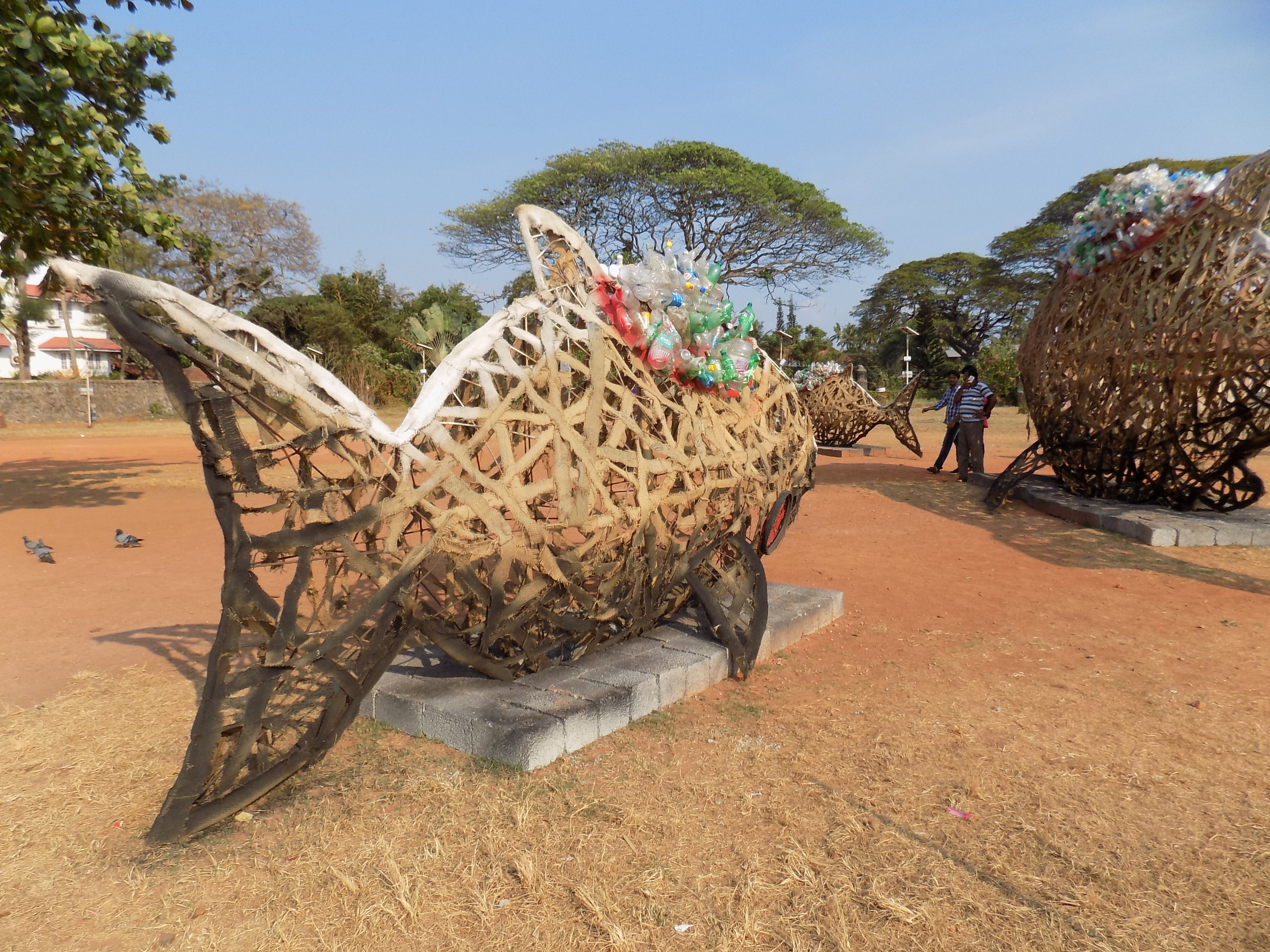
And yet, at the end of the promenade, we came across something unexpected: a powerful art installation known as The Fish Cemetery, highlighting the impact of plastic waste in the ocean.
It was thought-provoking and strangely fitting.
Kashi Art Café
We ended our day at the Kashi Art Café, a relaxed, creative space filled with artwork by local artists.
After the heat and the activity of the day, it was the perfect place to pause, reflect, and simply soak it all in.
Experiencing Kathakali in Fort Kochi
No visit to Kochi would be complete without seeing a Kathakali performance.

This traditional art form combines storytelling, music, dance, and elaborate costumes.
Before the performance, we spent an hour watching the performers apply their intricate makeup - layer upon layer, transforming themselves into the characters they would portray.
Some did their own makeup, while the lead performer lay still as another carefully painted his face.
There is no dialogue in Kathakali. Instead, the story is told through:
facial expressions
precise hand gestures (mudras)
rhythmic drumming
The performance we saw was an abridged version of a much longer traditional story, but even in its shorter form, it was captivating.
Thanks to a detailed introduction beforehand, we were able to follow the narrative and appreciate the skill involved.
It was unlike anything we had experienced before.

Final Thoughts: Why Kochi is the Perfect Introduction to India
Looking back, Kochi was exactly what everyone had promised.
It was welcoming, fascinating, and just gently different enough to ease us into India without overwhelming us.
There were moments of confusion, of course. Small misunderstandings. Unexpected detours.
But there were also kindnesses, conversations, and connections - like Joseph - that shaped our experience far more than any checklist of sights ever could.
And perhaps that’s the real answer to the question:
What are the best things to do in Kochi?
It’s not just about what you see.
It’s about how the place makes you feel.
Watch this video for more ideas on what to do in Kochi
If you’d like a simple, clear way to plan your route through Kochi, the backwaters and the beaches, you’ll find everything in my Kerala travel planning guide.
If you’re travelling soon, please use these links!
Are you travelling soon? Use these links when making your bookings. These are the companies we use. It won’t cost you any extra, but we will earn a few pennies to help keep Happy Days Travel Blog going. Thank you!!
Make sure you take out travel insurance. If you are a digital nomad or long-term traveller, try the specialist provider SafetyWing. (Never leave home without protecting yourself, your trip and your belongings!)
Book your flight with Skyscanner
Book your accommodation with Booking.com
Book a tour with Tour Radar
Book city tours and activities with Viator or Get Your Guide
Check out our Resource Page for more companies we recommend.
Disclosure: This post contains affiliate links. If you click through for more information, or to make a purchase, it may result in a small commission coming my way. Please note that there is no extra cost to you associated with this. Thank you so much for supporting my site.
