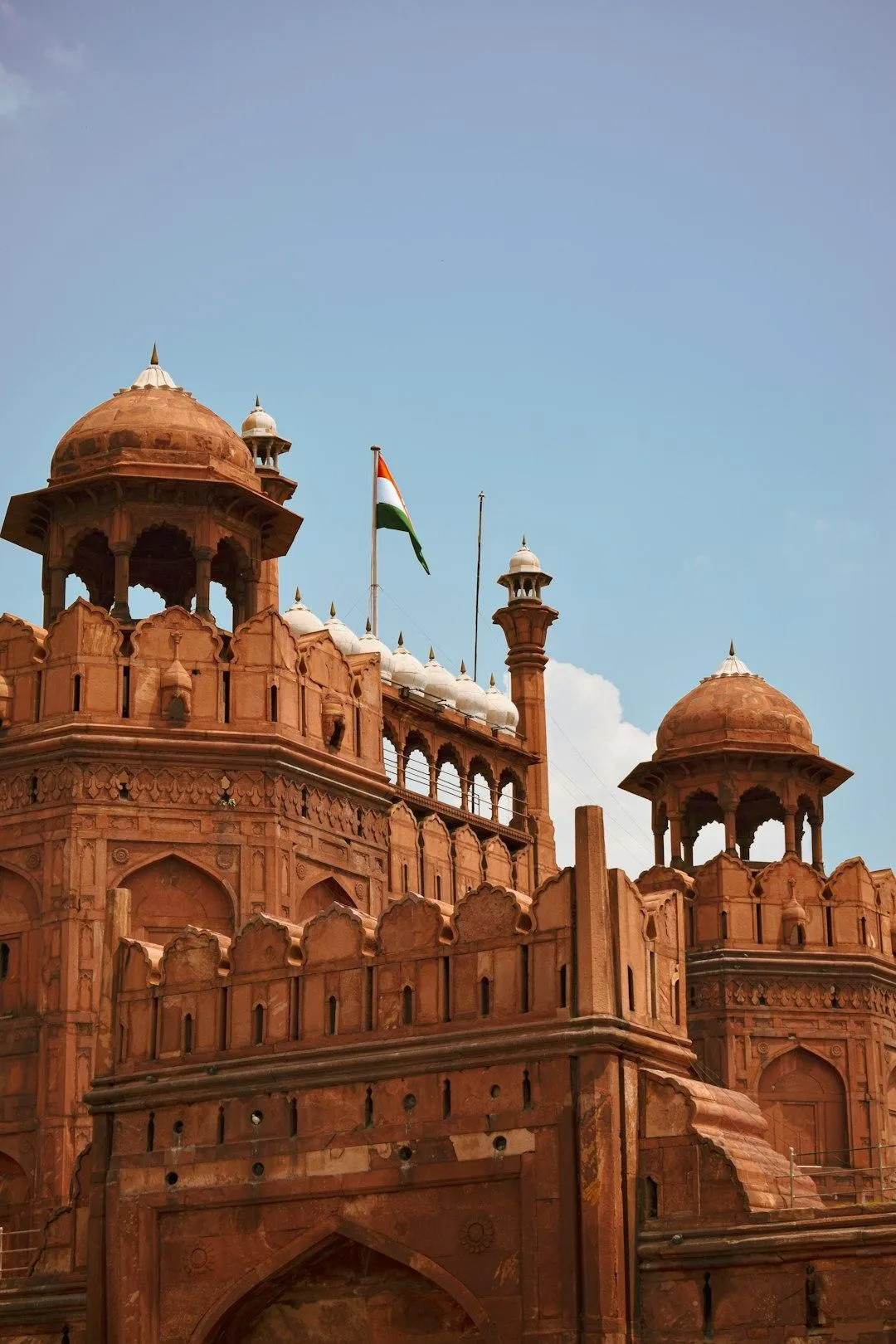
Visiting the Red Fort in Delhi: Is It Worth It?
The first thing I remember about visiting Delhi's Red Fort is not the fort itself.
It was the journey there.
My auto-rickshaw driver seemed to view Delhi's traffic as little more than a friendly suggestion. We darted between cars, squeezed through impossibly small gaps, and somehow emerged unscathed at the entrance to one of India's most famous landmarks.
By the time I climbed out of the auto, I felt as though I had already completed one adventure before my visit had even begun.
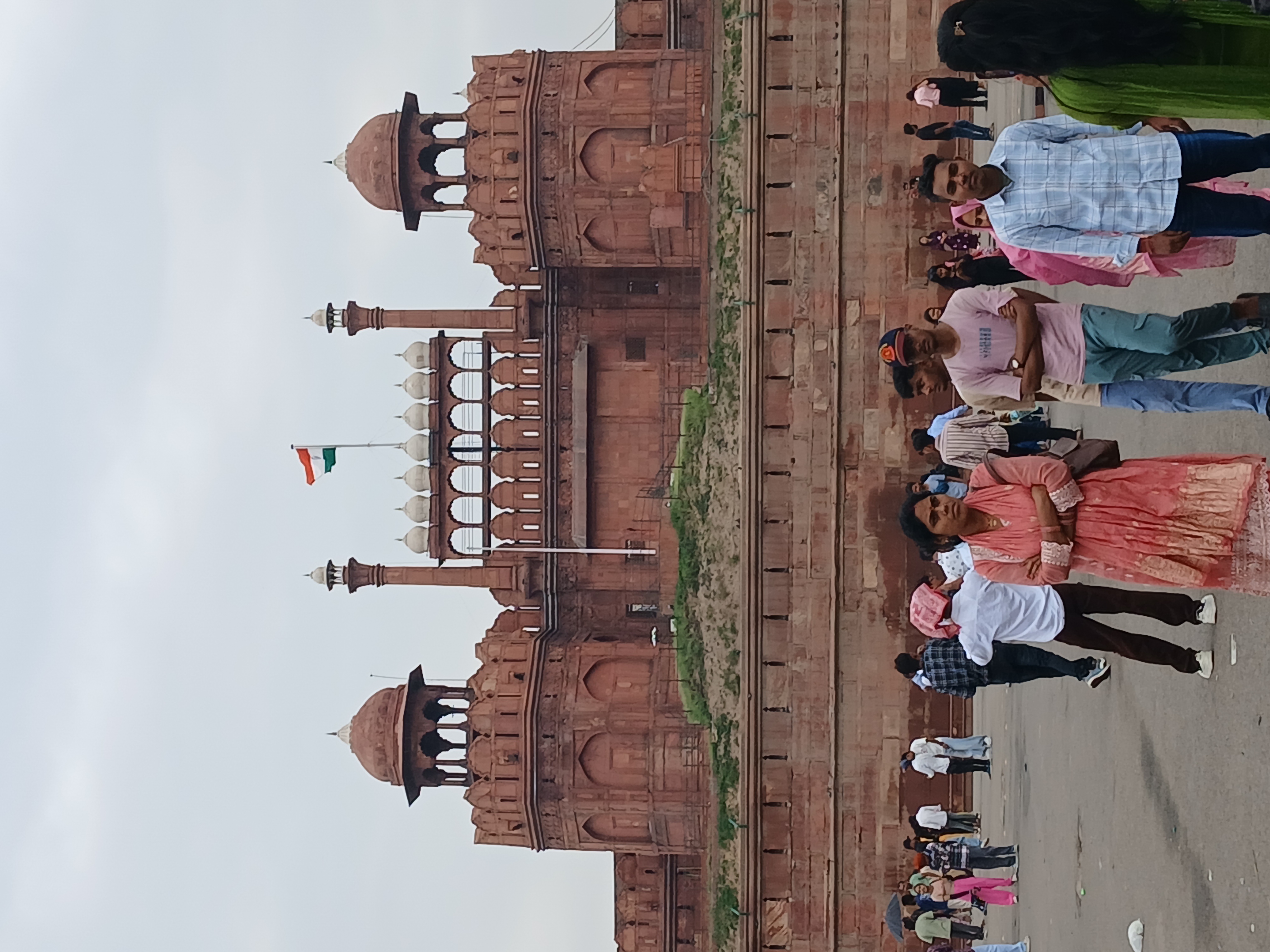
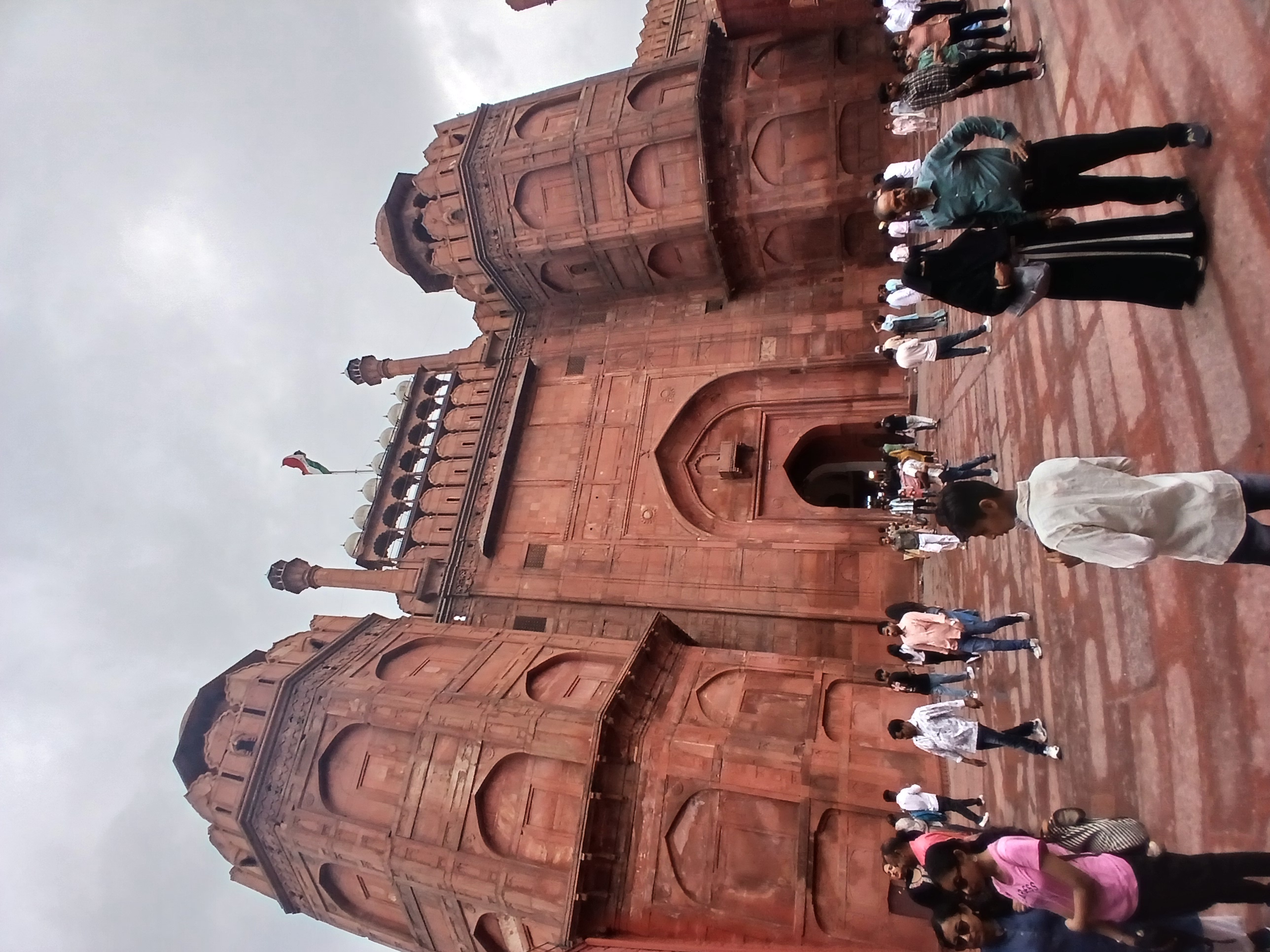
It was raining lightly when I arrived, which somehow suited the occasion. The red sandstone walls loomed through the grey skies, while visitors hurried towards the entrance carrying umbrellas and dodging puddles.
Outside the fort, the atmosphere was busy and chaotic. Security checks, souvenir sellers, guides offering their services, and crowds of visitors all competed for attention.
Then I stepped inside.
Almost immediately, everything felt calmer.
The noise of modern Delhi faded into the background, replaced by wide open spaces, gardens, elegant Mughal buildings, and nearly four hundred years of history.
The Red Fort turned out to be one of the highlights of my time in Delhi.
To jump to a particular part of this article, please use these links:
What I Loved About Visiting the Red Fort
Things to Know Before You Visit
What Is the Red Fort?
The Red Fort, or Lal Qila as it is known locally, was commissioned by Mughal emperor Shah Jahan in 1639.
If the name sounds familiar, it should.
Shah Jahan was also responsible for building the Taj Mahal.
When the emperor decided to move his capital from Agra to Delhi, he ordered the construction of a magnificent new fortified palace complex that would showcase the wealth and power of the Mughal Empire.
The result was the Red Fort.
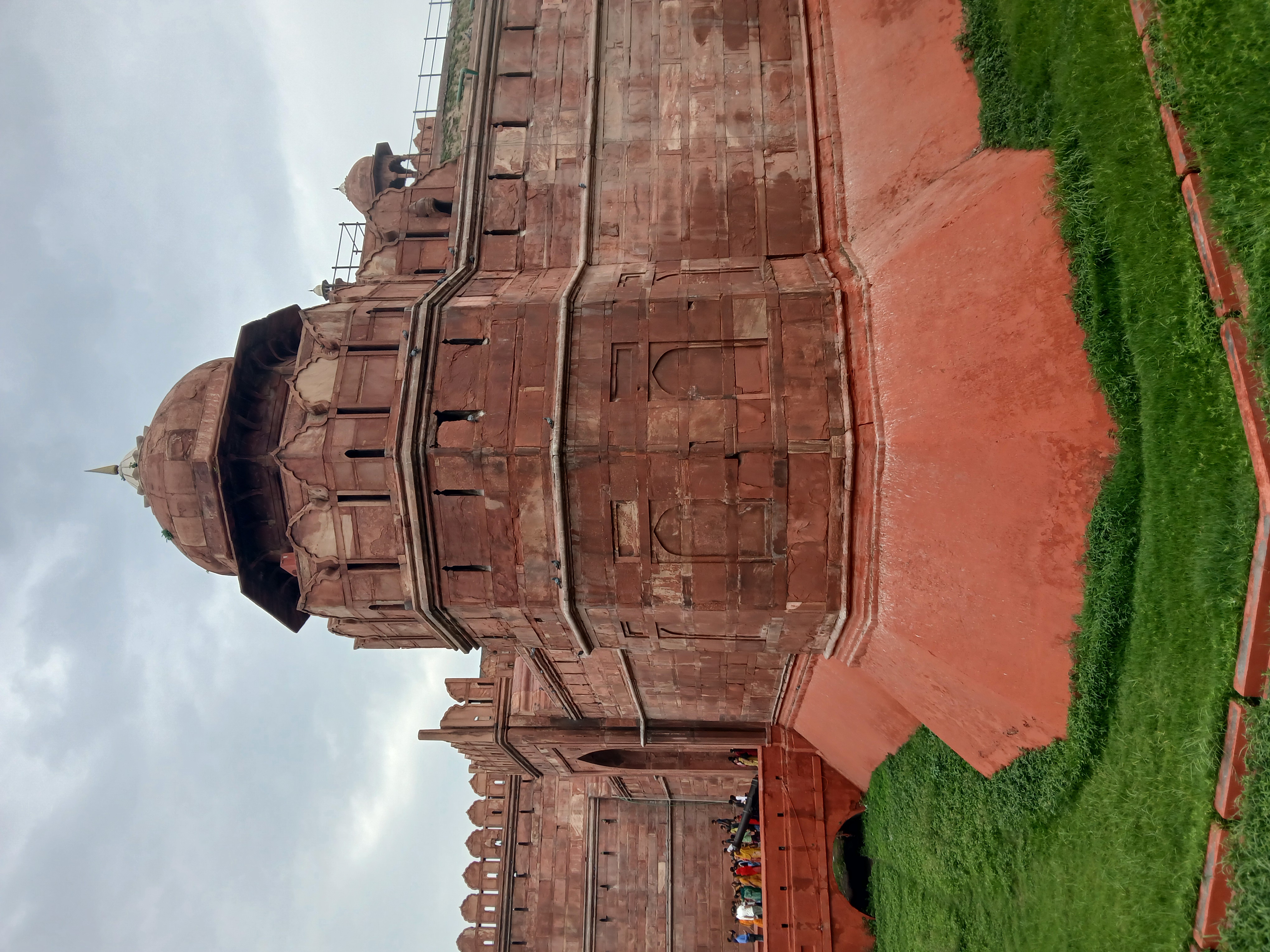
Completed in 1648, the vast complex became the centre of Mughal rule for nearly two centuries. Behind its imposing sandstone walls stood royal palaces, audience halls, gardens, mosques, and administrative buildings designed for one of the wealthiest empires in the world.
At its height, the fort was said to contain extraordinary treasures, including the famous Peacock Throne.
Sadly, much of that splendour was lost over the centuries.
The Persian ruler Nadir Shah looted the fort in 1739, carrying away enormous wealth, including the Peacock Throne itself. Later, after the Indian Rebellion of 1857, the British demolished many of the original palace buildings and converted parts of the site for military use.
Even so, enough survives today to give visitors a sense of the fort's former grandeur.
In recognition of its importance, the Red Fort was designated a UNESCO World Heritage Site in 2007.
It also remains a powerful symbol of modern India.
Every year on Independence Day, India's Prime Minister raises the national flag from the fort and addresses the nation.
For many Indians, the Red Fort represents far more than a historical monument.
It is a symbol of the country's identity and independence.
Enter Through Chhatta Chowk
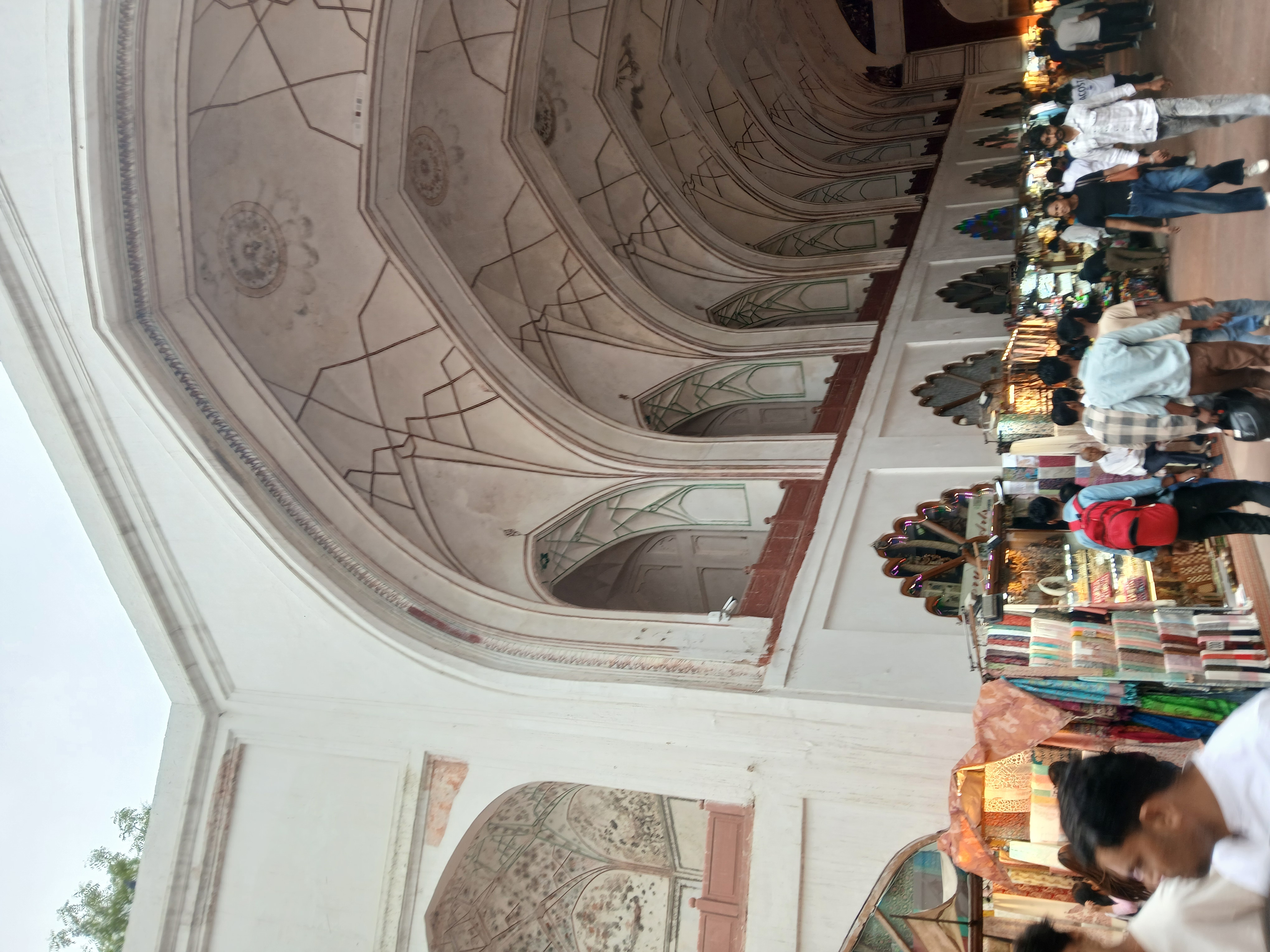
Every visit to the Red Fort begins at Chhatta Chowk.
This covered bazaar once served as the imperial shopping arcade for the Mughal court. Merchants sold luxury goods, including silks, jewellery, carpets, precious stones, and finely crafted objects to members of the royal household.
Today, the market still functions as a shopping area, although the merchandise is aimed more at modern tourists than Mughal nobility.
You will find souvenirs, handicrafts, textiles, jewellery, and plenty of opportunities to browse.
Even if shopping is not your main objective, it is worth taking a moment to imagine what this space must once have looked like.
The vaulted ceilings and long arcade create a dramatic entrance and provide an intriguing glimpse into daily life at the Mughal court.
More importantly, it helps build anticipation.
As you walk through the market, the fort gradually begins to reveal itself.
Explore the Palace Complex
Emerging from Chhatta Chowk, the scale of the Red Fort becomes immediately apparent.
This is not simply a fort.
It is an entire city within walls.
Wide pathways lead through the complex, connecting audience halls, gardens, museums, and royal residences spread across a surprisingly large area.
Allow yourself plenty of time.
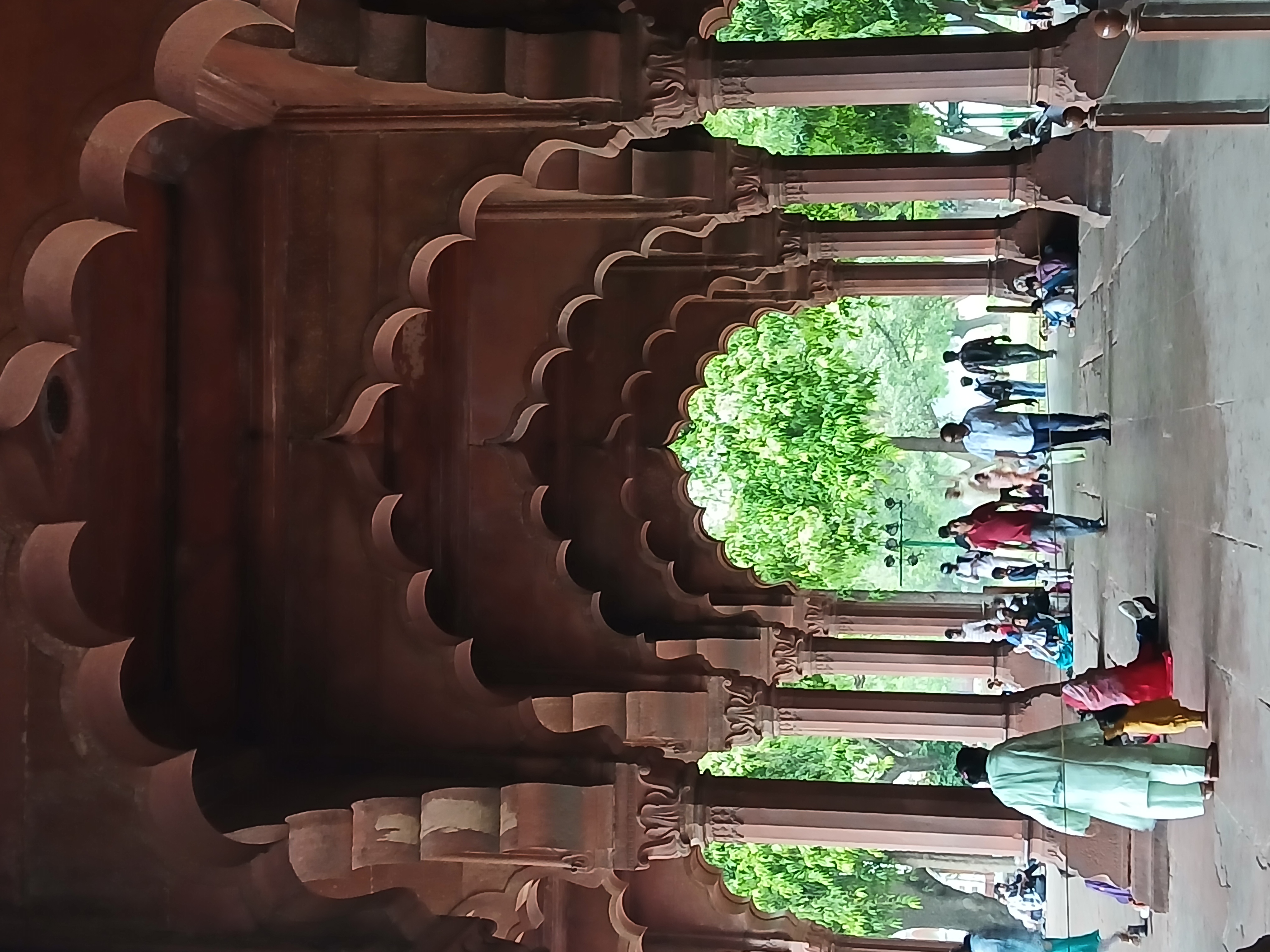
One of the first major buildings you encounter is the Diwan-i-Am, or Hall of Public Audience.
This impressive structure was where Shah Jahan listened to petitions and grievances from his subjects. Standing beneath its elegant arches, it is easy to imagine the emperor seated on his throne while officials and petitioners gathered before him.
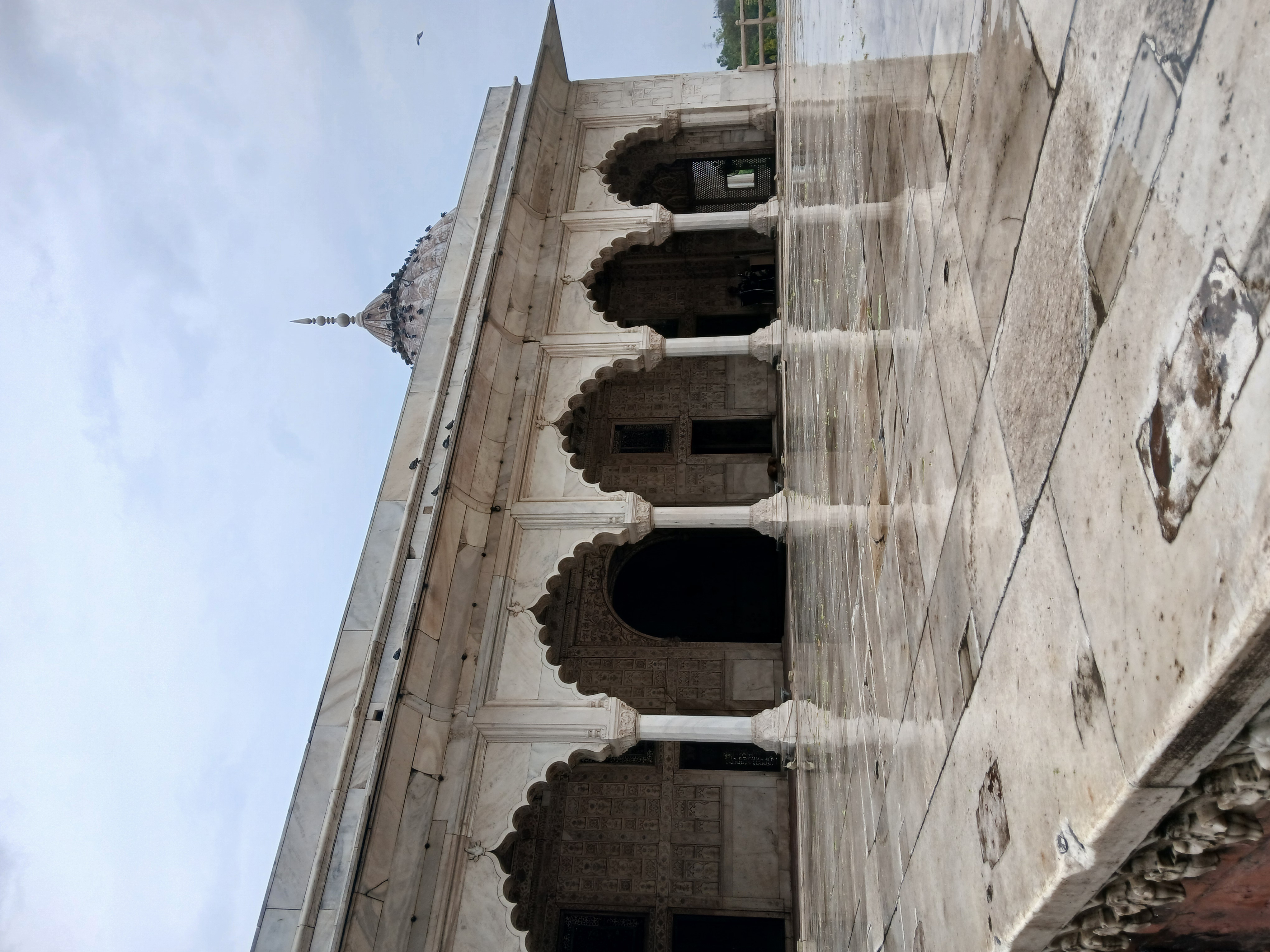
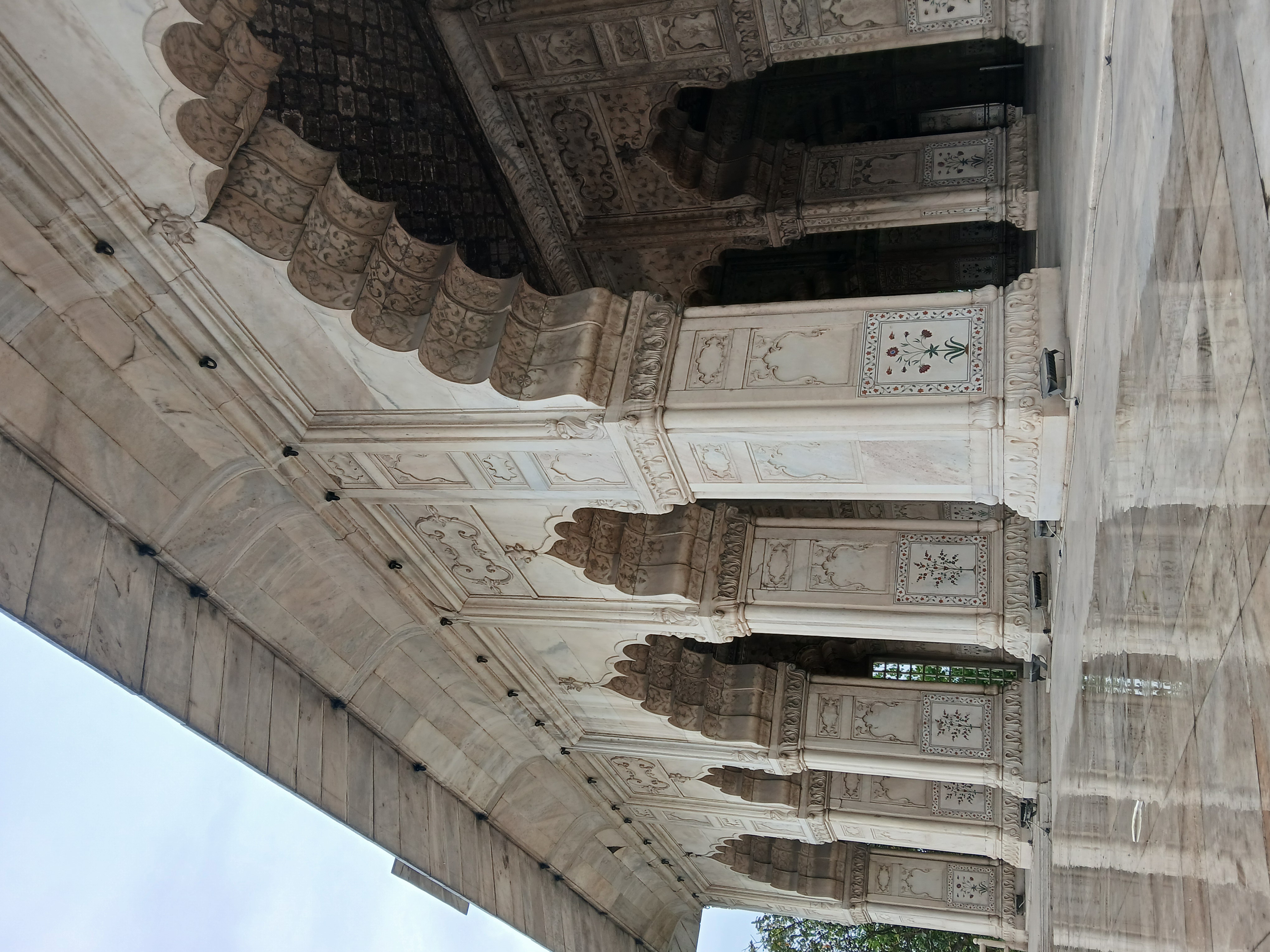
The marble work throughout the fort is particularly beautiful.

Although many original decorations were removed or destroyed, intricate carvings and delicate details remain, offering glimpses of the extraordinary craftsmanship that once characterised the Mughal court.
As I wandered through the complex, what struck me most was the contrast between the fort's immense scale and the peaceful atmosphere inside.
Outside the walls, Delhi felt loud, busy, and relentless.
Inside, visitors wandered quietly between historic buildings while birds moved through the gardens.
It was surprisingly easy to forget that one of India's busiest cities existed just beyond the fortifications.
Visit the Museums
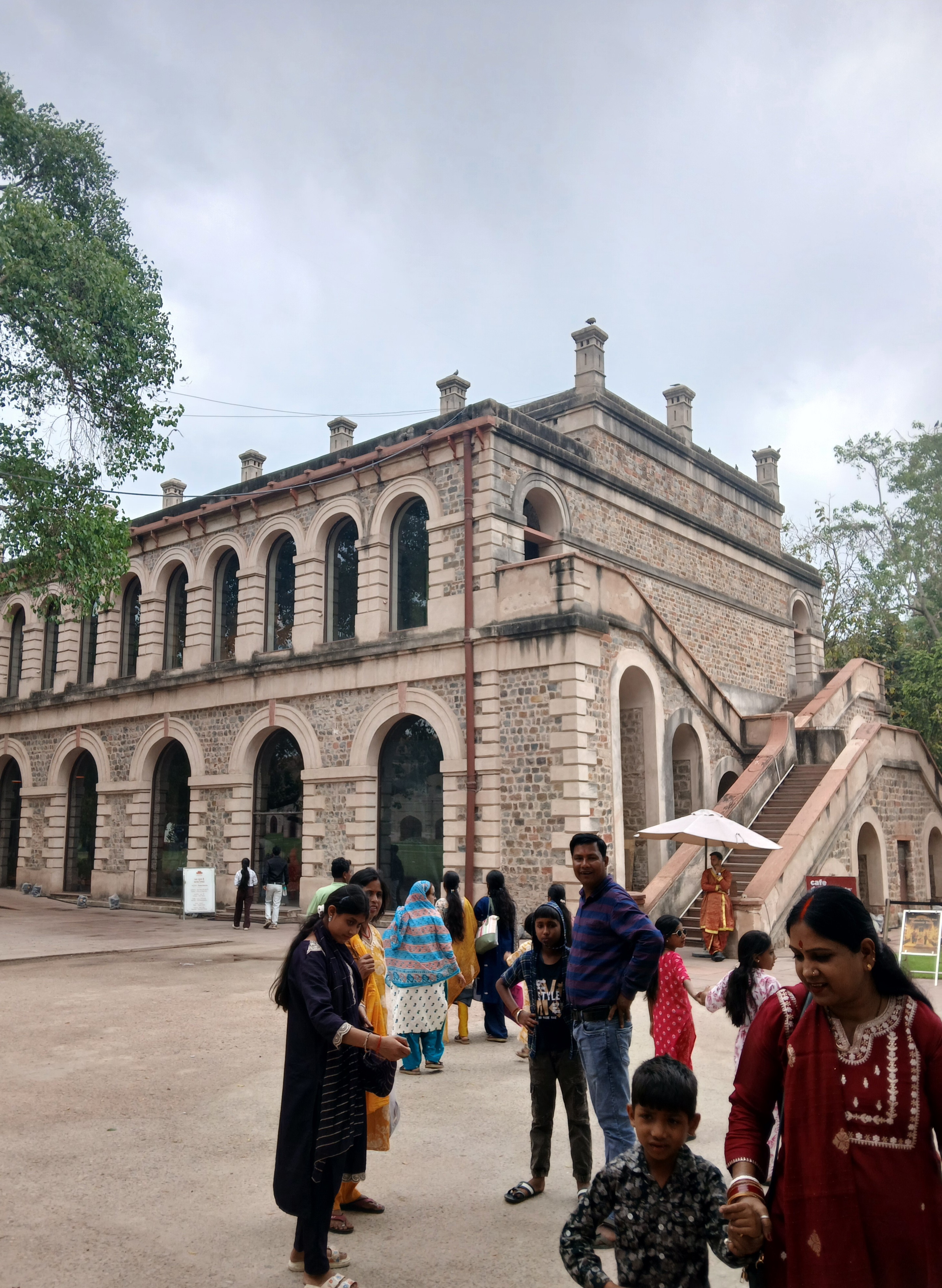
One aspect of the Red Fort that many visitors overlook is its collection of museums.
Several museum galleries are housed within the complex, covering different aspects of India's history and military heritage.
I found these particularly interesting because they added context to everything I had been seeing elsewhere in Delhi.
Rather than focusing solely on the Mughal period, the museums help tell the broader story of India's past, including the struggle for independence and the role the fort has played throughout the centuries.
If you enjoy understanding the historical significance of a place rather than simply admiring the architecture, it is well worth setting aside time to explore them.
Many visitors rush through the museums on their way to the more famous buildings.
I would recommend doing the opposite.
They help transform the Red Fort from a beautiful collection of historic structures into a place that feels connected to the story of modern India.
The History of the Red Fort
As impressive as the Red Fort is today, what survives is only a fraction of what once stood here.
When Shah Jahan completed the fort in 1648, it represented the height of Mughal power and wealth. Behind the walls lay lavish palaces, magnificent gardens, flowing water channels, private apartments, audience halls, and treasures beyond imagination.
For nearly two centuries, the Red Fort served as the centre of Mughal rule.
Then came a series of events that changed everything.
In 1739, the Persian ruler Nadir Shah invaded Delhi and looted the city. The Red Fort was stripped of many of its greatest treasures, including the famous Peacock Throne, one of the most extravagant royal thrones ever created.
The Mughal Empire never fully recovered.
Over the following decades, power gradually declined until the British East India Company became the dominant force in much of India.
The fort's next major chapter came during the Indian Rebellion of 1857.
After suppressing the uprising, the British took control of the Red Fort and transformed much of it into a military base. Many original palace buildings were demolished to make way for barracks and military facilities.
As a result, historians estimate that a significant proportion of the original Mughal complex was lost.
While walking around the site, I found myself wondering what the fort must have looked like before those changes.
Even in its reduced form, it remains impressive.
At its peak, it must have been extraordinary.
Today, however, the Red Fort's significance extends far beyond the Mughal Empire.
Every year on 15 August, India's Independence Day, the Prime Minister raises the national flag from the fort and delivers a speech to the nation.
That tradition has taken place since India's independence in 1947 and continues to reinforce the fort's role as a symbol of modern India.
What I Loved About Visiting the Red Fort
The obvious answer would be the history.
And yes, the history is fascinating.
But what surprised me most was the atmosphere.
Given how busy Delhi can be, I expected the Red Fort to feel crowded and hectic. Instead, I found large areas where it was possible to wander at a relaxed pace and simply absorb the surroundings.
I loved the sense of space.
The wide walkways, gardens, and open courtyards provide plenty of opportunities to pause and appreciate the architecture without feeling rushed.
I also enjoyed the contrast between the city outside and the calm within the walls.
One moment you are surrounded by traffic, noise, and the intensity of Old Delhi. A few minutes later, you are strolling through a UNESCO World Heritage Site listening to birdsong.
That contrast became one of my favourite things about Delhi as a whole.
The Red Fort captures it perfectly.
I also appreciated how much context the museums added to the experience. The architecture is impressive in its own right, but understanding the fort's role in India's wider history made the visit far more meaningful.
Most of all, I enjoyed feeling connected to the story of Delhi itself.
The city has changed dramatically over the centuries, but the Red Fort remains one of the places where those layers of history are most visible.
Things to Know Before You Visit
If you are planning a visit to the Red Fort, here are a few practical tips based on my experience.
Allow Plenty of Time
The Red Fort is much larger than many visitors expect.
You could easily spend three or four hours here, particularly if you visit the museums as well as the main palace complex.
If you enjoy history, architecture, or photography, you may want even longer.
Arrive Early
Delhi can become extremely hot later in the day, especially between March and June.
An earlier start means cooler temperatures, smaller crowds, and better conditions for exploring the large open areas within the fort.
Expect Security Checks
Security is taken seriously at the Red Fort.
You will need to pass through airport-style security screening before entering the site.
The process was straightforward during my visit, but it can create queues during busy periods.
Wear Comfortable Shoes
The complex covers a considerable area, and there is a lot of walking involved.
Comfortable footwear is definitely recommended.
Combine It with Old Delhi
The Red Fort works particularly well as part of a wider day exploring Old Delhi.
Jama Masjid, Chandni Chowk, Khari Baoli Spice Market, Fatehpuri Mosque, and Sheeshganj Gurudwara are all within easy reach and make excellent additions to the day.
Is the Red Fort Worth Visiting?
In my opinion, yes.
If you are interested in Indian history, the answer is an easy yes.
If you enjoy architecture, UNESCO World Heritage Sites, or understanding the story of a destination, the answer is also yes.
Would I say it is the most beautiful monument in Delhi?
Probably not.
For pure beauty, I think Humayun's Tomb has the edge.
Would I say it is the most important?
Possibly.
The Red Fort is one of those places that helps you understand Delhi.
Its story spans the Mughal Empire, colonial rule, independence, and modern India. Few places in the city connect those different eras so effectively.
It is also far more than a photogenic building.
The museums, historical significance, and symbolic importance all add depth to the experience.
For first-time visitors to Delhi, I would consider it an essential stop.
Final Thoughts
The Red Fort was one of the highlights of my time in Delhi.
I arrived expecting an impressive historical monument and left with a much deeper appreciation of both Delhi and India's history.
What I remember most is not any single building or exhibit.
It is the feeling of stepping through the gates and leaving modern Delhi behind for a few hours.
The traffic, noise, and chaos remained outside the walls.
Inside was a place where centuries of history still felt surprisingly close.
If you are planning a trip to Delhi, I would absolutely recommend making time for the Red Fort.
Just don't rush it.
Allow yourself time to wander, explore the museums, and appreciate the stories hidden behind those famous red sandstone walls.
If you’re travelling soon, please use these links!
Are you travelling soon? Use these links when making your bookings. These are the companies we use. It won’t cost you any extra, but we will earn a few pennies to help keep Happy Days Travel Blog going. Thank you!!
Make sure you take out travel insurance. If you are a digital nomad or long-term traveller, try the specialist provider SafetyWing. (Never leave home without protecting yourself, your trip and your belongings!)
Book your flight with Skyscanner
Book your accommodation with Booking.com
Book a tour with TourRadar
Book city tours and activities with Viator or GetYourGuide
Check out my Resource Page for more companies I recommend.
Disclosure: This post contains affiliate links. If you click through for more information, or to make a purchase, it may result in a small commission coming my way. Please note that there is no extra cost to you associated with this. Thank you so much for supporting my site.
