
Best Things to Do in Mumbai: A Slow Travel Guide to India’s Most Intense City
Mumbai is not gentle.
After two months in the relative calm of Goa, my arrival into this vast, heaving metropolis was something of a shock. The drive to Colaba took well over an hour. The traffic was relentless. The noise constant. The air thick with movement, urgency and life.
But Mumbai isn’t trying to be peaceful.
It is India’s financial powerhouse, its entertainment capital, and a city layered with colonial history, trade, migration, faith, ambition and resilience. Formerly known as Bombay, it was originally a cluster of seven islands inhabited by Koli fishing communities. The Portuguese arrived in the 16th century, followed by the British, who developed it into one of the most important ports in the British Empire.
Today, Mumbai is where heritage architecture stands beside glass skyscrapers, where dhobis wash 200,000 items a day in open-air stone basins, and where the Arabian Sea laps against monuments that witnessed the end of the British Raj.
If you’re planning a visit, here are the best things to do in Mumbai — blending iconic landmarks with the lived experiences that make this city unforgettable.
Visit the Gateway of India

No visit to Mumbai is complete without standing beneath the Gateway of India.
Completed in 1924, this grand basalt arch was built to commemorate the landing of King George V and Queen Mary in 1911. Ironically, it later became the symbolic departure point of the last British troops in 1948, marking the end of colonial rule.
Today it’s one of Mumbai’s most photographed landmarks — and a gathering place for tourists, photographers, street vendors and (apparently!) persistent ear-cleaning entrepreneurs. Within minutes of arriving, I was approached three times with offers of an impromptu ear service. I declined. Firmly. 😂
Come early if you want space to breathe — especially if you're there over Republic Day weekend like I was. Crowds are immense, and security is tight.
Admire the Taj Mahal Palace Hotel

Standing proudly opposite the Gateway is the magnificent Taj Mahal Palace, Mumbai.
Opened in 1903 during the British Raj and designed in the Indo-Saracenic style, it is said to be the second most photographed building in India after the Taj Mahal itself.
It was also one of the targets of the 2008 terrorist attacks. Security remains high, and stepping inside carries a certain gravity. The hotel preserves elements of that history, but it also radiates resilience.
Inside, we wandered past the “hall of fame” — photographs of notable guests including Barack and Michelle Obama, William and Kate, John Lennon and Yoko Ono… and, somewhat unexpectedly, Pierce Brosnan.
Even if you’re not staying here, step inside for a few minutes. It’s part of Mumbai’s story.
Explore Colaba & the Fort District

Colaba was my base — a short walk from the Gateway and packed with life.
Highlights include:
Leopold Cafe (est. 1871), one of Mumbai’s famous Irani cafés
Cafe Mondegar, known for its Mario Miranda murals and Mumbai’s first jukebox
Regal Cinema, a traditional old cinema, is a great venue for watching a Bollywood movie
Leopold Café was also targeted in 2008 and has preserved visible marks as memorials. Despite queues around the block, solo travel has its advantages — I was seated quickly. Lemon tandoori chicken? Excellent. Coffee machine? Broken.
Colaba flows into the Fort district, known for Gothic Revival architecture and grand colonial buildings. This area feels like a living museum of British Bombay.
Visit St. Thomas’ Cathedral

Tucked away in the Fort district is St. Thomas Cathedral, Mumbai — the oldest Anglican church in Mumbai and one of the city’s most historically significant buildings.
Completed in 1718, this serene, pale interior feels a world away from the honking traffic outside. The cathedral marks what was once “Bombay’s Point Zero” — the exact centre of colonial Mumbai. From here, 16 milestone markers once radiated northwards, measuring distances out of the city.
It’s also where Rudyard Kipling was baptised.
What struck me most was the unusual decorative ironwork on the pillars — something I don’t recall seeing in any other church. The walls are lined with memorial plaques commemorating soldiers and officials of the British Raj, offering a quiet but sobering glimpse into the city’s colonial past.
If Mumbai begins to feel overwhelming, this is a place to pause, cool down, and breathe.
Walk the Mumbai Heritage Route (By Day and by Night if Time Allows)

Mumbai’s Victorian and Art Deco ensemble is a UNESCO-listed heritage zone — and it’s spectacular.
Key sights include:
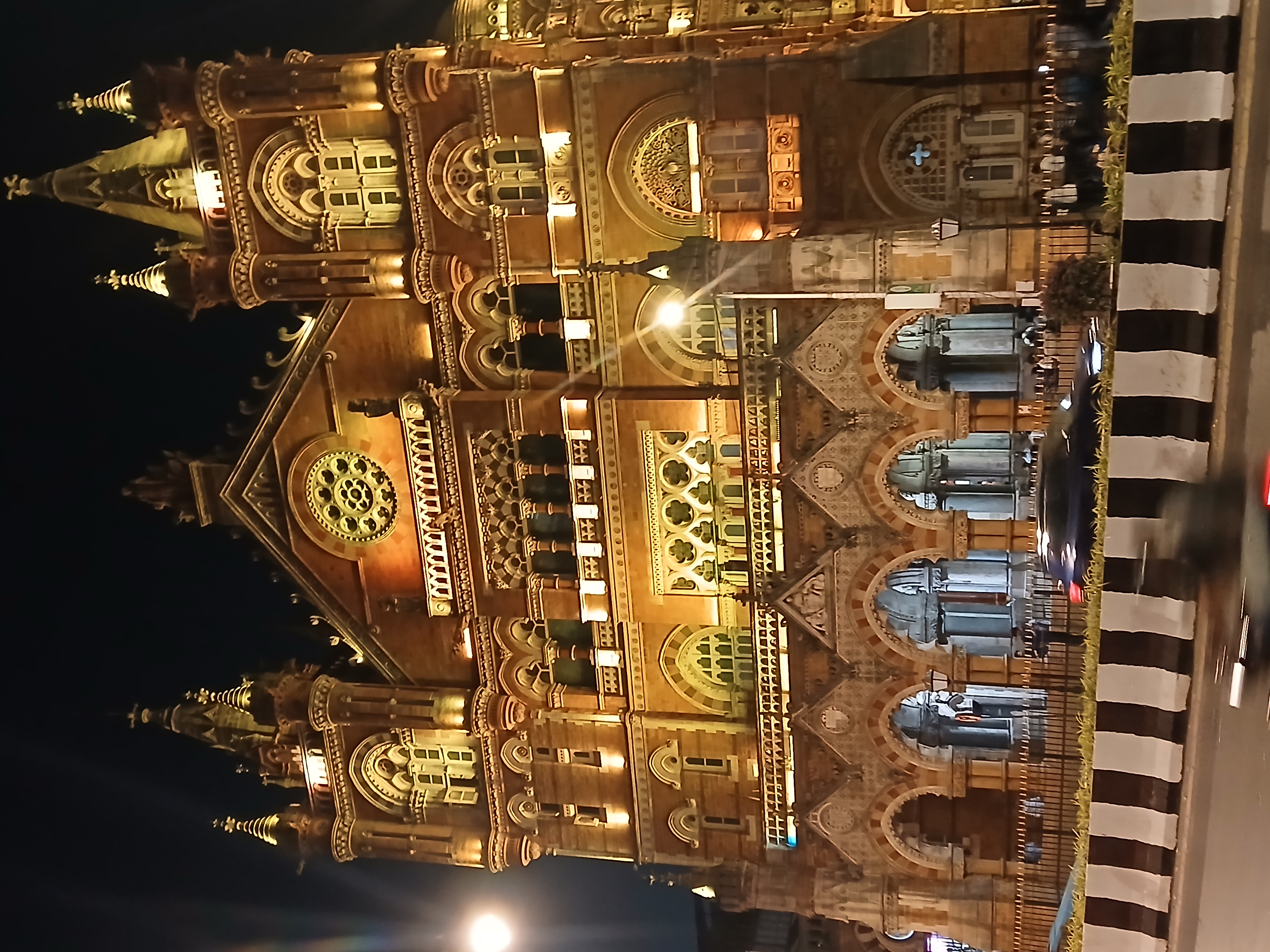
Chhatrapati Shivaji Terminus
Flora Fountain
University of Mumbai and its Rajabai Clock Tower
Asiatic Society of Mumbai
The Supreme Court
The National Mint
The General Post Office
Chhatrapati Shivaji Terminus is extraordinary — almost cathedral-like inside. The city has even built a “tourist podium” in the middle of the road so visitors can safely photograph it.
While we were there, a Sufi parade passed by — music drifting through traffic. That’s Mumbai in a sentence.
Take a Bollywood Studio Tour
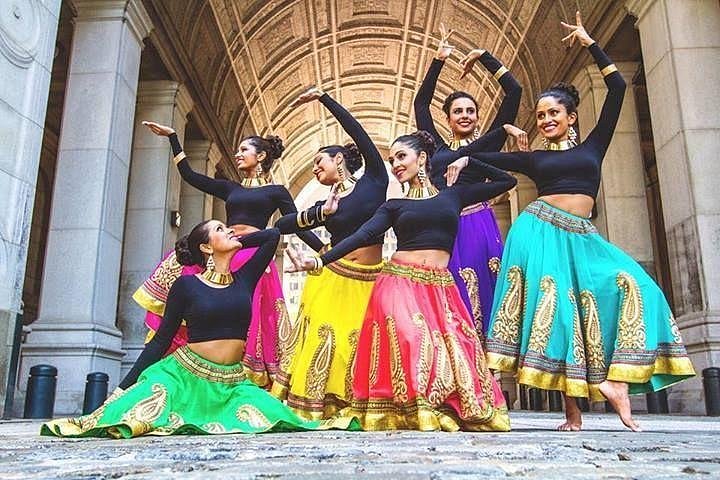
Mumbai is the heart of India’s film industry — often referred to as Bollywood — and for cinema lovers, a studio tour is one of the most popular things to do in the city.
While I didn’t take one myself (I was tempted by the idea of seeing a Bollywood film at Regal Cinema instead!), there are several organised tours that take visitors inside working studios, often in Goregaon’s Film City.
Depending on the tour, you might:
Visit live film or television sets
Watch a dance rehearsal
Learn how special effects are created
See costume departments and sound stages
Occasionally, even spot actors at work
Bollywood produces more films annually than Hollywood, and its influence on Indian culture is enormous. If you’re interested in cinema, music, choreography, or simply want a behind-the-scenes glimpse into India’s entertainment powerhouse, this experience is worth considering.
It’s also a great counterbalance to Mumbai’s colonial heritage sites — showing the city not as it was, but as it is now: ambitious, creative and globally influential.
Visit Dhobi Ghat

Near Mahalaxmi station lies Dhobi Ghat — the world’s largest open-air laundry.
Operating since 1890, thousands of dhobis manually wash clothes using concrete pens and flogging stones. Around 200,000 items are cleaned daily.
It’s astonishing — particularly when viewed against the backdrop of gleaming skyscrapers in Mumbai’s financial district.
Take an Early Morning Market Tour

Start at Sassoon Dock (built 1875), one of the oldest docks in Mumbai and still a major wholesale fish market.
From there:
Wholesale fruit & vegetable markets (brace for chilli fumes!)
Flower markets selling blooms by the kilo for garlands
The chaotic energy of legal vs illegal stalls
Markets are where Mumbai feels most alive — loud, pungent, industrious and completely unapologetic.
Consider a Responsible Slum Tour

Dharavi is one of Asia’s largest informal settlements and home to a vast recycling and small-scale manufacturing economy.
If you choose to visit, go with a local guide from the community. Responsible tours can provide insight into industry, resilience and daily life — but this is a complex topic. My visit to Dharavi affected me deeply. I wrote a separate post about it. You can read it here.
I’ve also written separately about the ethics of slum tourism. Find that article here.
Walk Marine Drive & Visit Mumbai Beach

For sea air and perspective, head to Marine Drive.
Known as the “Queen’s Necklace” when lit at night, this sweeping promenade curves along the Arabian Sea. Nearby Girgaum Chowpatty is one of the city’s most famous beaches — especially lively at sunset with families, street food vendors and festival celebrations.
Mumbai’s beaches aren’t tropical idylls like Goa — but they are social, energetic, and deeply woven into city life.
Take a Cookery Class
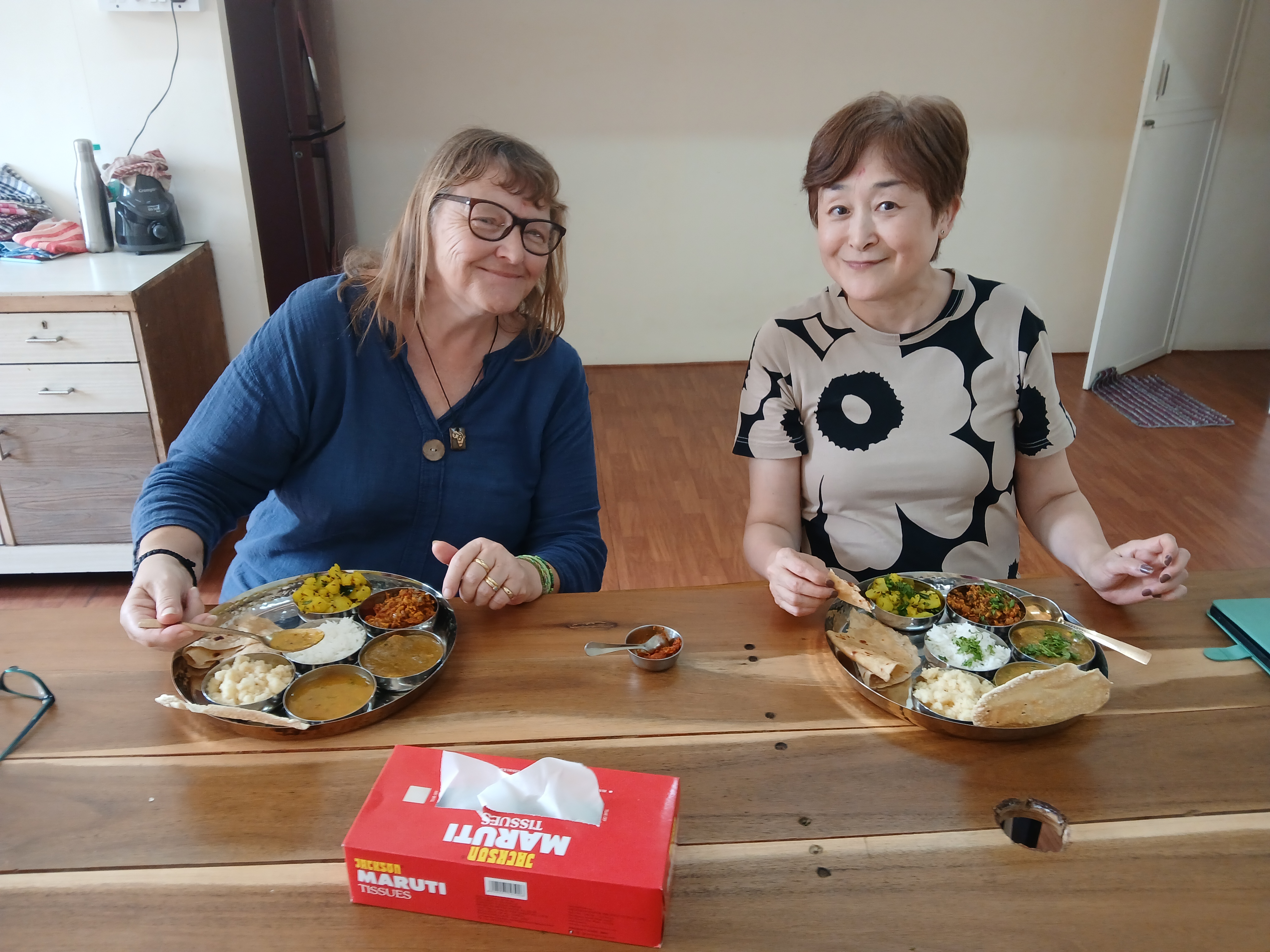
One of my favourite experiences.
In three hours we made:
Potato bhaji
Dal fry
Chicken keema
Chicken curry
Chapattis
It wasn’t revolutionary — but I picked up practical techniques I’ll use again. And eating food you’ve cooked yourself in India? Deeply satisfying.
Take a Ferry to Elephanta Island

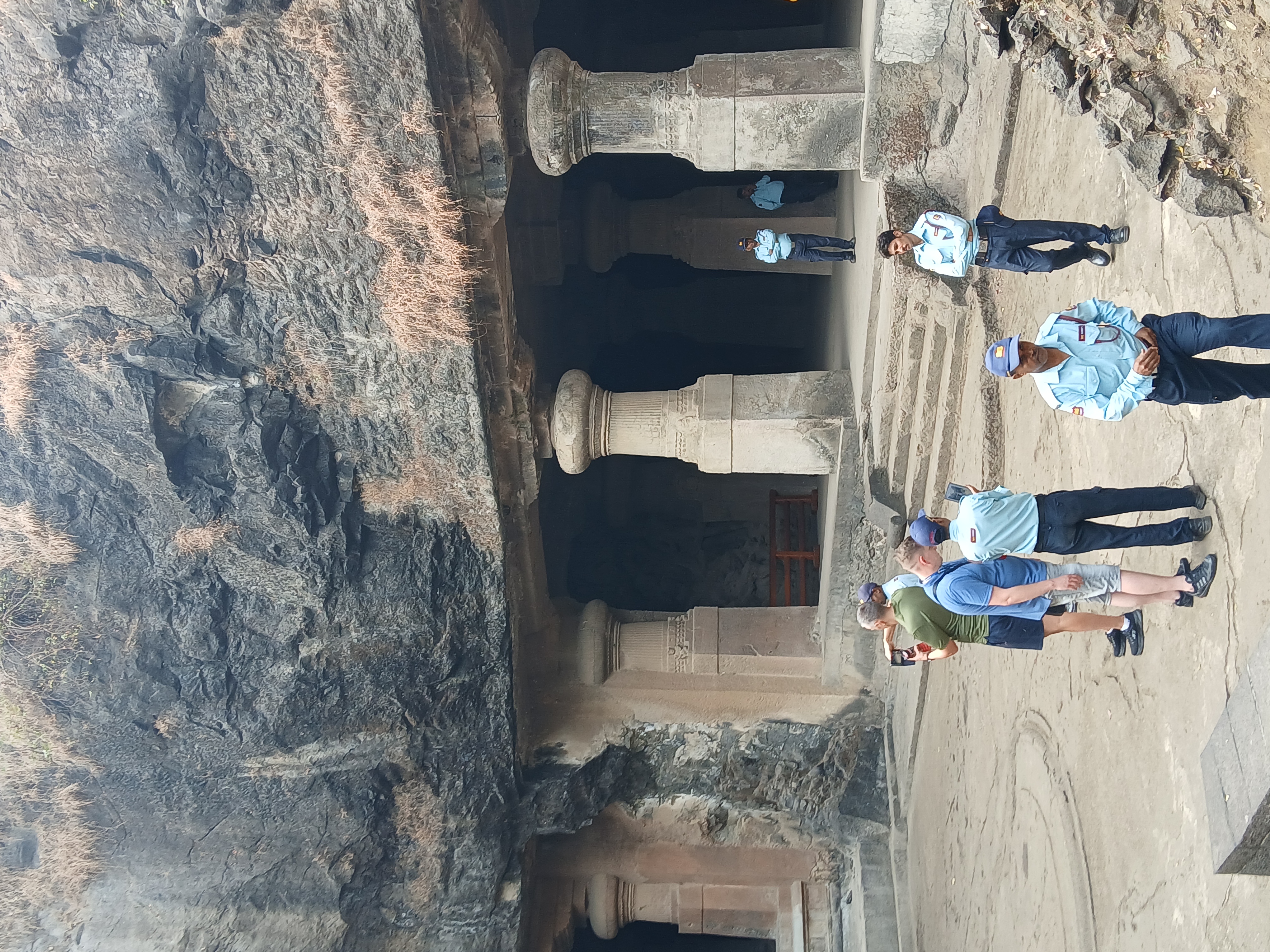
From the Gateway of India, ferries depart for Elephanta Island.
Originally called Gharapuri (“City of Caves”), the island was renamed by Portuguese explorers after they discovered a basalt elephant sculpture (now in Mumbai’s zoo gardens).
The caves date between the 5th and 9th centuries CE and are predominantly dedicated to Shiva. The 5.45-metre Trimurti (three-faced Shiva) is breathtaking.
There are 120 steps up to the caves, so make sure you have sensible footwear.
Important:
Ferries stop during the monsoon season.
The last return boat is around 6.30pm.
Monkeys are opportunistic. Guard your snacks.
Final Thoughts: Is Mumbai Worth Visiting?
Mumbai is intense. It is loud, crowded, contradictory and overwhelming.
But it is also layered, historic, creative and resilient.
If you approach it slowly — with guided walks, early mornings, thoughtful tours and time by the sea — it reveals itself in fascinating ways.
It may not be restful.
But it is unforgettable.
Watch this Video for More on the Best Things to do in Mumbai
If you’re travelling soon, please use these links!
Are you travelling soon? Use these links when making your bookings. These are the companies we use. It won’t cost you any extra, but we will earn a few pennies to help keep Happy Days Travel Blog going. Thank you!!
Make sure you take out travel insurance. If you are a digital nomad or long-term traveller, try the specialist provider SafetyWing. (Never leave home without protecting yourself, your trip and your belongings!)
Book your flight with Skyscanner
Book your accommodation with Booking.com
Book a tour with Tour Radar
Book city tours and activities with Viator or Get Your Guide
Check out our Resource Page for more companies we recommend.
Disclosure: This post contains affiliate links. If you click through for more information, or to make a purchase, it may result in a small commission coming my way. Please note that there is no extra cost to you associated with this. Thank you so much for supporting my site.
