Best Things to Do in Essaouira, Morocco: A Complete Travel Guide
Essaouira (pronounced essa-weera) was one of our favourite places in Morocco.
After the noise and intensity of some of Morocco's larger cities, arriving in this relaxed little town on the Atlantic coast felt like taking a deep breath. We loved wandering through the white-and-blue medina, watching the fishermen at work in the colourful harbour, browsing tiny art galleries and lingering over long lunches of freshly caught fish and seafood.
In fact, Mark and I enjoyed Essaouira so much that we talked about returning one day and spending an entire winter here.
Essaouira doesn't have a long list of blockbuster attractions. That's not really the point. This is somewhere to slow down, wander without much of a plan, sit at a pavement café and simply enjoy being there.
We spent two nights and three days in Essaouira and could easily have stayed longer.
In this guide, I'll share the best things to do in Essaouira, where to stay, how long you need and some practical tips to help you plan your visit to one of my favourite places in Morocco.
To jump to a particular part of this article, please use these links:
How Long Do You Need in Essaouira?
The Best Things to Do in Essaouira
Wander Through Essaouira's Medina
Watch the Fishermen at Essaouira Port
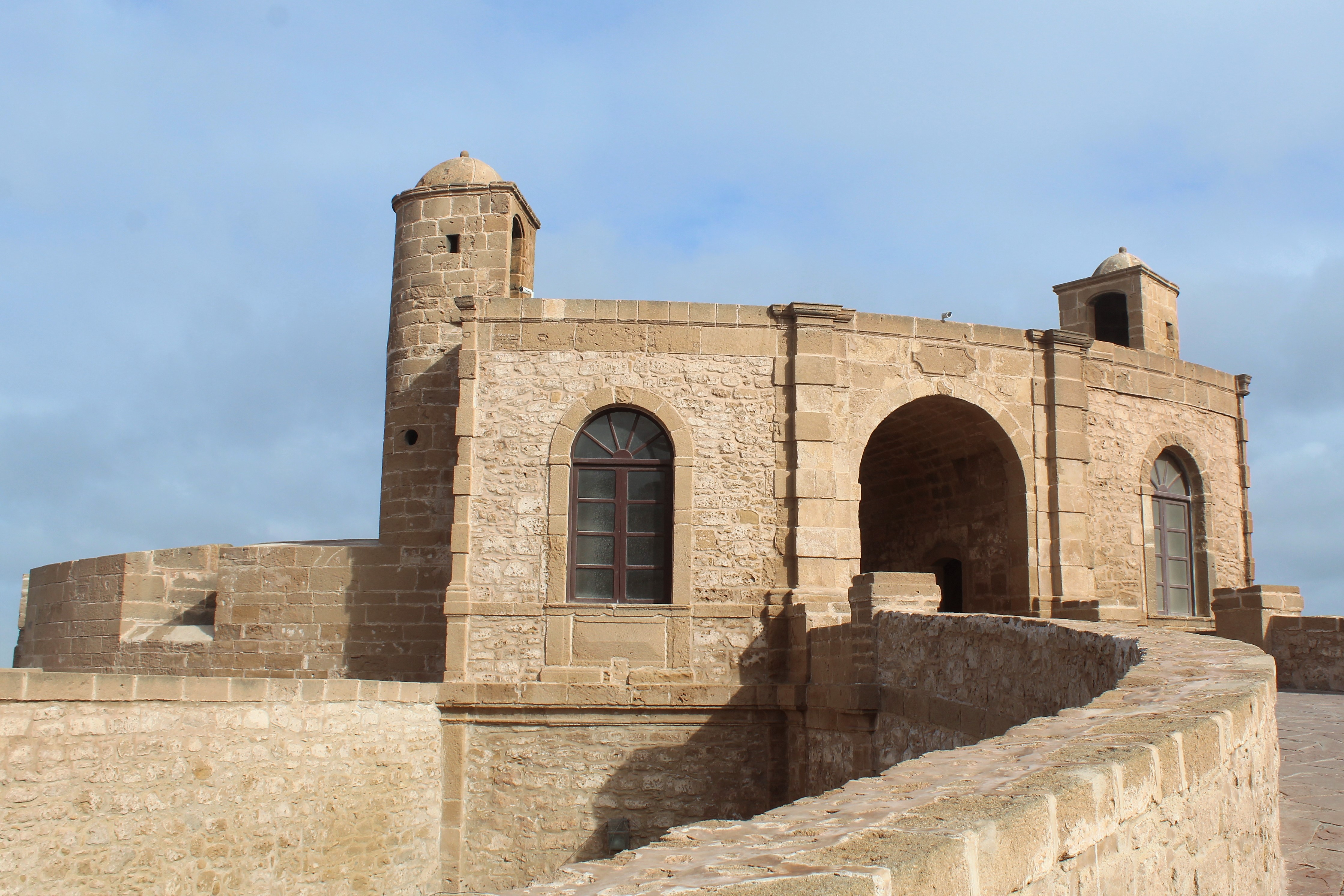
Walk the Ramparts and Skala de la Ville
Discover Essaouira's Art Scene
Explore Essaouira With a Local Guide
Getting to Essaouira From Marrakech
Getting to Essaouira by Car or Private Transfer
Final Thoughts on Visiting Essaouira
The History of Essaouira
Archaeological research shows that Essaouira has been inhabited since prehistoric times. Its bay is partially sheltered from strong ocean winds by the island of Mogador. This means that, for centuries, the town has been considered to be one of the best harbours on the Moroccan coast.
The Carthaginian navigator, Hanno, established a trading post here as early as the 5th century BC. In Roman times, Essaouira became known for dye production, using local shells to create the purple colour used in the togas worn by senators.
During the following centuries, the Portuguese, Spanish, Dutch, English, and French all tried to take control of Essaouira with varying degrees of success. For much of the time, the port remained a centre for the export of sugar and molasses and was controlled by pirates.
In 1764, Sultan Sidi Mohammed ben Abdallah, also known as Mohammed III, installed himself in Essaouira and employed a French architect, Théodore Cornut, to create a modern city and fortress which combined European and Moroccan styles. His aim was to establish a harbour as close as possible to Marrakesh and to cut off trade from Agadir in the south. He succeeded. Essaouira soon became Morocco’s principal port, a vital link for trade between Timbuktu and Europe. It was a place where the trade in gold, salt, ivory, and ostrich feathers was carefully monitored, taxed, and controlled by a garrison of 2000 imperial soldiers.
When the French established their protectorate in 1912, they diverted trade to Casablanca, Tangier, and Agadir. It wasn’t until Morocco gained its independence in 1956 that Essaouira regained some of its former glory.
Essaouira Today
Essaouira is a major fishing port with a very busy harbour and many of the town’s inhabitants making their living from the sea. It is also establishing itself as a tourist destination. Since the first hippies arrived here in the sixties, the town has attracted a steady flow of visitors. Originally, many of these were artists, musicians, and writers, drawn by the relaxed vibe, art galleries, and colourful boutiques and bars. Nowadays, windy Essaouira is also a popular destination for surfers, especially between April and November.
Is Essaouira Worth Visiting?
Absolutely. In fact, Essaouira was one of our favourite stops in Morocco.
Don't come expecting a checklist of huge monuments or famous attractions. Essaouira's appeal is much more about atmosphere.
It's the kind of place where you can wander through the medina without worrying too much about where you're going, watch fishermen unloading their catch at the harbour, browse small galleries and craft shops, eat ridiculously fresh seafood and then spend an hour over a glass of mint tea simply watching the world go by.
After some of Morocco's busier cities, we found the slower pace incredibly refreshing.
If you enjoy slow travel and prefer getting a feel for a place rather than rushing between sights, I'd definitely include Essaouira in your Morocco itinerary.
How Long Do You Need in Essaouira?
You can visit Essaouira as a day trip from Marrakech, but I think that would be a shame. Part of the pleasure of Essaouira is being able to slow down, wander without an agenda and enjoy the town after the day-trippers have left.
We spent two nights and three days in Essaouira and could happily have stayed longer.
For a first visit, I'd recommend at least two nights. That gives you enough time to explore the medina and port, walk along the ramparts, browse the shops and galleries, enjoy a leisurely seafood lunch and spend some time on the beach without feeling that you have to rush.
Three or four nights would be even better if you enjoy slow travel. Essaouira is somewhere that rewards lingering rather than sightseeing at speed.
Mark and I loved it so much that we talked about coming back one day and spending an entire winter here. That probably tells you more about how we felt about Essaouira than any list of attractions could!
The Best Things to Do in Essaouira
Wander Through Essaouira's Medina
Essaouira's walled medina dates largely from the late 18th century and became a UNESCO World Heritage Site in 2001. Unlike some of Morocco's larger medinas, we found Essaouira relatively easy and enjoyable to explore on foot.
Spend time wandering through the narrow streets, pausing to admire the ornate doors and windows Morocco is so famous for. There are shops and street vendors everywhere, selling everything from jewellery, leather goods and spices to colourful handwoven rugs and locally made crafts.
One of my favourite discoveries was freshly harvested creamy walnuts. They were so delicious that I bought 2kg of them and later used them to make my popular coffee cakes!
Don't worry too much about following a particular route. Essaouira is a place to wander, browse and see where the next street takes you.
Watch the Fishermen at Essaouira Port
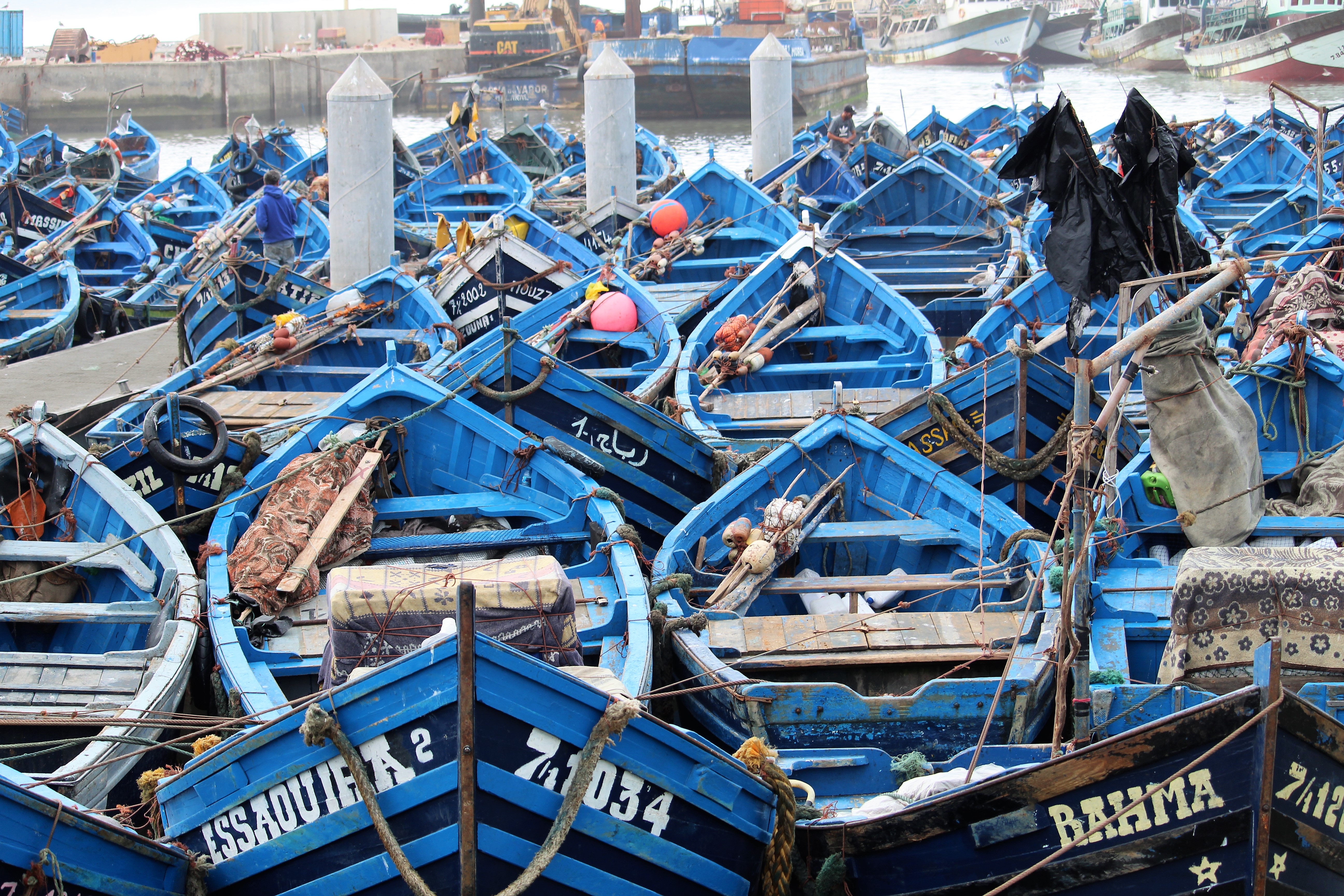
For me, one of the best things to do in Essaouira is simply to wander around the port.
Try to ignore the sometimes unpleasant aroma of yesterday's catch and instead enjoy the atmosphere created by local fishermen going about their business.
It's a colourful, noisy place. Small boats, invariably painted bright blue and owned by individuals, jostle for space among the larger trawlers. Countless seagulls, bigger than any I'd ever seen, circle overhead, drowning out any conversation with their raucous screeching.
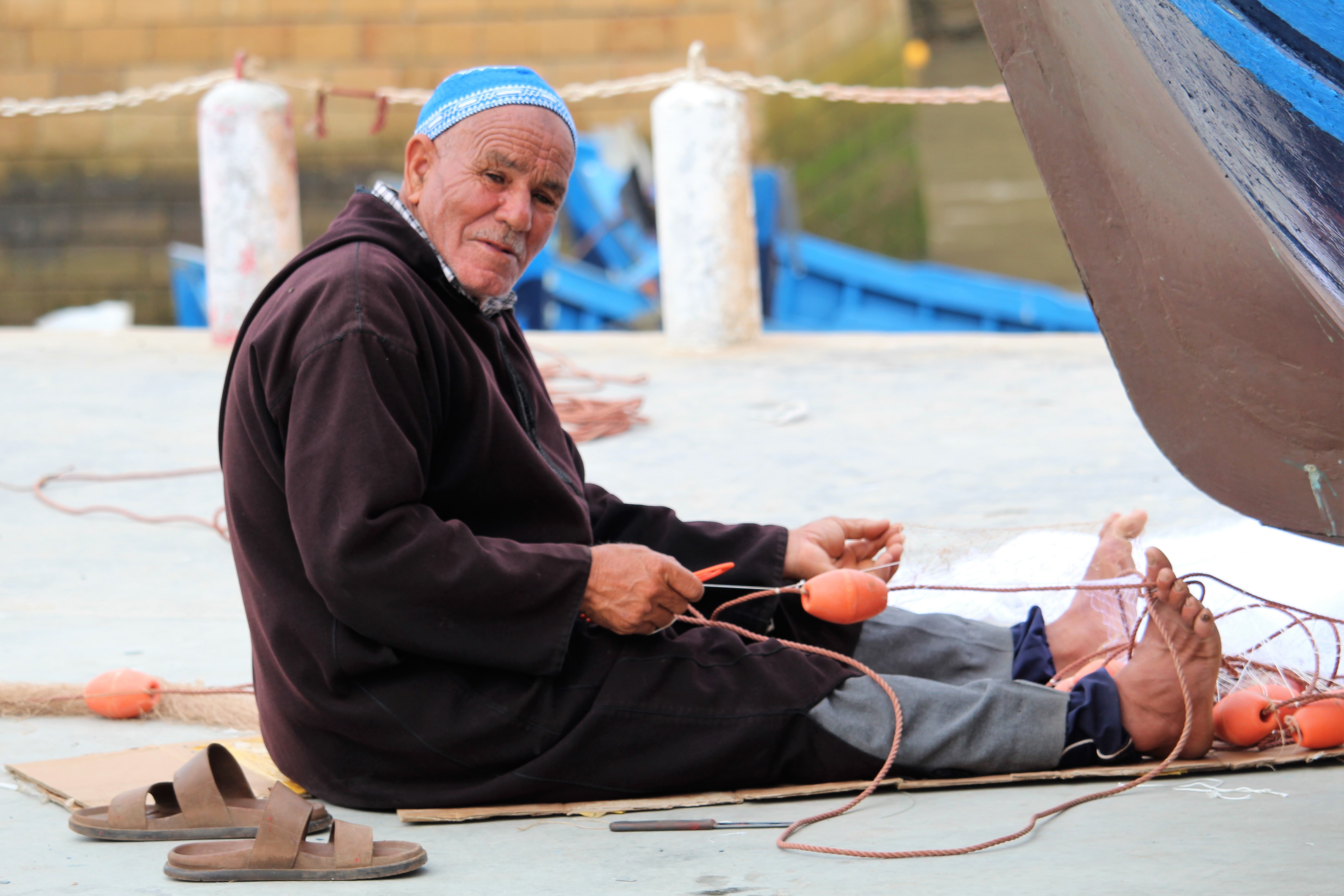
Wizened old men sit on the concrete floor mending their nets by hand, while porters pushing rickety hand barrows with dodgy wheels carry trays of iced fish between the dockside and local restaurants.
When we visited, the fishermen landed their catches early in the morning and again towards dusk. The hive of activity became even more intense as local shoppers competed with wholesalers and restaurateurs to secure their choice of fish.
Stalls appeared along the quayside displaying an extraordinary variety of fish and seafood. Some sellers had huge displays, while others had only a handful of fish to sell.
The whole port area is a photographer's and artist's dream – as confirmed by the number of both we saw while we were there.
Walk the Ramparts and Skala de la Ville
Essaouira's fortified walls are another reminder of the town's history as an important trading port.
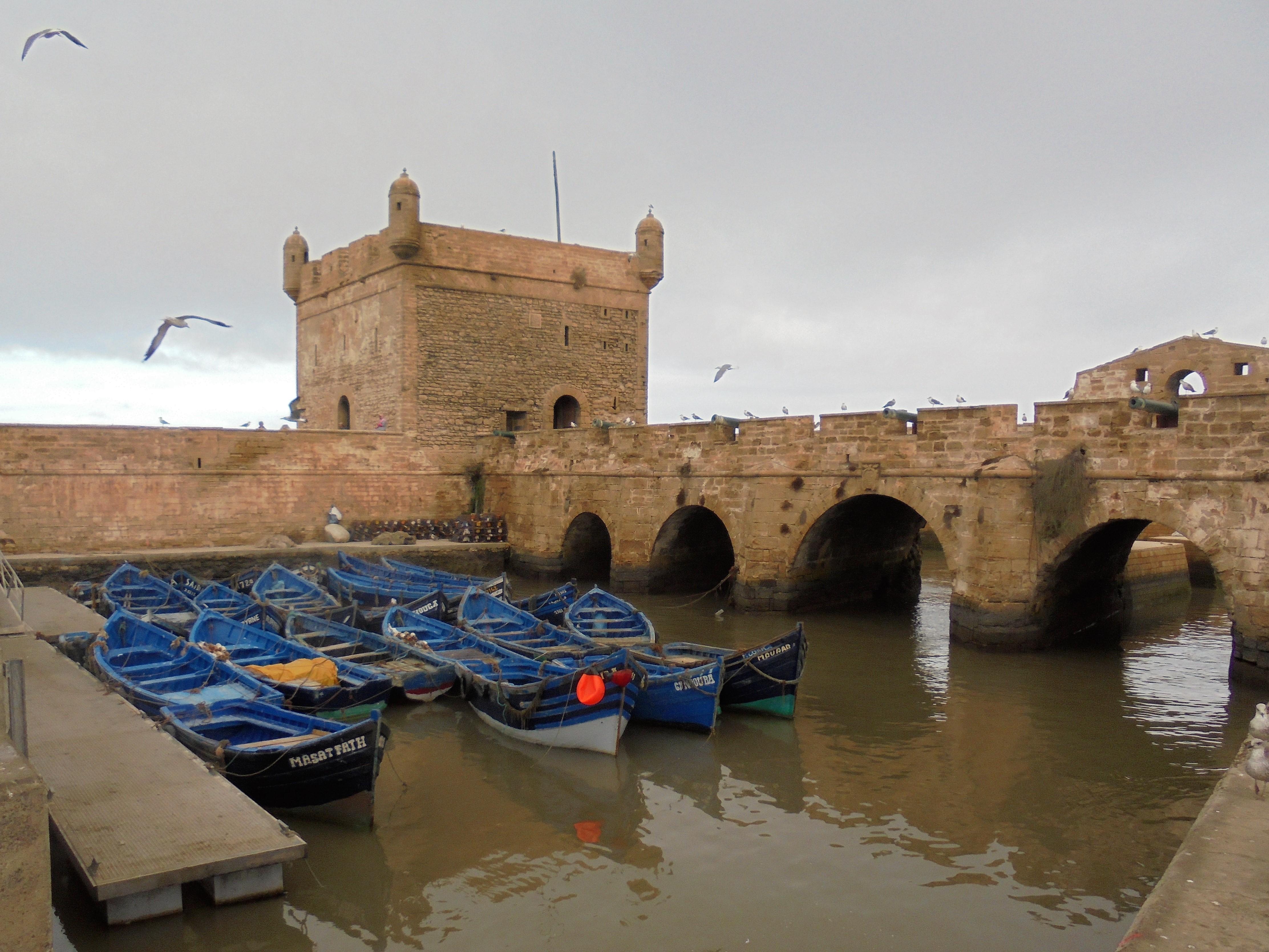
The impressive Skala de la Ville protected the medina from attack from the sea and today provides wonderful views across the Atlantic.
We went early in the morning when sea mist was hanging around the old fortifications. It gave the whole place an incredibly atmospheric feel.
Near the harbour is the Skala du Port, another of Essaouira's distinctive fortified structures. This area provides some of the classic views back towards the medina and the jumble of blue fishing boats in the harbour.
Between the crashing Atlantic waves, old stone walls and almost constant cries of the seagulls, this was one of my favourite areas for simply wandering with my camera.
Discover Essaouira's Art Scene
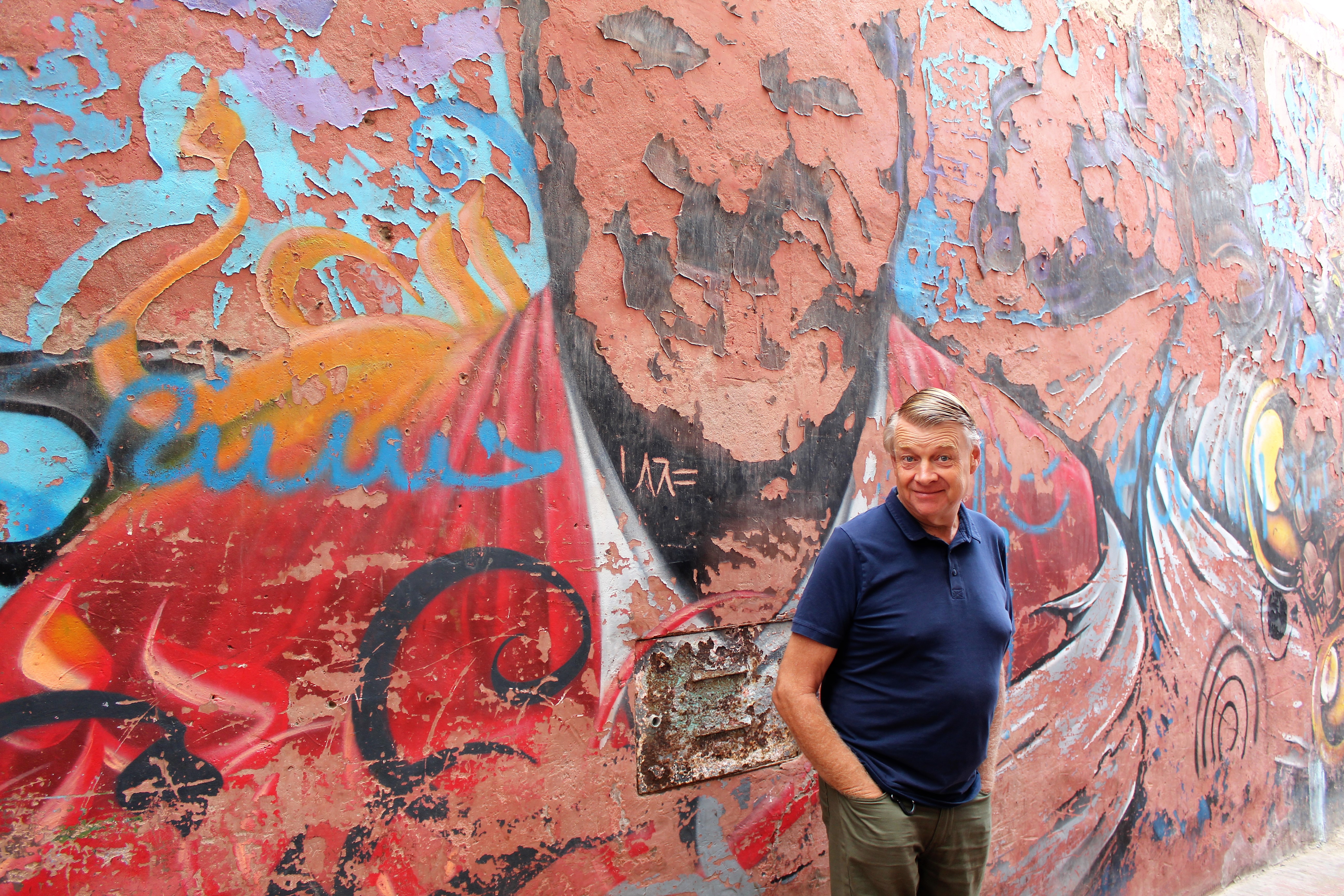
Essaouira has long attracted artists, musicians and other creative people, and art still feels very much part of the town's personality.
You'll find small galleries and workshops throughout the medina, while artists can often be seen painting outside or sitting at pavement cafés trying to capture the scene in front of them.
If you're looking for a souvenir that's a little different, consider buying a piece of original art. We also saw some beautiful examples of local calligraphy.
Even if you're not planning to buy anything, browsing the galleries is part of the pleasure of exploring Essaouira.
Shop in the Souqs
Essaouira is also a great place to shop for souvenirs.
The medina is packed with colourful little shops selling jewellery, leather goods, spices, textiles, wooden objects and all manner of Moroccan crafts.
As everywhere, you'll find some mass-produced souvenirs, but there are also plenty of locally handcrafted items if you take the time to look.
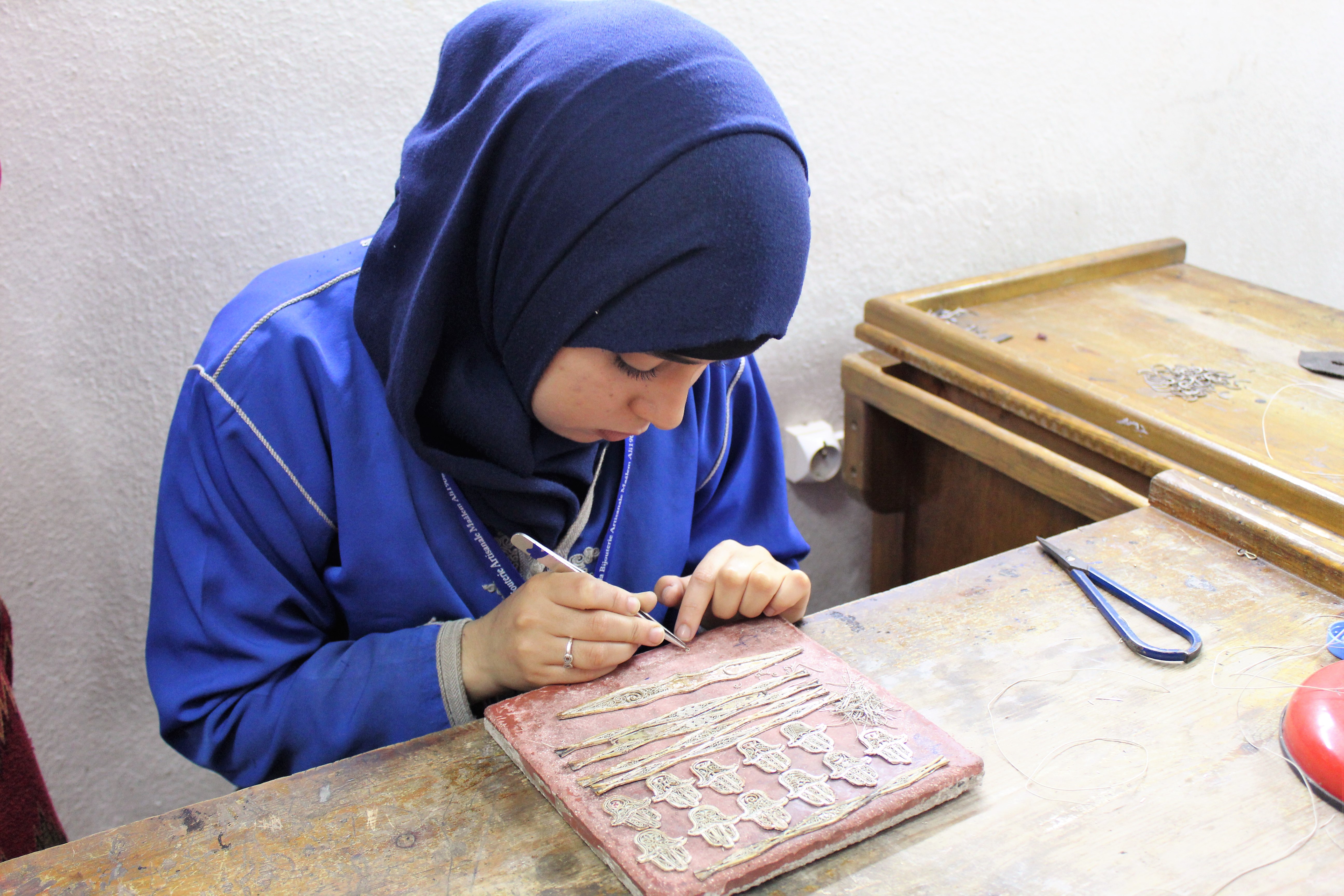
Our local guide, Rashida, took us to a silver jewellery cooperative where all the women working there were deaf. Their work was exquisite. I bought some beautiful intricate filigree earrings and a pendant for our nieces, which made far more meaningful souvenirs than something mass-produced.
Walk Along Essaouira Beach
Essaouira has a huge sweep of sandy beach stretching away from the town.
This isn't necessarily the place I'd choose for a traditional beach holiday. The Atlantic can be rough, and Essaouira is famously windy, but the beach is wonderful for a long walk.
When we visited, locals were playing football on the sand – to a surprisingly high standard! Nobody seemed to mind us stopping to watch.
You'll also see horses and camels on parts of the beach, although I'd always recommend looking carefully at animal welfare standards before deciding whether to ride.
The same winds that can make sunbathing rather challenging have helped make Essaouira popular with surfers, windsurfers and kitesurfers. If you've ever wanted to try one of these sports, you'll find schools and equipment hire around the beach.
Take a Moroccan Cookery Class
If you enjoy Moroccan food as much as we do, a cookery class is a lovely way to spend a few hours in Essaouira.
It's an opportunity to learn more about the spices, ingredients and techniques behind dishes such as tajines, couscous and pastilla – and, of course, you get to eat the results afterwards.
If you want to include a cookery class in your trip, I can recommend this one.
Learn About Argan Oil
The area around Essaouira is famous for its argan trees and the oil produced from their fruit.
On our way to Essaouira, our driver, Omar, suddenly pulled over and gesticulated wildly towards the other side of the road.
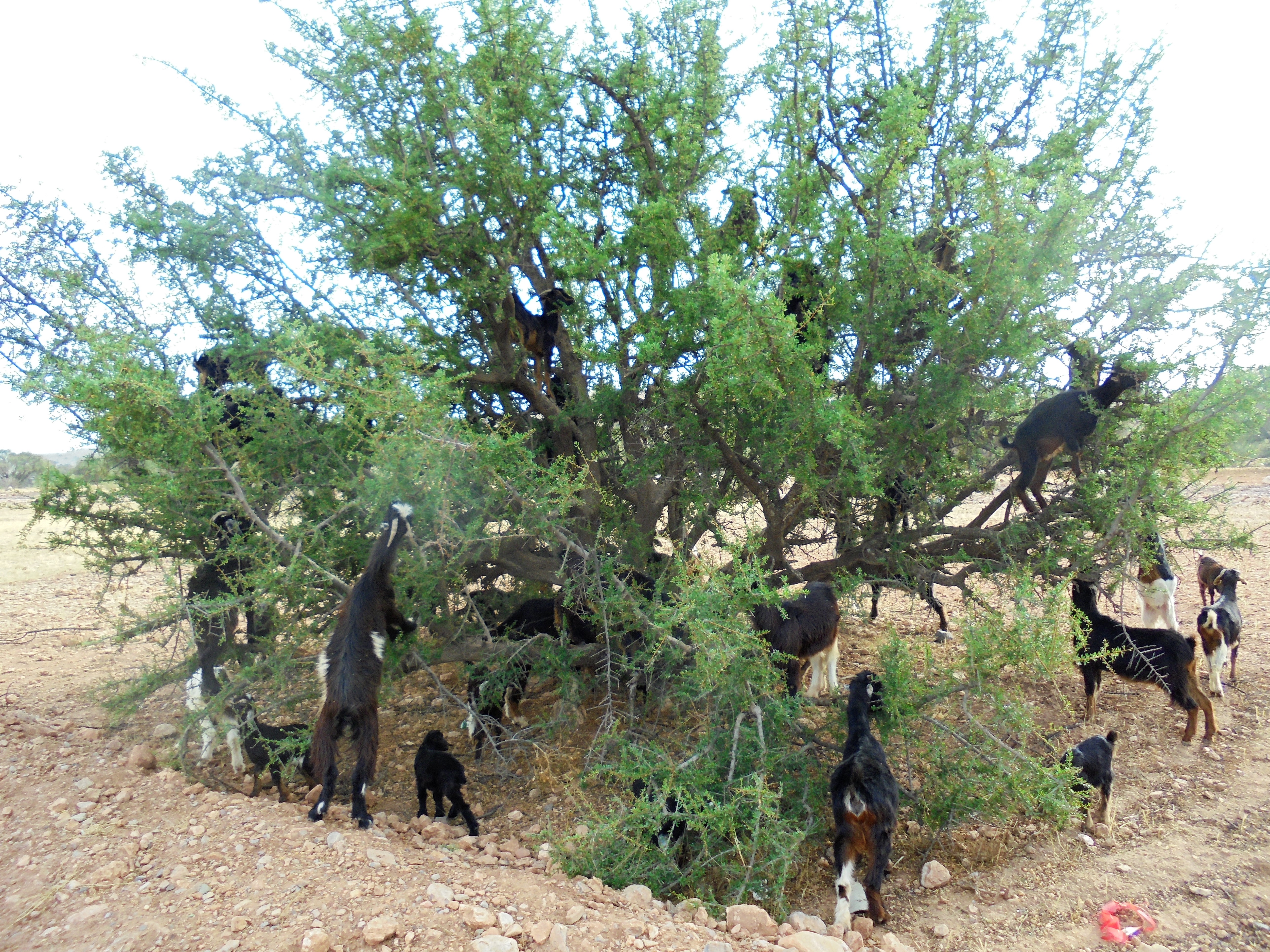
We all looked in the direction he was pointing and were delighted to see one of those iconic Moroccan sights we'd read about before our trip: goats in the argan trees.
We'd already asked our guide, Hamid, whether we might see them. He'd been wisely non-committal, not wanting to promise something he couldn't deliver, so when we spotted them, everyone was out of the minibus in a flash, taking photographs.
Goats genuinely do climb argan trees to eat the fruit, although it's worth knowing that some roadside displays are now staged for tourists. If you encounter them, it's worth observing from a distance and considering the welfare of the animals rather than automatically paying for photographs.
We later visited an argan cooperative to learn about the incredibly labour-intensive process of producing argan oil.
The nuts are cracked and processed by hand before the kernels are ground and pressed to extract the precious oil. Traditionally, this work has provided an important source of income for women in Morocco's argan-growing regions.
Argan oil is used both in cooking and in cosmetic products. Culinary argan oil has a distinctive nutty flavour, while cosmetic versions are widely used in skin and hair products.
Visiting a cooperative gave us a much better understanding of why genuine argan oil is so highly valued – and why such a small bottle can be surprisingly expensive.
Explore Essaouira With a Local Guide
It's perfectly possible to explore Essaouira independently, and the medina is much less intimidating to navigate than some of Morocco's larger old cities.
Even so, we really enjoyed exploring with local guides.
As we've found so many times on our travels, having somebody who lives in a place show you around can reveal details you'd otherwise walk straight past. You also have someone to answer all those questions that occur to you as you wander.
If you have time, I'd consider taking a guided walking tour early in your stay and then spending the rest of your visit exploring independently. I highly recommend this tour of Essaouira.
Where to Stay in Essaouira
Where you stay in Essaouira depends largely on whether you'd prefer to be surrounded by the atmosphere of the old town or closer to the beach.
Stay Inside the Medina
For a first visit, I'd choose the medina.
Staying within the old walls means you're right among Essaouira's shops, cafés, restaurants and galleries, and you can step outside your accommodation and immediately start exploring.
Better still, stay in a traditional riad.
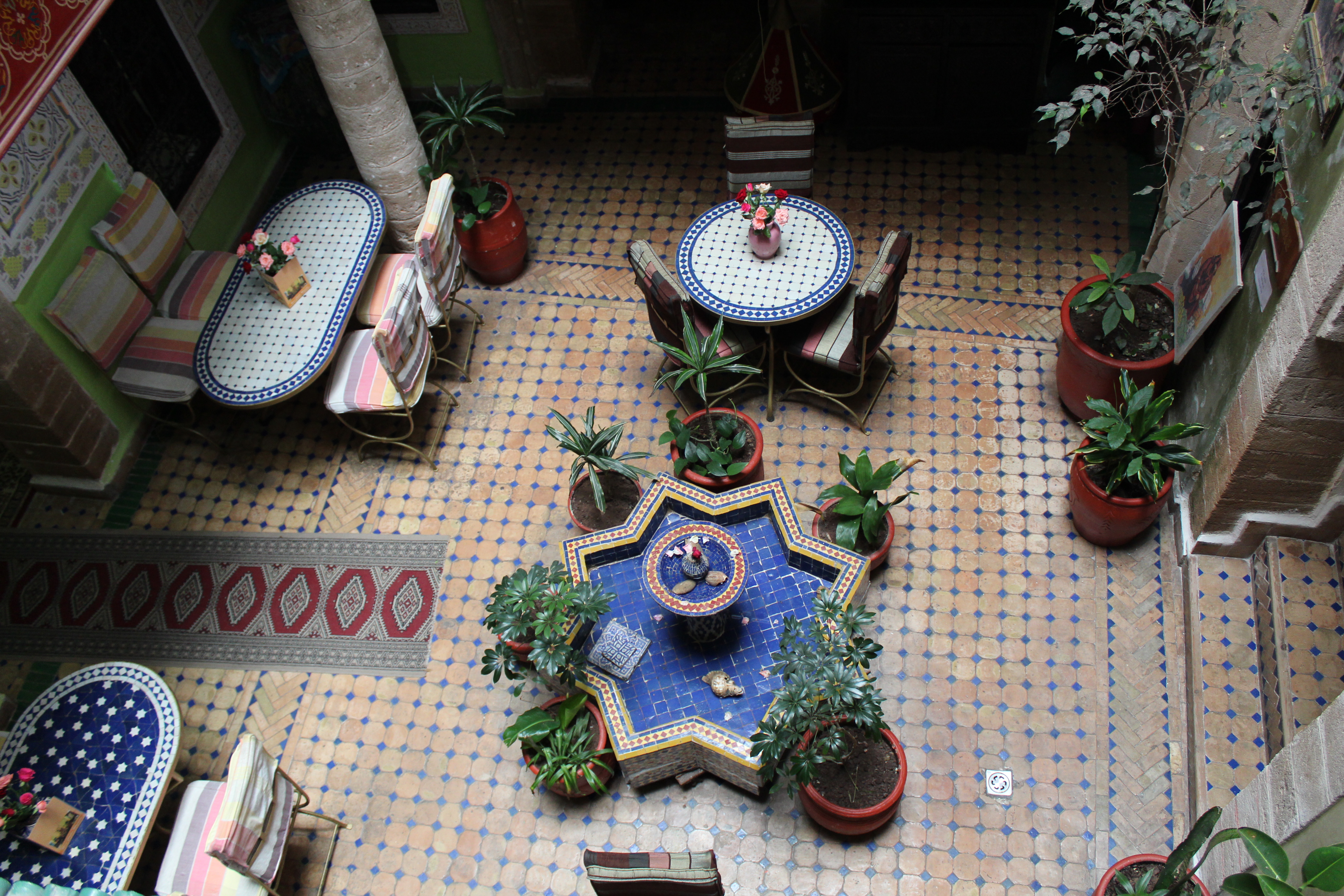
One of the things I love about Moroccan riads is the contrast between the busy street outside and the tranquillity within. Step through the door and suddenly you're in a peaceful inner courtyard that feels completely removed from the hustle and bustle outside.
We stayed at Riad Chakir Mogador, which was comfortable, slightly shabby chic and came with a delicious breakfast. It put us right in the middle of the town and suited us perfectly.
Stay Near Essaouira Beach
If the beach, surfing or watersports are more important to you, consider staying outside the medina and closer to the seafront.
You'll find larger hotels and more modern accommodation here, often with easier road access than properties hidden away within the medina.
This can also be a good choice if you're staying for longer and want a little more space.
For a short first visit, though, I'd still choose the medina. Being able to wander its streets early in the morning and again in the evening was part of what made Essaouira so enjoyable for us.
What to Eat in Essaouira
If you like fish and seafood, come to Essaouira hungry.
As you'd expect from one of Morocco's major fishing ports, freshly caught fish plays a huge part in the local food scene.
Fresh Fish and Seafood
One of the iconic Essaouira experiences is choosing fish from stalls near the port and having it grilled for you.
If you decide to eat at one of the fish grill stalls, establish exactly what you're ordering and agree the total price before you sit down. Some visitors have found the selling rather enthusiastic, and prices aren't always as clear as they could be.
Personally, I'd rather choose a restaurant inside the medina. Ask for advice from your accommodation or a trusted local guide.
That's exactly what we did.
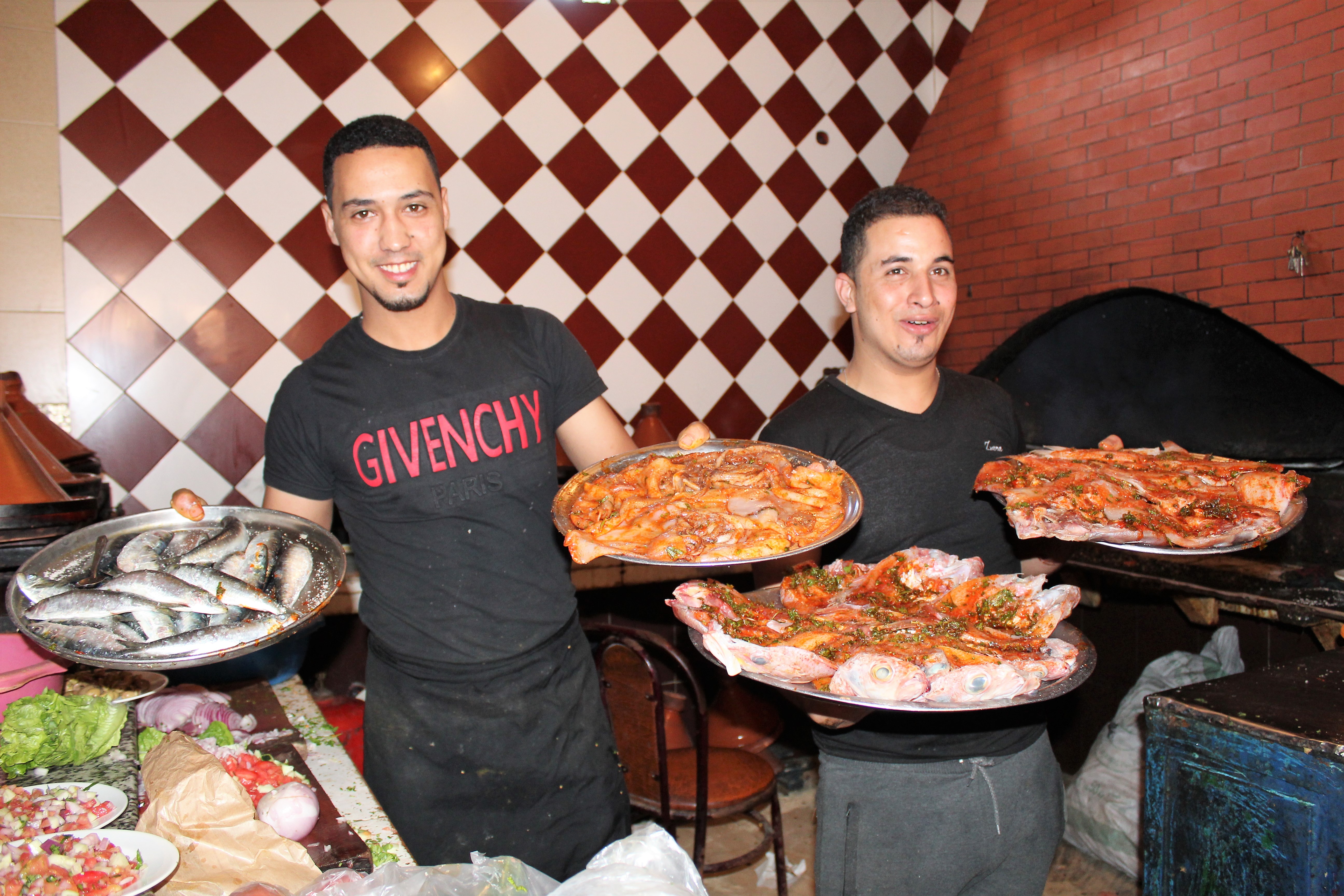
Our guide, Hamid, took the princely sum of 60 dirham each from us and went to buy a selection of fish and seafood. He then arranged to meet us at a restaurant where everything he'd bought was cooked for us.
The platters of barbecued fish just kept coming.
We had sole, sea bream, sardines, another unidentified local fish, huge king prawns, shrimps and calamari, all accompanied by piles of warm bread straight from the oven and fresh, zingy salads.
Just when we thought we couldn't possibly eat another thing, juicy segments of fresh orange arrived.
It was a truly memorable lunch – and remains one of my favourite food memories from Morocco.
Amlou
While you're in this part of Morocco, look out for amlou, a delicious spread traditionally made with almonds, honey and argan oil.
It's sometimes compared with nut butter, although that doesn't really do it justice. You'll often encounter it at breakfast with Moroccan bread.
If you're visiting an argan cooperative, you may also have the opportunity to taste culinary argan oil and amlou there.
Getting to Essaouira
Essaouira sits on Morocco's Atlantic coast, roughly west of Marrakech, and is relatively easy to incorporate into a longer Morocco itinerary.
Getting to Essaouira From Marrakech
Marrakech and Essaouira are a popular combination.
There is no train to Essaouira, so most independent travellers arrive by bus, private transfer or hire car. The journey generally takes around three hours, depending on traffic and stops along the way.
Day trips from Marrakech are widely available, but if your itinerary allows, I'd strongly recommend staying overnight rather than trying to squeeze Essaouira into a few hours.
Two nights give you the chance to experience the town at a much more relaxed pace.
Getting to Essaouira by Bus
Long-distance buses connect Essaouira with several Moroccan cities, including Marrakech.
If you're travelling independently, I'd check current routes and timetables before your journey rather than relying on schedules published in older travel guides.
Getting to Essaouira by Car or Private Transfer
A private transfer gives you more flexibility and can be particularly convenient if you're travelling as a couple or small group.
Hiring a car is another possibility if Essaouira forms part of a longer road trip along Morocco's Atlantic coast.
Whichever way you arrive, remember that much of the medina is pedestrianised, so if you're staying inside the walls you may need to walk the final part of the journey to your accommodation.
Best Time to Visit Essaouira
Essaouira is a year-round destination, but its Atlantic location gives it a very different climate from inland Moroccan cities such as Marrakech.
Spring and autumn are excellent times for sightseeing, when temperatures are generally comfortable for walking around the medina, harbour and ramparts.
Summer can be a good time to escape the much more intense heat found inland. However, there's something you should know about Essaouira before packing your sunhat:
It can be very windy.
Those Atlantic winds are part of Essaouira's character and one reason the area has become so popular for windsurfing and kitesurfing. If watersports are the reason for your visit, that's a definite advantage. If you're dreaming of lying peacefully on the beach all day, perhaps less so!
Winter is quieter and cooler, particularly in the evenings, but for anyone interested in slow travel and spending longer in one place, I can see the attraction.
We certainly could.
Mark and I talked seriously about coming back to Essaouira one day and spending a winter here. There was something about the combination of the sea, the medina, the cafés, the food and the slower pace of life that made us think we could settle in quite happily for a few months.
We never got to put that idea to the test.
Perhaps one day I still will.
Final Thoughts on Visiting Essaouira
Essaouira was one of those places where we arrived as tourists and left wondering what it might be like to live there.
There isn't one enormous attraction that defines the town. Instead, my memories are of simple things: blue fishing boats crowded into the harbour, enormous seagulls circling overhead, mist hanging around the old ramparts, colourful little shops and galleries, and a table disappearing beneath plate after plate of freshly cooked seafood.
Most of all, I remember how relaxed we felt there.
Essaouira remains one of my favourite memories of Morocco, and somewhere I would happily return to.
If your Morocco itinerary is already packed with famous cities and must-see sights, I'd still try to find room for at least two nights here. Essaouira gives you something different: permission to slow down, wander without an agenda and simply enjoy being in Morocco.
Watch this Video for More About Essaouira
If you’re travelling soon, please use these links!
Are you travelling soon? Use these links when making your bookings. These are the companies we use. It won’t cost you any extra, but we will earn a few pennies to help keep Happy Days Travel Blog going. Thank you!!
Make sure you take out travel insurance. If you are a digital nomad or long-term traveller, try the specialist provider SafetyWing. (Never leave home without protecting yourself, your trip and your belongings!)
Book your flight with Skyscanner
Book your accommodation with Booking.com
Book a tour with TourRadar
Book city tours and activities with Viator or GetYourGuide
Check out my Resource Page for more companies I recommend.
Disclosure: This post contains affiliate links. If you click through for more information, or to make a purchase, it may result in a small commission coming my way. Please note that there is no extra cost to you associated with this. Thank you so much for supporting my site.
