Complete Morocco Travel Guide: Everything You Need to Know Before You Go
Welcome to my Morocco travel guide. In this article, you will find all the information you will need if you are planning a trip to this incredible North African nation.
First Thoughts
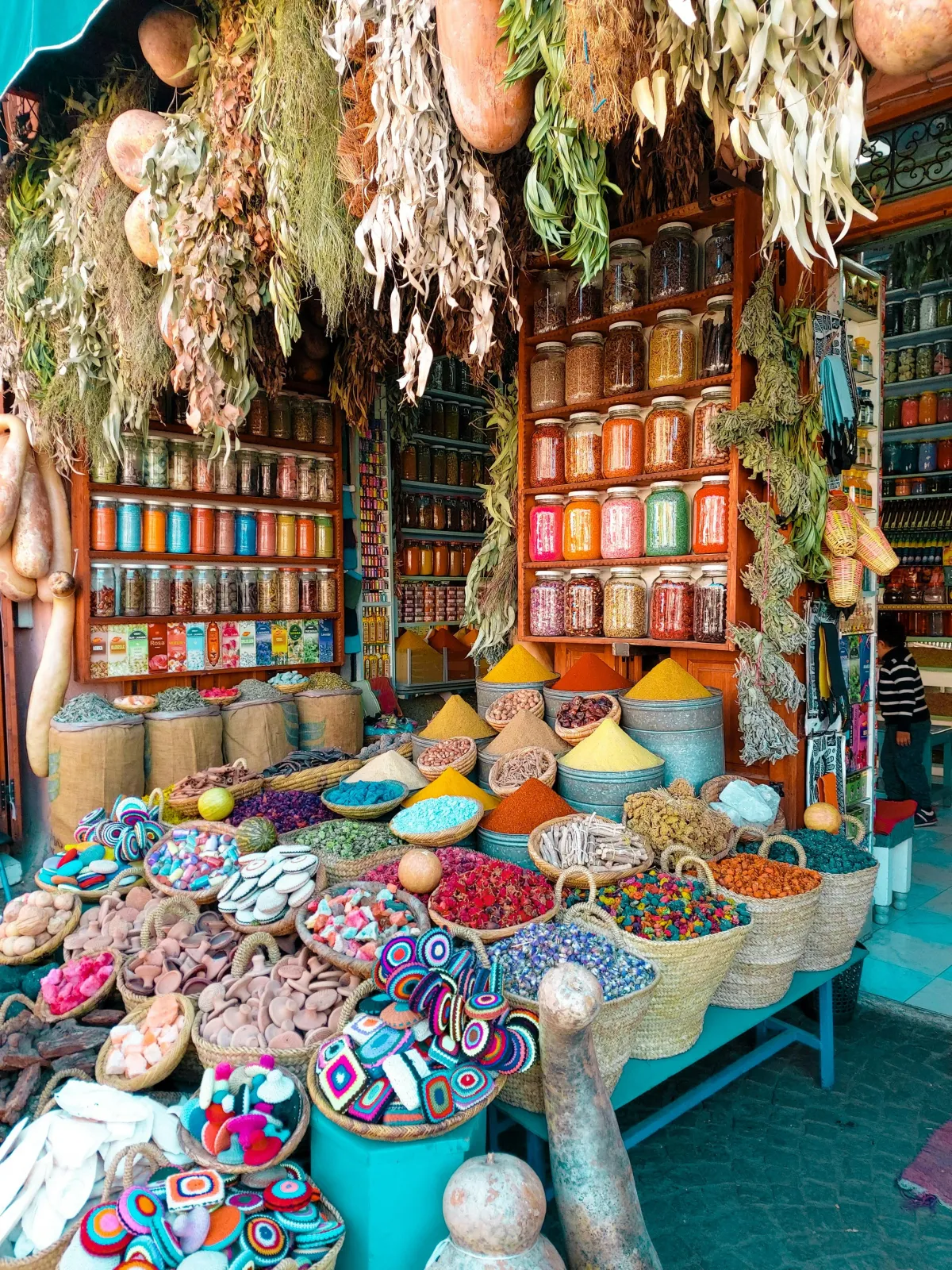
Morocco is an amazingly diverse country. From the epic snow-capped peaks of the High Atlas, through the ancient medinas of Fez and Marrakech, to the undulating dunes of the Sahara Desert, Morocco has something for everyone. It’s not a place just to go and lie on a beach for two weeks (although some people do). It’s a place for wandering and exploring. It’s an assault on the senses. There is so much history to discover. There are so many dishes to savour. There are so many friendly people to meet and stories to hear. It’s a country that you will want (no, need!) to return to time and again.
To jump to a particular section of this article, please use these links:
Essential Information About Morocco
Sensible advice to avoid insect bites:
Festivals and Celebrations in Morocco
Major Islamic Holidays in Morocco
How Long Should You Spend in Morocco?
Spend a Night in the Sahara Desert
Explore Casablanca with a Local Guide
Enjoy Mint Tea on a Food Tour of Marrakech
Listen to the Call to Prayer at Sunset in Moulay Idriss
Look Out for Goats Climbing Argan Trees
Watch Street Theatre in Djemaa el-Fnaa in Marrakech
Lose Yourself in the Alleyways of Fez Medina
Learn How to Cook the Perfect Tagine
Take a Thousand Photos in Chefchaouen
Do a Self-Guided Walking Tour in Rabat
Final Thoughts on Visiting Morocco
Essential Information About Morocco
Area – 710,850 km2
Population – about 37 million
Language – Arabic and Berber are the official languages. The local languages Darija and Hassaniya are also spoken, as are French, English, and Spanish.
Capital – Rabat
Currency – Moroccan dirham (MAD)
Time zone – GMT
Telephone – the country code for Morocco is +212
Electrical socket – Morocco uses two plug types. Type C has two round pins, and type E has two round pins and a hole for the socket’s male earthing pin. Morocco operates on a 220V supply. Why not bring a universal travel adapter with you?
Visas – tourists generally don’t need a visa for stays of up to 90 days. Check for up-to-date information before you travel.
Local laws
Morocco is no stricter than many other countries, but it has laws which may be different from those in your home nation. Familiarise yourself with them and respect them. As anywhere throughout the world, ignorance of the law is no defence!
Morocco is a Muslim country which follows Islamic laws and customs. Make sure your behaviour doesn’t offend, especially during the holy month of Ramadan or when visiting religious areas. You should respect local traditions, customs, laws and religions at all times and make sure you dress appropriately.
Avoid public displays of affection, particularly outside the main tourist areas and close to religious sites.
Sexual relations outside marriage are punishable by law. It’s not uncommon for hotels to ask couples to show evidence of marriage at the time of check-in, and if such evidence is not available, to insist on separate rooms.
Homosexuality is a criminal offence in Morocco. Be sensitive to local laws and customs and avoid public displays of affection. Complaints can lead to prosecution.
Alcohol is served in licensed hotels, bars and in tourist areas. However, drinking alcohol in the street and anywhere other than a licensed restaurant or bar isn’t allowed; you could be arrested.
Possessing, using or dealing in illegal drugs is a serious offence and can result in a lengthy prison sentence and/or a heavy fine.
It is against the law to carry Bibles in Arabic, to attempt to distribute any non-Muslim or evangelical literature or to be involved in any such activity.
Avoid taking any photographs near sensitive political or military sites.
You’ll need permission from the authorities to fly a drone. Contact the Moroccan Civil Aviation Authority for more information about the rules. In 2016, several British nationals were fined and had their passports confiscated for flying drones without permission.
It’s illegal to possess pornographic material.
Health and Safety in Morocco
Health
It’s important to check the latest health advice issued by your government before you travel. In the UK, this is available from the National Travel Health Network and Centre (NaTHNaC). You should also make an appointment with your GP or travel clinic about six weeks before you set off to find out about the latest vaccination requirements.
There are currently no vaccination certificates needed for Morocco, but all travellers should be immunised against hepatitis A, tetanus, and typhoid as a matter of course. Those in high-risk groups should also protect themselves from hepatitis B, rabies, and tuberculosis.
Malaria is not an issue in Morocco, but insect or tick bites can cause skin irritation and skin infections, and they can also transmit diseases such as leishmaniasis, Rift Valley fever, and West Nile virus. There are no vaccinations or medications to prevent these diseases, so the best line of defence is not to get bitten!
Sensible advice to avoid insect bites:
Burn mosquito coils
Cover up, especially at dawn and dusk
Eat Marmite! This was always Mark’s preferred method!
If you need medical assistance whilst in Morocco, dial 15 for an ambulance.
It should go without saying that you must never travel without comprehensive travel insurance.
Safety
The vast majority of tourist visits to Morocco are incident-free. However, it is sensible to consider the following:
Political Situation
Protests can occur at short notice across the country. They are mostly peaceful, but there have been isolated incidents of violence. You should follow local and international developments in the media and avoid political gatherings and demonstrations. If you do inadvertently get caught up in such an event, always follow the instructions given by the local security authorities.
Crime
Incidents of violent crime occasionally occur. There have been isolated incidents involving the use of knives against tourists.
Petty crime is common, especially in tourist areas such as the medina quarters of towns and cities, and on beaches. These offences include pick-pocketing, bag snatching and drive-by motorcycle theft of visible jewellery and handbags.
Take the same precautions as you would take anywhere:
Don’t carry large amounts of cash
Don’t wear ostentatious jewellery
Use a hotel safe, where possible, to store valuables and passports
Wear a money belt
Don’t walk in deserted areas, even during daylight
Take care when withdrawing cash from an ATM
Driving
This information is from the UK government website:
You need a 1968 International Driving Permit (IDP) to drive in Morocco. For UK travellers, you can get these over the counter in most post offices. You can’t get them in Morocco, so if you plan to hire a car, make sure you get one before you go.
Morocco has a poor road safety record. In 2025, 4577 people were killed, and over 220,000 were injured in traffic accidents. The road fatality rate is approximately 3 times higher than in the UK.
Drive carefully, especially in poor weather conditions, on secondary routes and on mountain roads. Driving at night can be particularly hazardous due to poor lighting. Lorries and trucks may be overloaded, and you should take extra care around them. It’s common to encounter pedestrians crossing motorways. You should take extra care when overtaking, particularly where there is no hard shoulder. Leave plenty of time to reach your destination and respect speed limits.
If you’re involved in a road accident, you should complete a ‘Constat Amiable’ form, to be signed by both parties. Blank forms are available on arrival at Tangier port from the insurance company booths and from tobacconists in all cities. If the accident results in a fatality and the Moroccan authorities consider you responsible, you may be detained pending a trial hearing.
If you enter Morocco with a vehicle, the registration number will be recorded. If you do not have the same vehicle when leaving Morocco, you’ll be refused exit and detained. You’ll need to provide evidence of adequate motor insurance. You should always carry your insurance, licence and registration documents with you.
Terrorism
Visitors should check with their government’s most up-to-date travel guidelines, but shouldn’t be put off travelling to Morocco.
There is an increased threat linked to the number of Moroccans sympathetic to or belonging to Daesh (formerly referred to as ISIL) and other extremist groups. Authorities regularly report the disruption of terrorist cells across the country. Crowded areas, government installations, transportation networks, businesses with Western interests, and areas where foreign nationals and tourists are known to gather may be at higher risk of attack. You should be vigilant in these areas and follow any specific advice from the local security authorities.
Emergency numbers
Fire and ambulance – 15
Police – 19 in major cities, 177 for the gendarmerie outside cities
Festivals and Celebrations in Morocco
Public Holidays
1st January – New Year’s Day
11th January – Independence Manifesto (commemorates the publication in Fez of the Moroccan nationalist manifesto for independence)
1st May – Labour Day
30th July – Feast of the Throne (commemorates King Mohammed VI’s accession)
14th August – Allegiance of Oued Eddahab (celebrates the ‘return to the fatherland’ of the Oued Eddahab region in the far south, a territory once claimed by Mauritania)
20th August – Anniversary of the King’s and People’s Revolution (commemorates the exile of Mohammed V by the French in 1953)
21st August – Young People’s Day (celebrates the king’s birthday)
6th November – Anniversary of the Green March (commemorates a strategic mass demonstration in November 1975, coordinated by the Moroccan government, to force Spain to hand over the disputed, autonomous semi-metropolitan province of Spanish Sahara to Morocco)
18th November – Independence Day (commemorates independence from France)
Major Islamic Holidays in Morocco
Islamic holidays are tied to the lunar calendar, so the dates change each year.
Moulid an-Nabi – celebrates the birth of the Prophet Mohammed. Children are given presents on this day.
Eid al-Fitr – the Feast of the Breaking of the Fast marks the end of Ramadan. The four-day celebration begins with a meal of spicy lentil soup, dates and honey cakes. All businesses and public transport shut down during this family holiday.
Eid al Adha – this three-day Feast of the Sacrifice honours Ibrahim’s willingness to sacrifice his son as a sign of his obedience to Allah. Families traditionally sacrifice a sheep during this holiday.
Best Time to Go to Morocco
Morocco is a great year-round destination, but the best time to visit is during spring (mid-March to May) or autumn (September to October). This way, you avoid the extremes of very cold temperatures in the mountains in winter and scorching hot days in the desert in summer.
How Long Should You Spend in Morocco?
One of the things I love most about Morocco is just how varied it is. You can be exploring Roman ruins one day, hiking in the Atlas Mountains the next, and then watching the sun set over the Sahara Desert a few days later. The downside is that there is so much to see that it can be tempting to cram too much into one trip.
If this is your first visit, I would recommend spending at least ten days in Morocco if you possibly can. That gives you enough time to experience a few of the country's highlights without feeling as though you're constantly on the move.
One Week in Morocco
If you only have a week, focus on one region rather than trying to see the whole country. A combination such as Marrakech, the High Atlas Mountains and Essaouira makes an excellent introduction, giving you a taste of bustling souks, mountain scenery and the Atlantic coast.
Ten Days in Morocco
With ten days, you can begin to experience the diversity that makes Morocco so special. A classic itinerary might include Marrakech, the Sahara Desert, Fez and Chefchaouen, although you should expect a few long driving days.
Two Weeks in Morocco
Two weeks is, in my opinion, the ideal length for a first trip. It gives you enough time to explore the country's famous imperial cities, spend a night beneath the stars in the Sahara, visit the Atlas Mountains and still enjoy a slower pace in places such as Essaouira or Chefchaouen.
Three to Four Weeks
This is how long we spent travelling around Morocco, and it allowed us to discover places that many visitors miss. We explored Tangier, Rabat, Meknès, Volubilis, Moulay Idriss, the Drâa Valley and several smaller towns as well as the country's better-known destinations. Travelling more slowly also gave us the opportunity to stay with local families, enjoy incredible home-cooked meals and experience everyday Moroccan life beyond the main tourist attractions.
However long you have, don't try to tick every destination off a list. Morocco rewards slow travel. Allow yourself time to wander through ancient medinas, linger over long lunches, chat with local people over glasses of sweet mint tea and simply soak up the atmosphere. Those unplanned moments often become the memories you treasure most.
Getting Around Morocco
One of the things that surprised us most about Morocco was how straightforward it was to travel around. Whether you prefer travelling independently or joining organised tours, there are plenty of options to suit every budget and travel style.
By Train
Morocco has one of the best rail networks in Africa. Comfortable, affordable trains connect many of the country's major cities, including Casablanca, Rabat, Meknès, Fez, Tangier and Marrakech. Journeys are generally reliable, and first-class tickets are well worth the small extra cost if you're travelling longer distances.
By Bus
For destinations that aren't served by the railway, buses are an excellent alternative. Companies such as CTM and Supratours operate modern, comfortable coaches linking towns and cities throughout the country. They are inexpensive, air-conditioned and a popular choice for both locals and visitors.
By Car
Hiring a car gives you the greatest flexibility, particularly if you want to explore the Atlas Mountains, the Drâa Valley or smaller villages at your own pace. Roads between the main tourist destinations are generally in good condition, although mountain routes can be narrow and winding. Driving in Morocco is certainly an adventure, so allow plenty of time and avoid driving after dark whenever possible.
By Grand Taxi
Grand taxis are shared long-distance taxis that operate fixed routes between towns and villages. They are a cheap and authentic way to travel, although they can be rather cramped as vehicles usually leave only when all seats are occupied. If you're travelling with friends or family, you can often pay for the remaining seats and hire the whole taxi.
Organised Tours
If you're short on time or don't want the responsibility of driving, organised tours are an excellent option. Many travellers combine independent city breaks with guided excursions to places such as the Sahara Desert, the Atlas Mountains or the kasbahs of southern Morocco. We found this to be a great way of learning more about the country's history and culture while leaving someone else to navigate the long distances.
My Tip
Morocco is much larger than many people realise. Although the distances between destinations don't always look far on a map, mountain roads and changing landscapes mean journeys often take longer than expected. Rather than trying to see everything in one trip, choose a handful of regions and allow time to enjoy them properly. Travelling more slowly gave us some of our favourite memories, from sharing meals with local families to discovering unexpected villages that weren't in any guidebook.
What to Pack for Morocco
No Morocco travel guide would be complete without mention of what you should take with you. Where you are going in Morocco and at what time of year will determine what you need to pack. Layers are always best so that you can add more or take some off as you change altitude. Be aware that even in the desert, temperatures can fall dramatically at night.
Women, especially when travelling alone, may receive unwanted attention from men. To minimise hassle, you should choose loose-fitting clothing which covers the arms, legs and chest. You will feel more comfortable, too!
PUT Link to MY COMPLETE PACKING LIST FOR MOROCCO
Where to Stay in Morocco
Morocco has a wide range of hotels, guesthouses and self-catering apartments to suit all pockets.
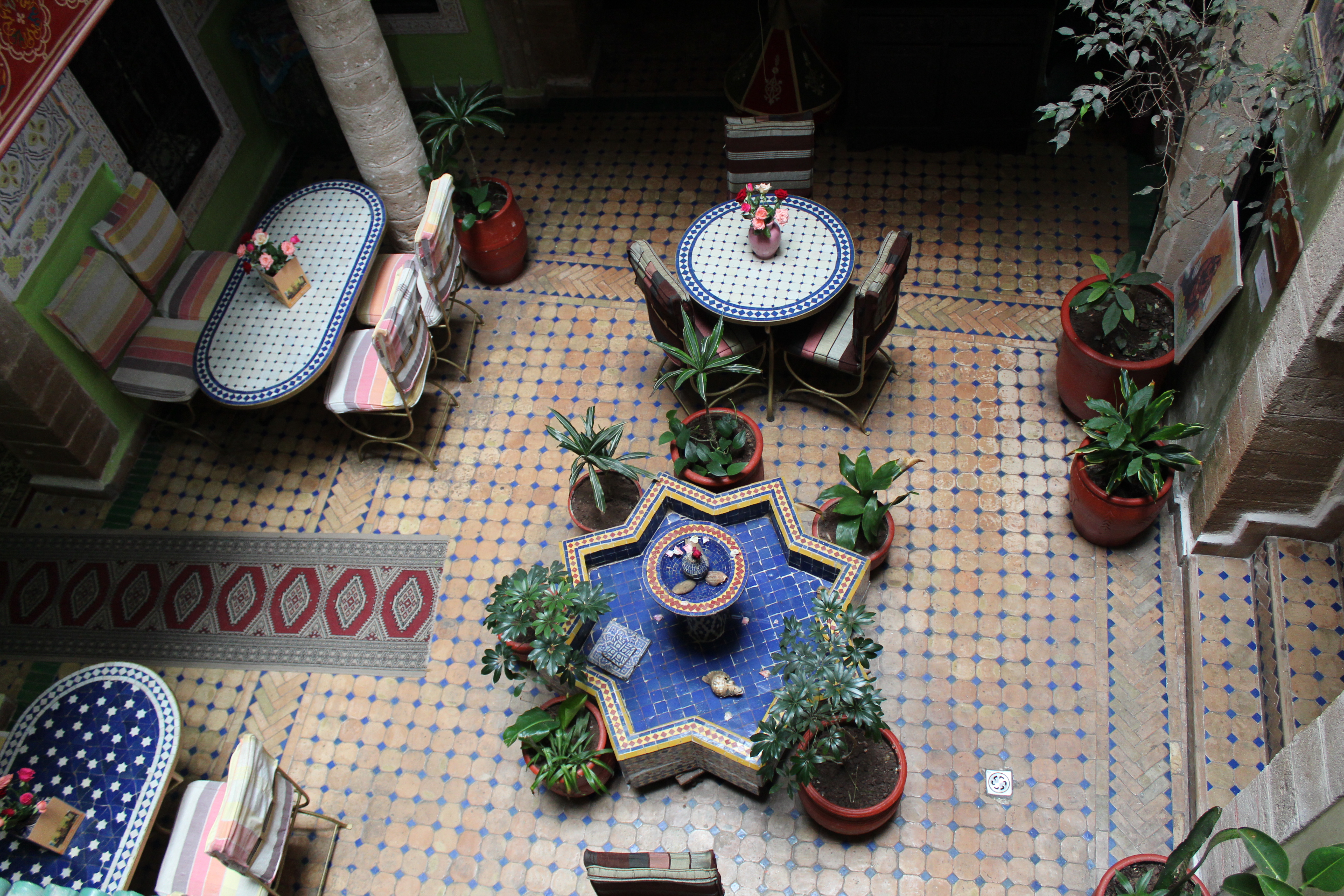
Make sure you spend at least one night in a riad. Many of these traditional Moroccan houses or palaces with interior gardens or courtyards have been restored to their former glory and converted into luxurious accommodation. You will get a real sense of what life was like for a wealthy Moroccan merchant and his family as you sip mint tea whilst relaxing on sumptuous cushions arranged around an ornate fountain. There are many thousands of riads in Morocco, particularly in Marrakech and Essaouira.
If you are travelling in the High Atlas Mountains, be sure to stay with a family in a gîte d’étape. These provide basic accommodation similar to a youth hostel with thin mattresses on the floor of a shared dormitory, but don’t be put off! Berber people are famous for their hospitality and good cooking. You will be welcomed into the family home and fed extremely well!
Another unique place to stay in Morocco is under canvas in the Sahara. This is an unforgettable experience which you can read more about below.
What to Eat in Morocco
The food in Morocco is flavoursome and varied. It will surely be a highlight of any trip to this incredible country.
Moroccan cookery is influenced by the nation’s interactions with other cultures over hundreds of years. You will taste flavours of Berber, Arabic, Andalusian, European, Sub-Saharan, and Mediterranean traditions, all blended into one delicious cuisine.
My Morocco travel guide continues with a description of some of the dishes you will enjoy for each meal.
Breakfast
A Moroccan breakfast typically revolves around bread. Freshly baked rolls and flatbreads are served warm with a tantalising array of colourful accompaniments. These include fruity extra-virgin olive oil, a variety of plump olives, runny honey, apricot jam, delicious dates, clarified butter, soft goats’ cheese, and spicy chutneys. Eggs are also commonplace, either boiled or fried, both with runny yolks perfect for dipping your bread in!
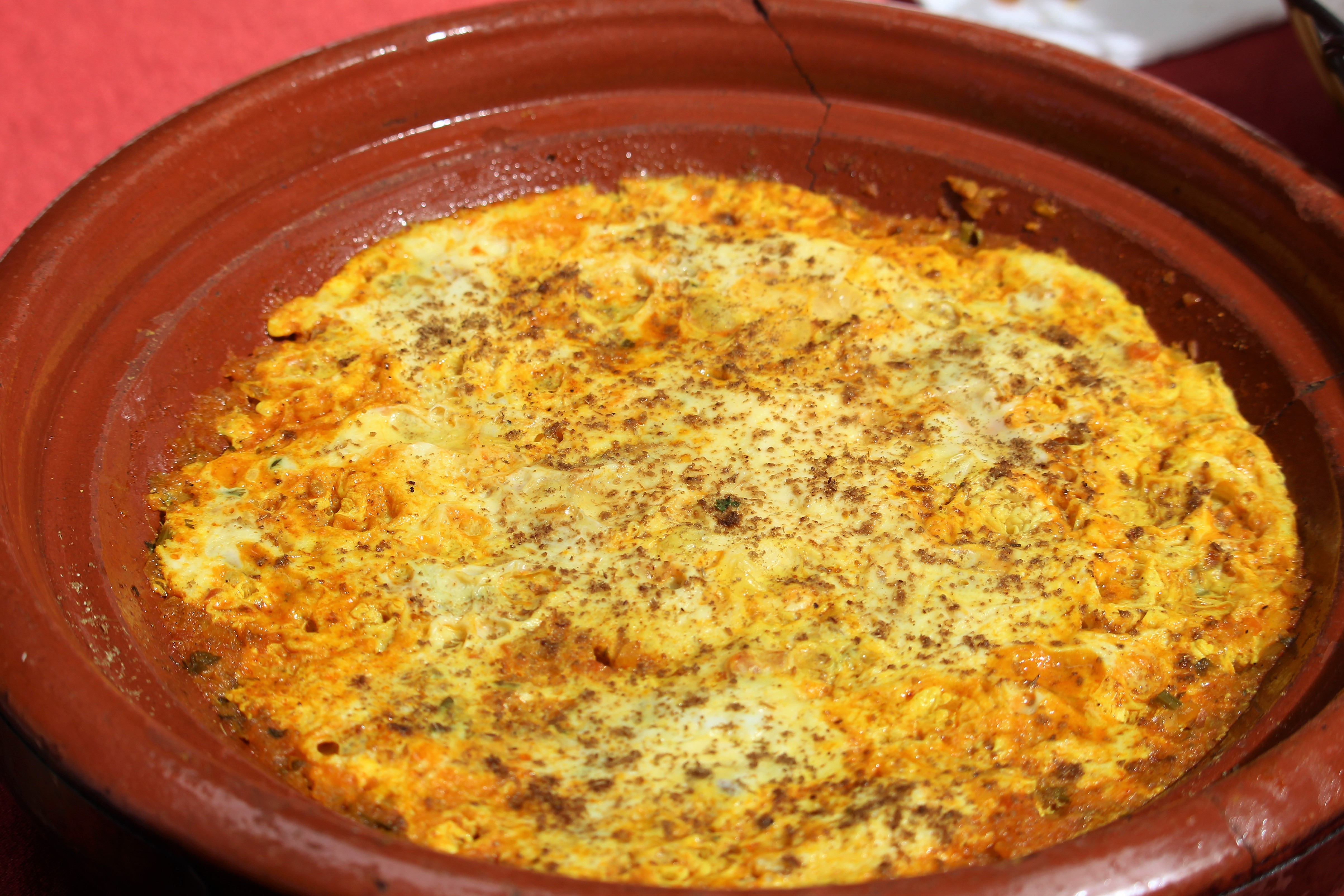
One of our favourite breakfasts on our trip around Morocco, though, was Berber omelette. Onions, tomatoes and peppers are fried with spices in a tagine over an open fire. Beaten eggs are added. The lid is then put on, and the whole thing is allowed to cook gently until the eggs are set. The resulting dish is absolutely delicious and will certainly set you up for a day full of sightseeing or trekking in the mountains!
Mezze
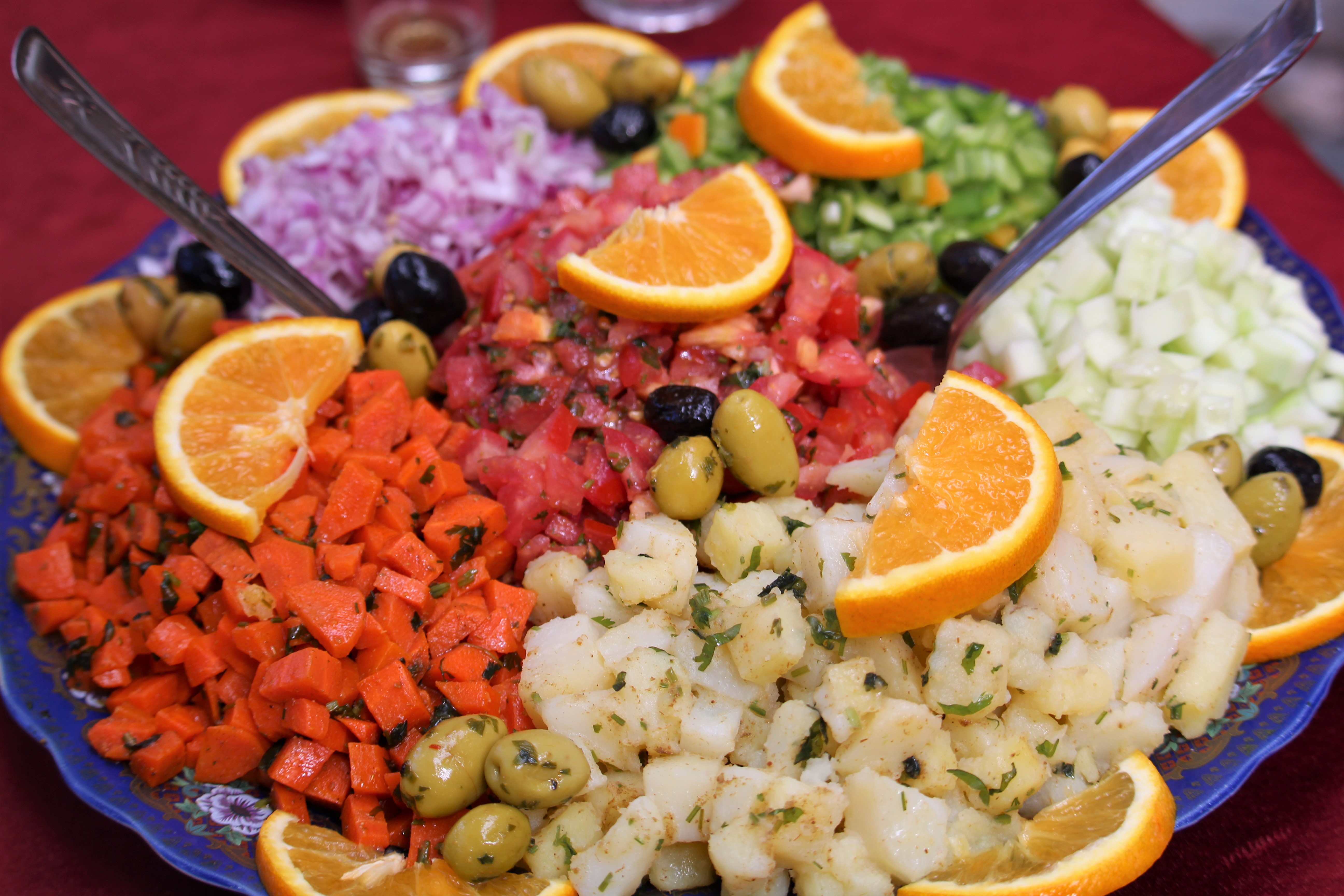
Moroccan meals often start with mezze, a selection of vibrant salads and tasty bites. Taking inspiration from Middle Eastern cuisine, mezze in Morocco might include olives, hummus, zaalouk ( a cooked aubergine and tomato salad), crudités, warm flatbreads, chickpeas, and lamb meatballs. Whatever you have, it’s a very social way to begin a meal with everyone eating from the same plate or bowl.
Main Dishes
When you think of Moroccan food, the first dish that probably comes to mind is tagine. Tagine is the name of the iconic conical cooking pot and also the name of the dish that is cooked in it. To make it, you layer sliced vegetables, herbs, spices, and meat (chicken, beef, or lamb) along with oil and water. As the mixture cooks, a stew-like consistency develops, making a rich, flavourful sauce that is often scooped up with bread.
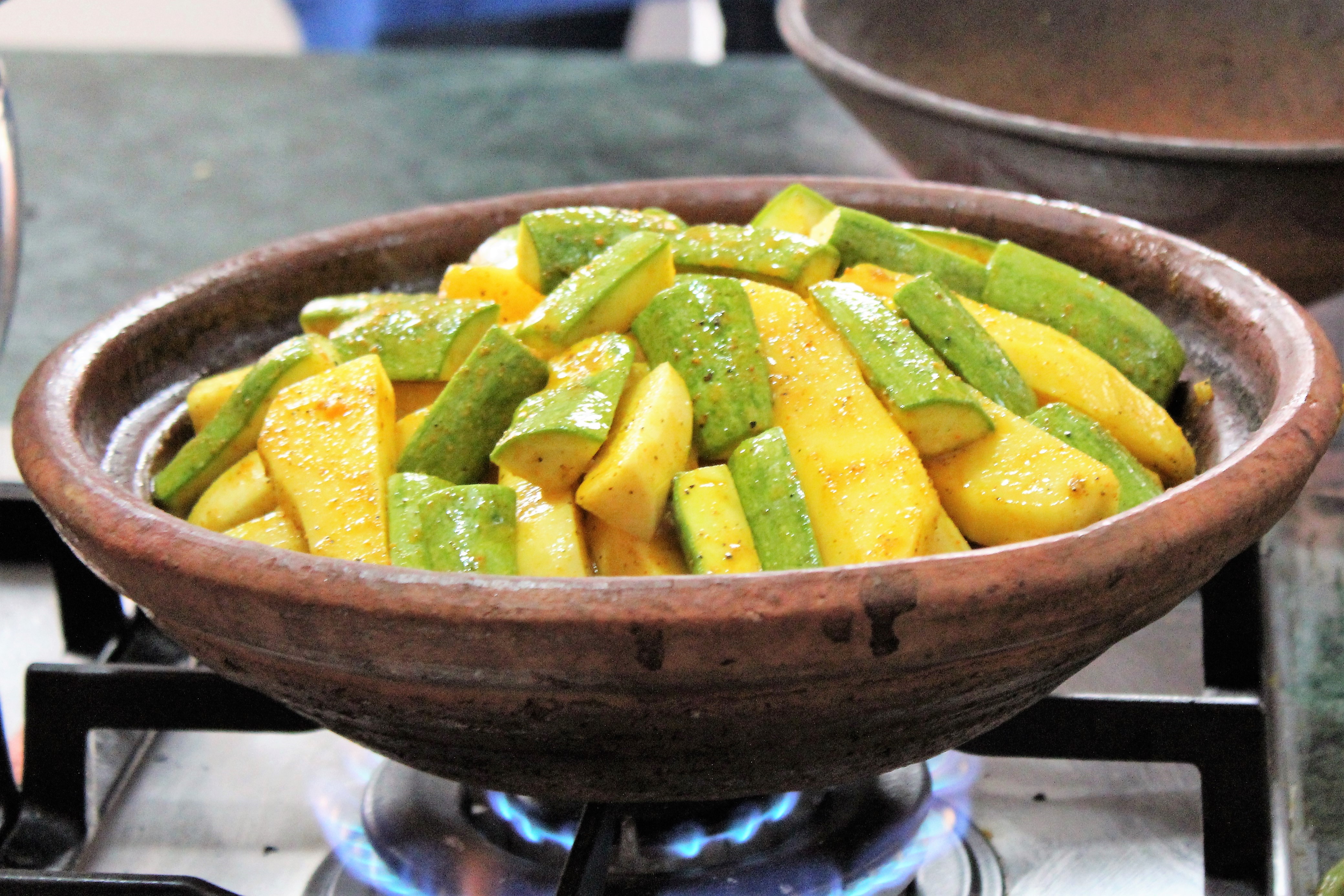
Tagine is invariably served with couscous, the Berber staple of semolina grains. Unlike the dried variety rehydrated with boiling water we are used to in our kitchens, Moroccan couscous is prepared by hand with loving care. The process is much more involved and takes much longer than we would expect.
Other popular main dishes include tangia, a meat stew traditionally cooked in a clay pot in the neighbourhood hammam, and fish chermoula.
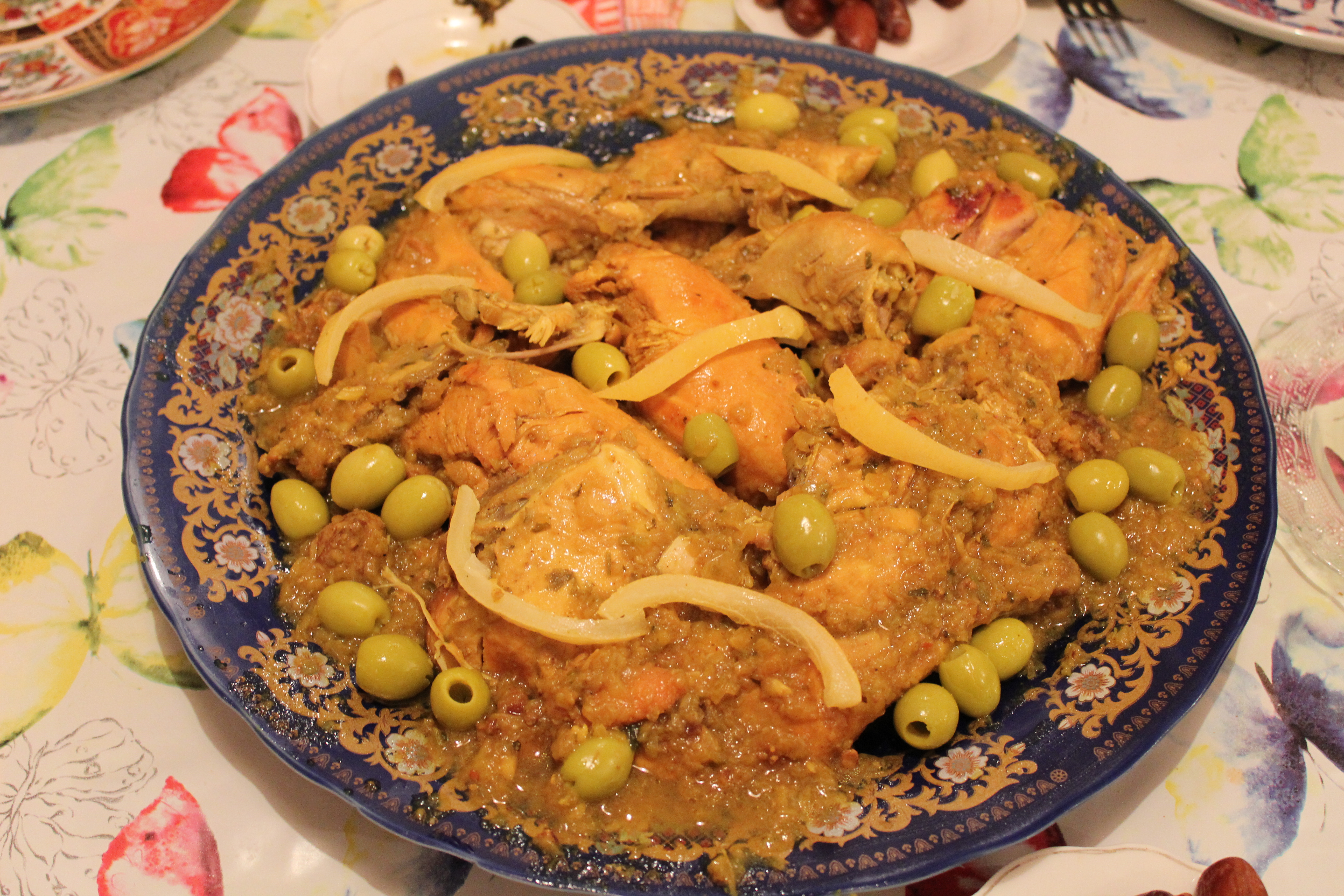
Moroccans love combining meat and fruit in their main dishes. Examples include rabbit with prunes, lamb with dried apricots, beef with dates, and, my favourite, chicken with preserved lemons and olives.
There are many regional specialities, too. We particularly enjoyed trying pastilla in Fez. This sweet and savoury pie is traditionally made with chicken or pigeon wrapped in crisp layers of filo pastry and sprinkled with icing sugar. The camel burgers we had in Meknès were another revelation!
Desserts
Typically, Moroccan people have a very sweet tooth! Sticky, syrupy baklava flavoured with honey, dates, figs, rosewater, and pistachio is extremely popular, as are desserts made from oranges, the national fruit.
Street Food
Street food is everywhere in Morocco. The finest examples are found in Jemaa el-Fnaa, Marrakech’s main square, where a food market consisting of over 100 stalls opens up every evening.
Typical dishes include harira (spicy tomato and lentil soup), snail broth, lamb brochettes, and merguez (chilli beef or lamb sausages) served in soft bread rolls – Moroccan hotdogs! Grilled sardines are also found everywhere, as is maakouda. These delicious golden fritters are made from mashed or grated potatoes, garlic, cumin, onions and coriander, which are then dipped in beaten eggs before frying.
The Middle Eastern classic, shawarma, is also very popular in Morocco. Choose from lamb or chicken. It will come in a wrap with a selection of toppings which might include hummus, tahini, chilli sauce, pickled vegetables or salad.
One of my favourite Moroccan street foods is msemmen, a cross between a crêpe and a soft flatbread. It is made from working and folding thin layers of dough rather than using a batter. It’s then fried on a hotplate until golden brown. The resulting pancake can either be stuffed with fillings like kefta and onions or spicy herbs and vegetables, or topped with butter, honey, or even cheese.
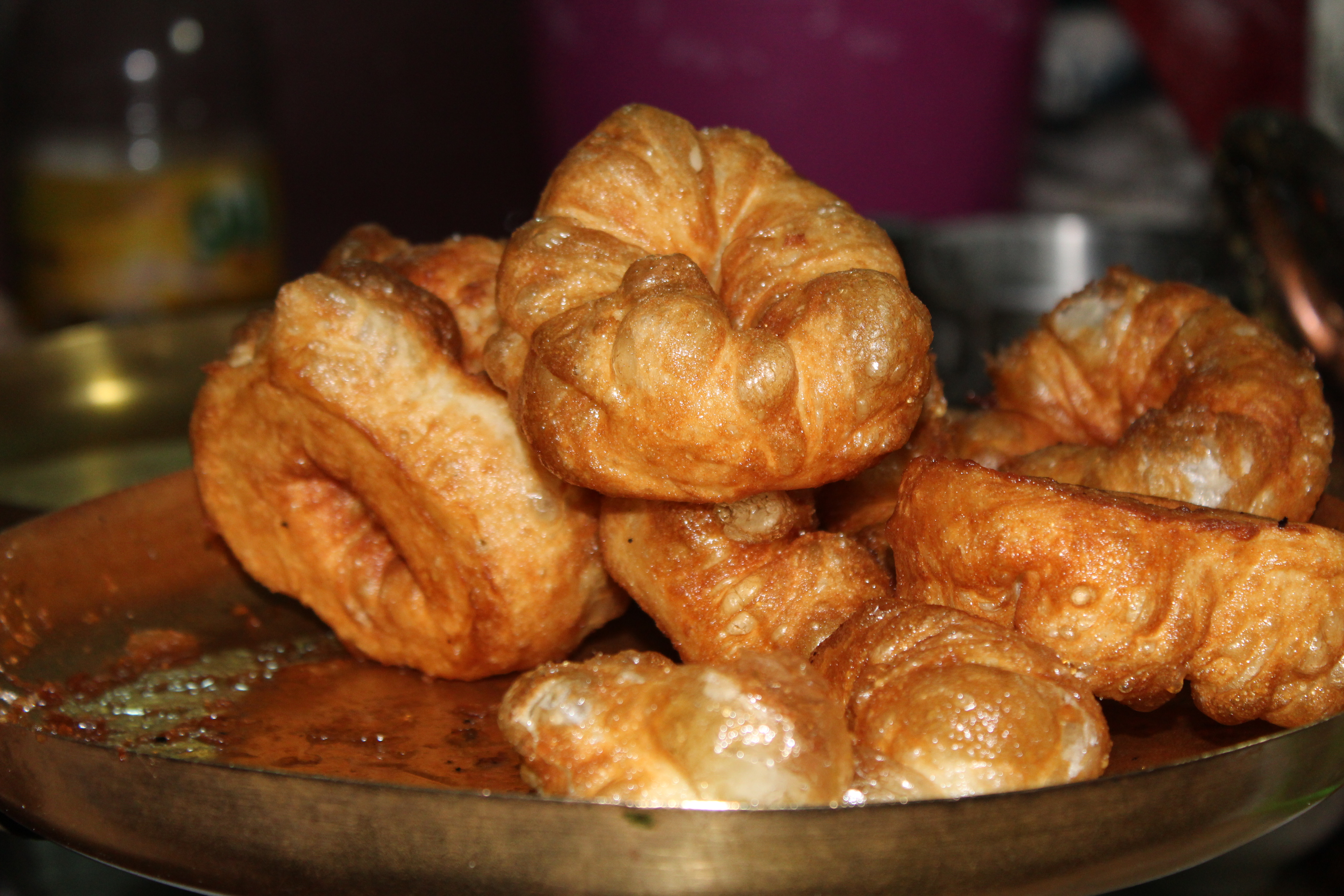
There are plenty of sweet street foods, too. Sfenj are light, fluffy, deep-fried doughnuts served coated in sugar or honey and often bought by workers on their way home in the afternoon. They are the perfect stopgap between lunch and dinner! Don’t miss out on trying chebakia, a local Moroccan pastry shaped to look like a rose, deep-fried and then dunked in honey flavoured with rosewater.
READ MY COMPLETE GUIDE TO MOROCCAN FOOD
What to Drink in Morocco
Alcohol
Even though alcohol is forbidden in Islam and Morocco is a mainly Muslim country, the sale and consumption of alcohol is not banned. It is perfectly possible to drink alcohol in bars, restaurants, and hotels, particularly in tourist areas. You should respect local sensibilities, though, and not consume alcohol in public. In more ‘off-the-beaten-track’ places, alcohol will be harder to come by. Don’t try to flout local customs. Simply refrain until you are in a more touristy place!
Mint Tea
Mint tea, also known as Moroccan whisky, is ubiquitous in Morocco. It is made from gunpowder green tea flavoured with fresh mint leaves and sweetened with copious amounts of sugar. Locals drink it at any time of day. There are rituals associated with making and serving mint tea, as demonstrated in this video.
We enjoyed mint tea many times during our trip around Morocco, most notably in a family home in M’Hamid when our guide, Hamid, showed us the correct way to make it.
Coffee
As well as enjoying mint tea, Moroccans (mainly men) also consume vast quantities of strong black Arabic coffee. They sit outside coffee bars for hours, telling stories or exchanging banter over a game of backgammon.
There are rituals associated with making coffee, as there are for mint tea. The beans are usually ground and then brewed straight away – the fresher, the better. The coffee is often flavoured with spices, especially cardamom. The amount of sugar used depends on when the coffee is being drunk. After dinner, coffee is served slightly sweetened. At celebrations such as weddings, christenings, and birthdays, the coffee is very sweet. At funerals, it is drunk with no sugar at all. Moroccans rarely drink coffee with milk, although this is changing in big cities with the influx of American-style coffee shops.
More usually, there will be the option to flavour your coffee with a few drops of orange blossom water.
Milkshakes
Milkshakes are popular in Morocco, particularly one made by whizzing together almonds, milk, dates, and a splash of orange flower water. Other flavours include avocado, mango, and strawberry.
Other Soft Drinks
Bottled water, sugar cane juice, fresh fruit juices (especially pomegranate), and proprietary soft drinks like Coca-Cola, Fanta, and Sprite are widely available in Morocco.
Best Things to Do in Morocco
My Morocco travel guide continues with a round-up of the best things to do when you visit the country.
Spend a Night in the Sahara Desert
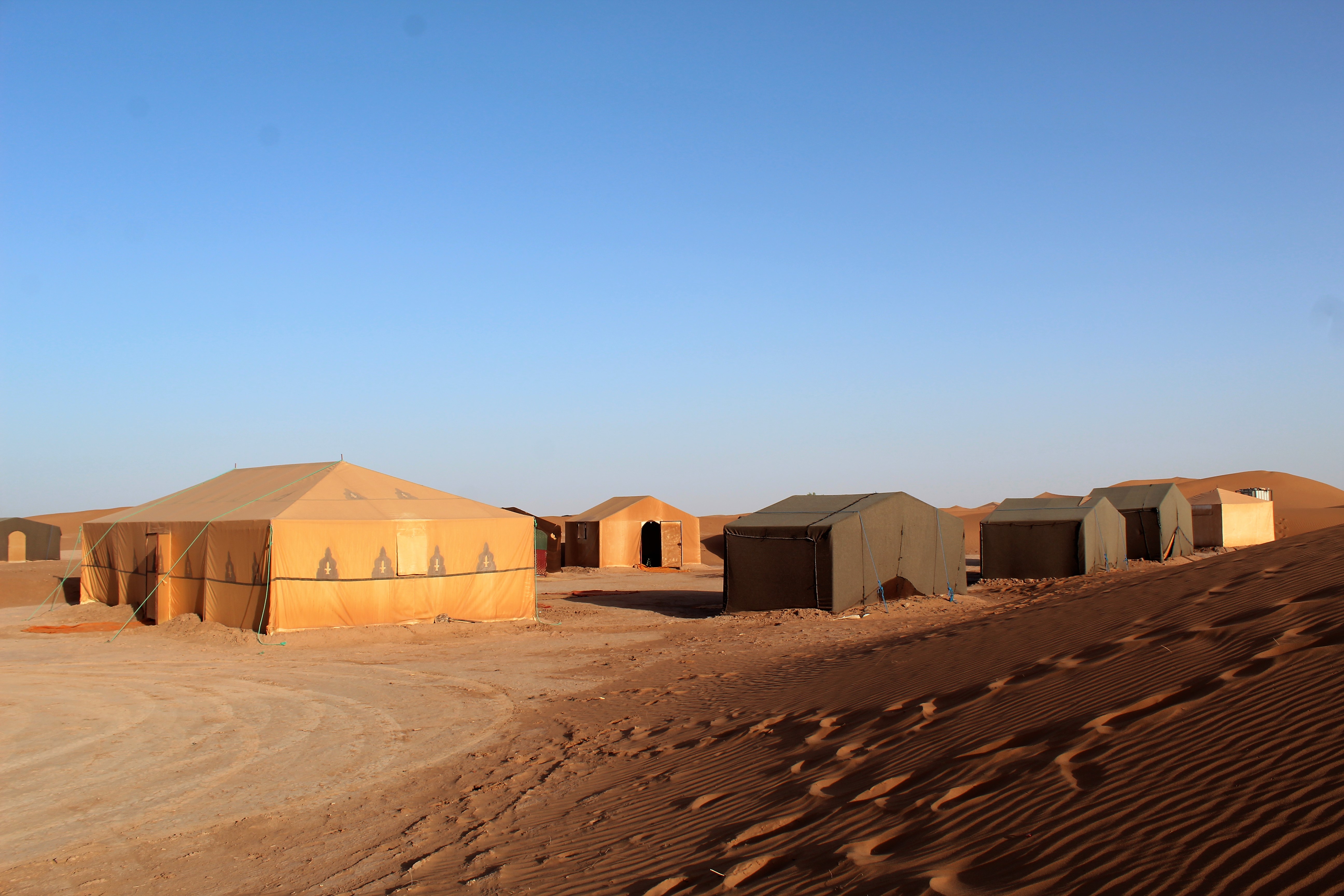
One of the most memorable things to do in Morocco is to spend a night ‘glamping’ in the Sahara! Semipermanent camps have been set up where you can enjoy delicious meals and the experience of sleeping under canvas or, if you prefer, directly under the stars. Your stay will usually include watching the sunset from the top of a dune, getting up very early to see the sunrise, and, if you’re lucky, being entertained with Berber singing and dancing around the campfire.
Explore Casablanca with a Local Guide
I have talked many times about how I like to book a tour with a local guide whenever I visit a new city. It’s the best way I know to get under the skin of a place. I always discover things I would never have found by myself.
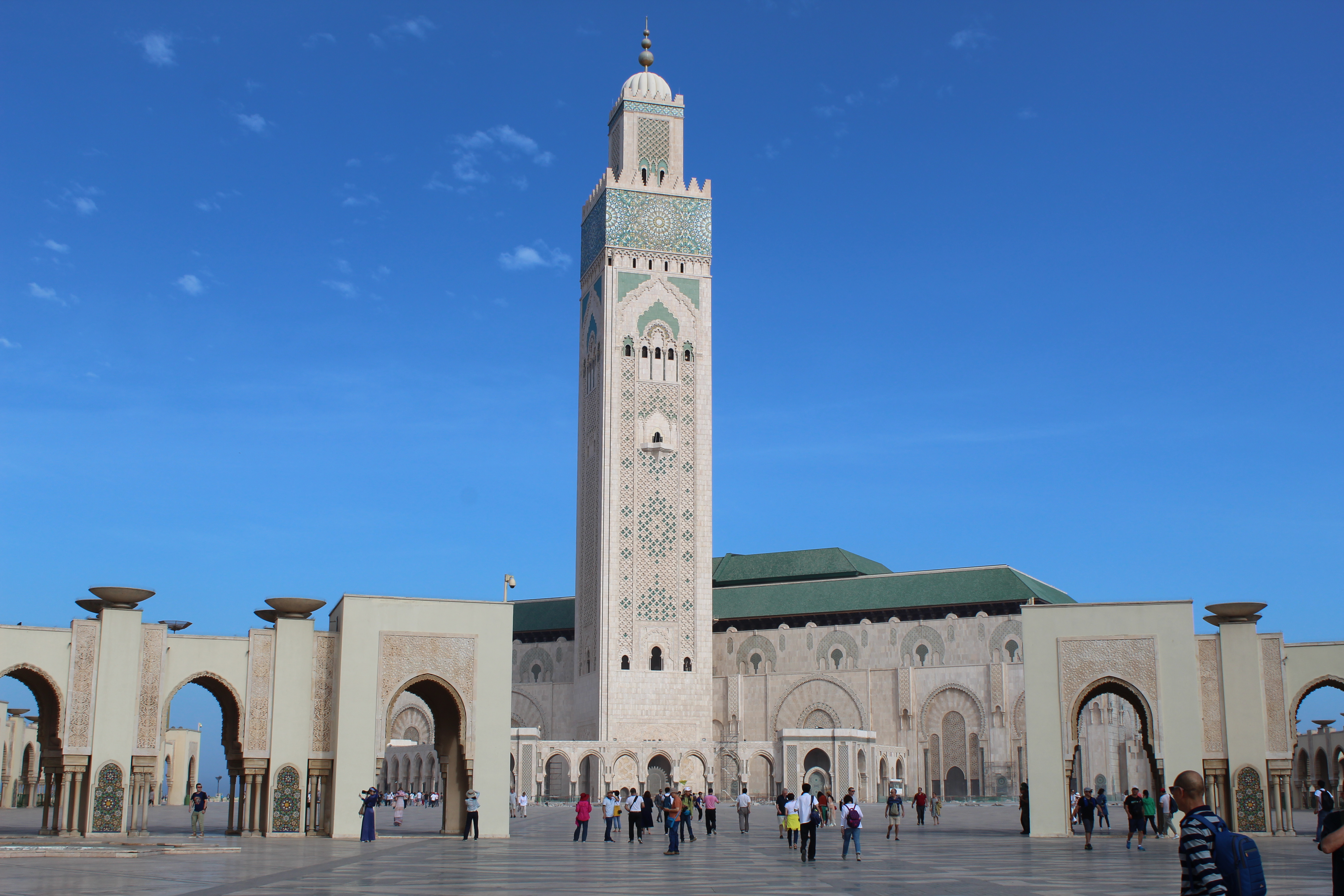
Casablanca was no exception. From visiting the impressive Hassan II Mosque, to wandering the lanes of the old medina, to sampling luscious olives, refreshing mint tea, and sweet almond pastries, our tour ticked all the boxes.
Enjoy Mint Tea on a Food Tour of Marrakech
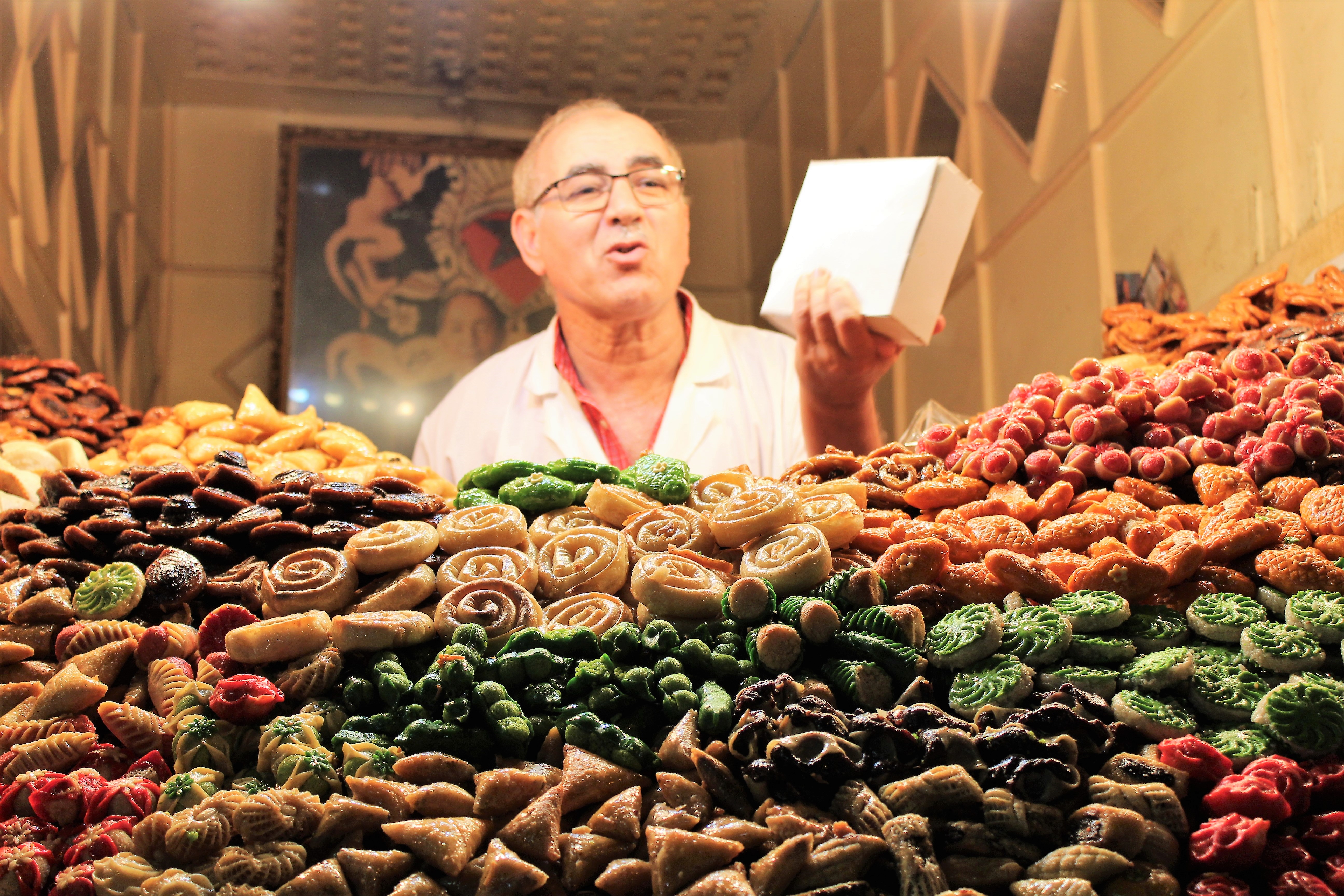
As I said above, mint tea is everywhere in Morocco, and it’s important that you experience it with all the associated rituals. The best way to do this is as part of a food tour of Marrakech. As well as the tea, you will get to try sfenj, delicious bread straight from the oven, plump olives, tanjia, sweet cookies, and many other treats.
Listen to the Call to Prayer at Sunset in Moulay Idriss
The holy city of Moulay Idriss was closed completely to non-Muslims until 1912, and it wasn’t until 2005 that they were allowed to stay overnight, so it still feels like a real privilege to be there. Whether you are religious or not, in the same way that Jerusalem or Rome affects you, you feel a certain spirituality in the air at Moulay Idriss. It’s a very calming, peaceful place, a feeling which is only intensified by the sung call to prayer which fills the air five times a day.
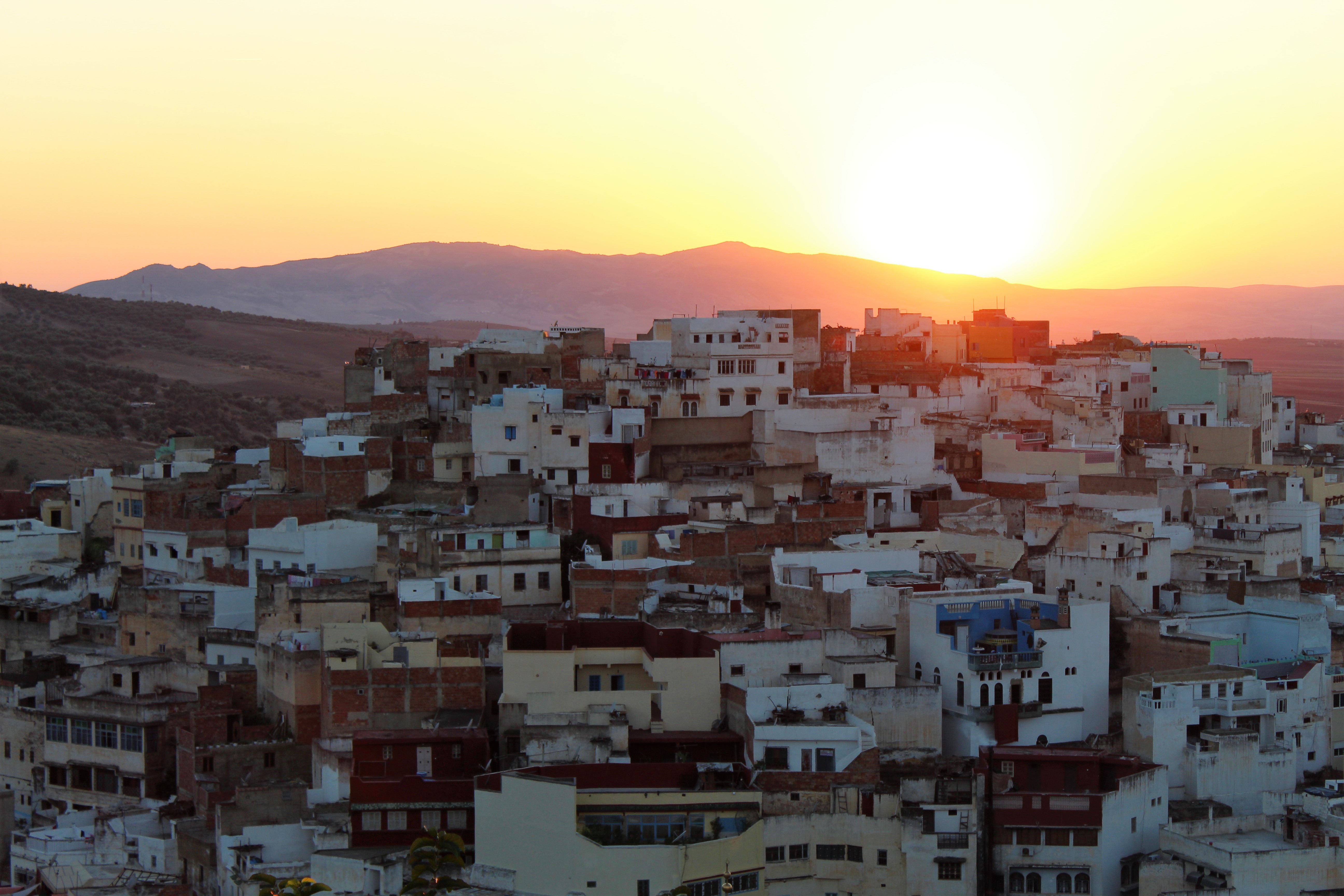
Read all about our stay in Moulay Idriss here.
Look Out for Goats Climbing Argan Trees
‘Goats climbing argan trees’ sounds like the title of a comedy sketch, but it is, in fact, one of the iconic sights of Morocco. The goats climb the trees to feed on the fruit of the argan tree. Later, the nuts that they excrete are collected, and precious argan oil is extracted. This video explains the process:
Watch Street Theatre in Djemaa el-Fnaa in Marrakech
The main square in Marrakech, Djemaa el-Fnaa, has to be one of the largest, most chaotic, most colourful public spaces in the world. It is an assault on the senses. You can shop here, eat and drink here, and, most importantly, be entertained by jugglers, clowns, dancers, singers, musicians, and magicians. There are still snake charmers and monkey handlers in the square. My advice would be to steer well clear of these. The fewer tourists who engage with them, the sooner they will be a thing of the past on Moroccan streets.
Djemaa el-Fnaa is an experience not to be missed, as you can see in this video.
Eat Camel Burgers in Meknès
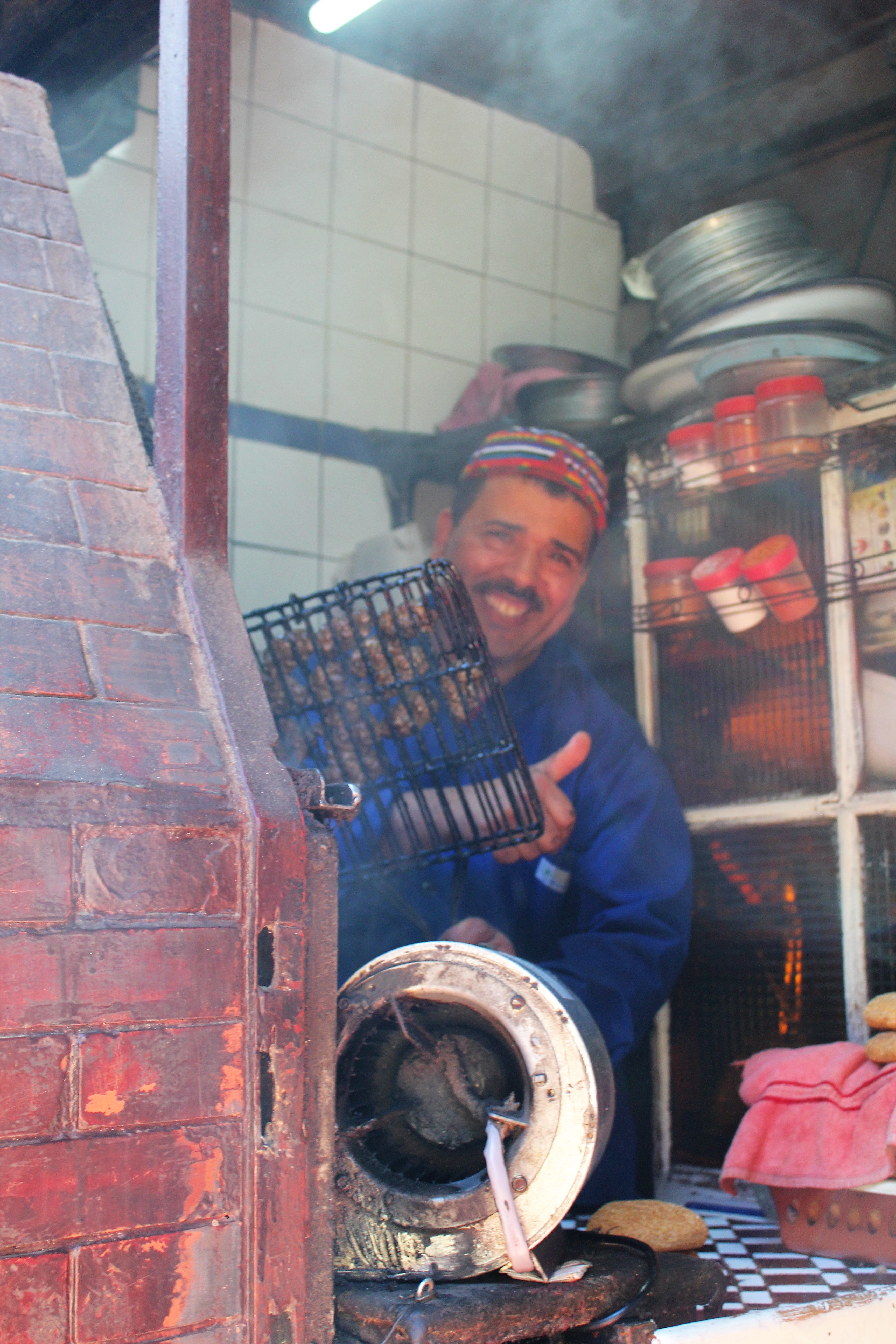
With apologies to vegetarians, trying camel burgers in the medina in Meknès is a must-do activity in Morocco! The city itself has an interesting history, making it well worth a stop on any tour around the country. Once you’re there, you have to sample the camel burgers in the narrow, smoke-filled alleys of the medina!
Lose Yourself in the Alleyways of Fez Medina
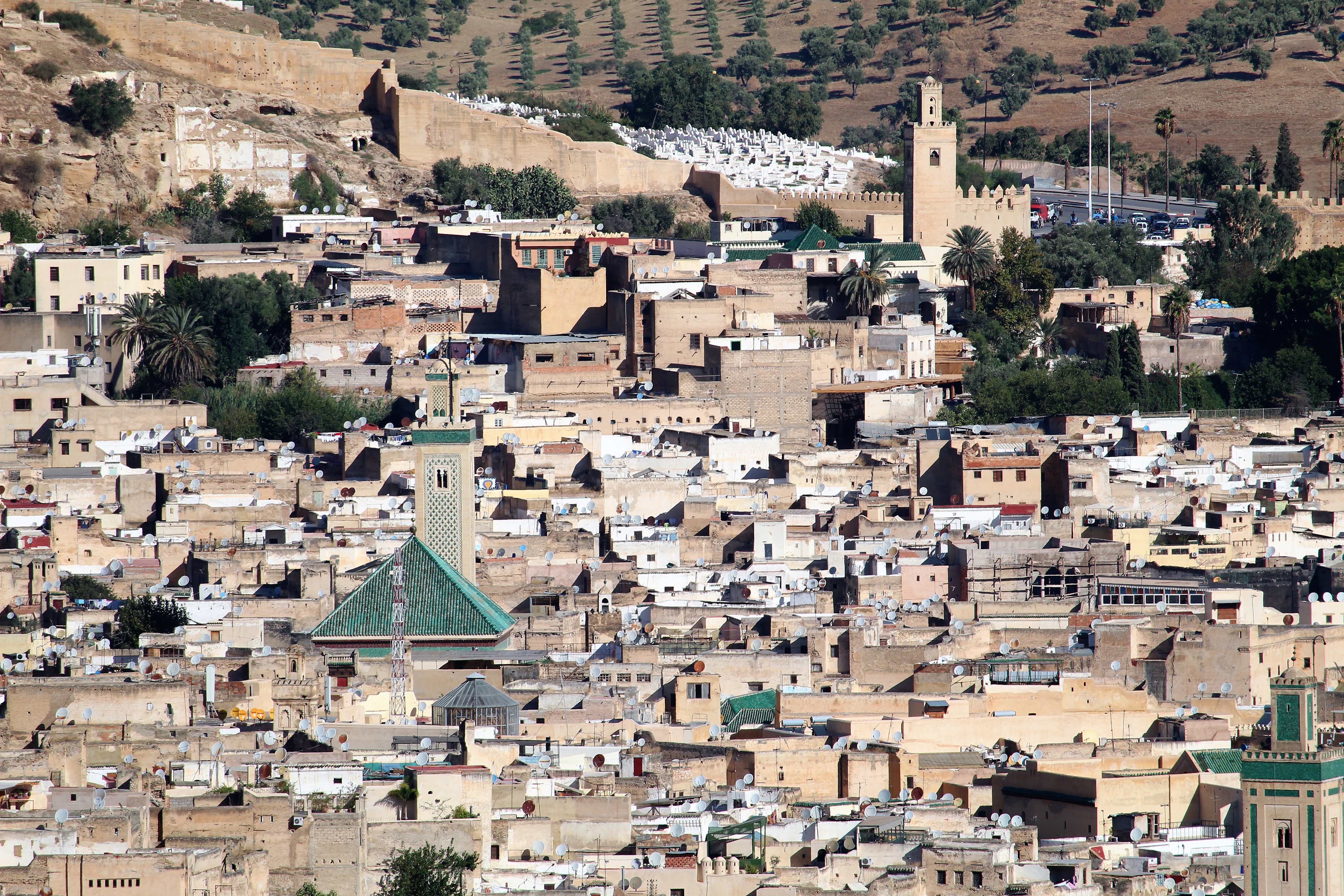
Fez has the oldest and largest medina in Morocco. You can easily spend a day meandering through the alleyways, soaking up the atmosphere as you peer through half-open doors, wondering at the lives going on behind them. Your imagination will be fired up by the tantalising aromas, chaotic sounds, and colourful sights. Don’t worry about getting lost – it’s part of the experience! There’s no need to be overly afraid. Take the same precautions with your belongings and your personal safety as you would anywhere else, and just enjoy it!!
Hike in the Atlas Mountains
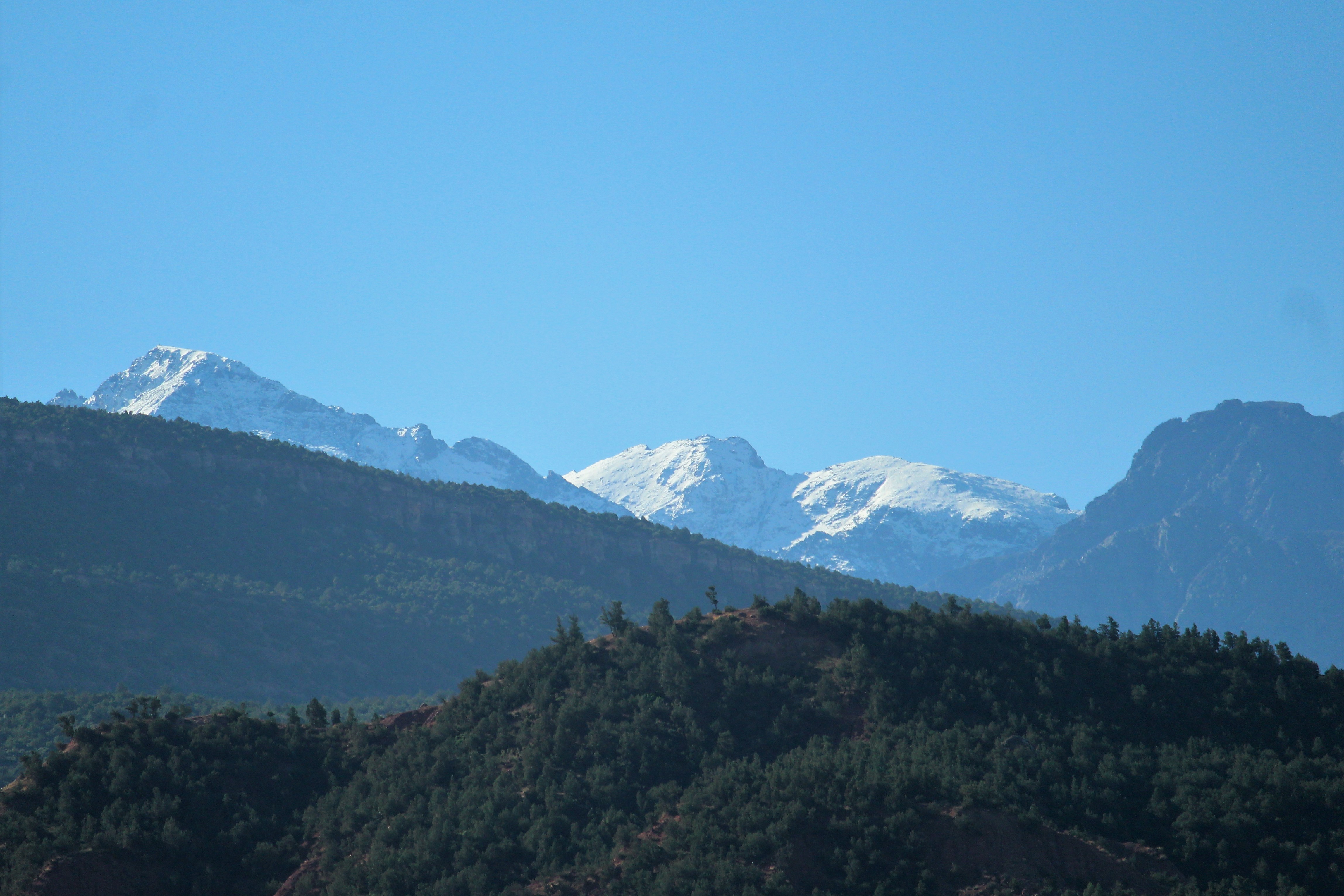
When you’ve had enough of bustling, busy cities, why not escape for a day or two to the High Atlas region? Here, it will be cooler, the air will be clearer, and you can enjoy some unparalleled Berber hospitality. Go hiking, imagine you’re Russell Crowe as you visit the set of Gladiator, and marvel at the stunning kasbah at Aït Benhaddou.
Learn How to Cook the Perfect Tagine
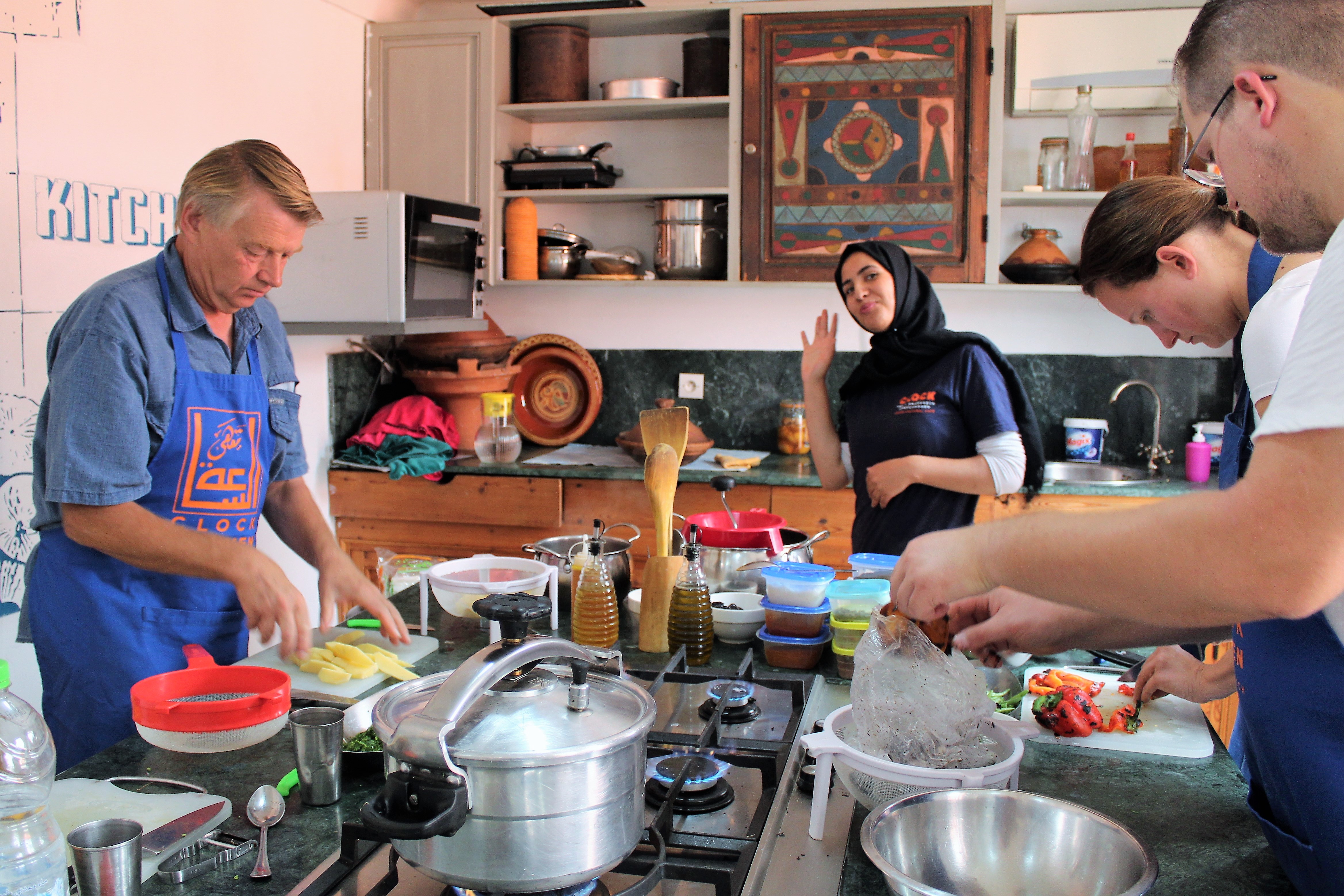
One of the best things to do when you visit a country for the first time is to take a cookery class and learn how to prepare one of the national dishes. We did just this in Marrakech. The class we took at Café Clock was incredible! We shopped for ingredients in the local souk and then learned how to make a cooked salad, a vegetable tagine, a lamb tanjia, and some delicious date pastries.
You can read my full review of the class (including details on how to book) here.
Take a Thousand Photos in Chefchaouen
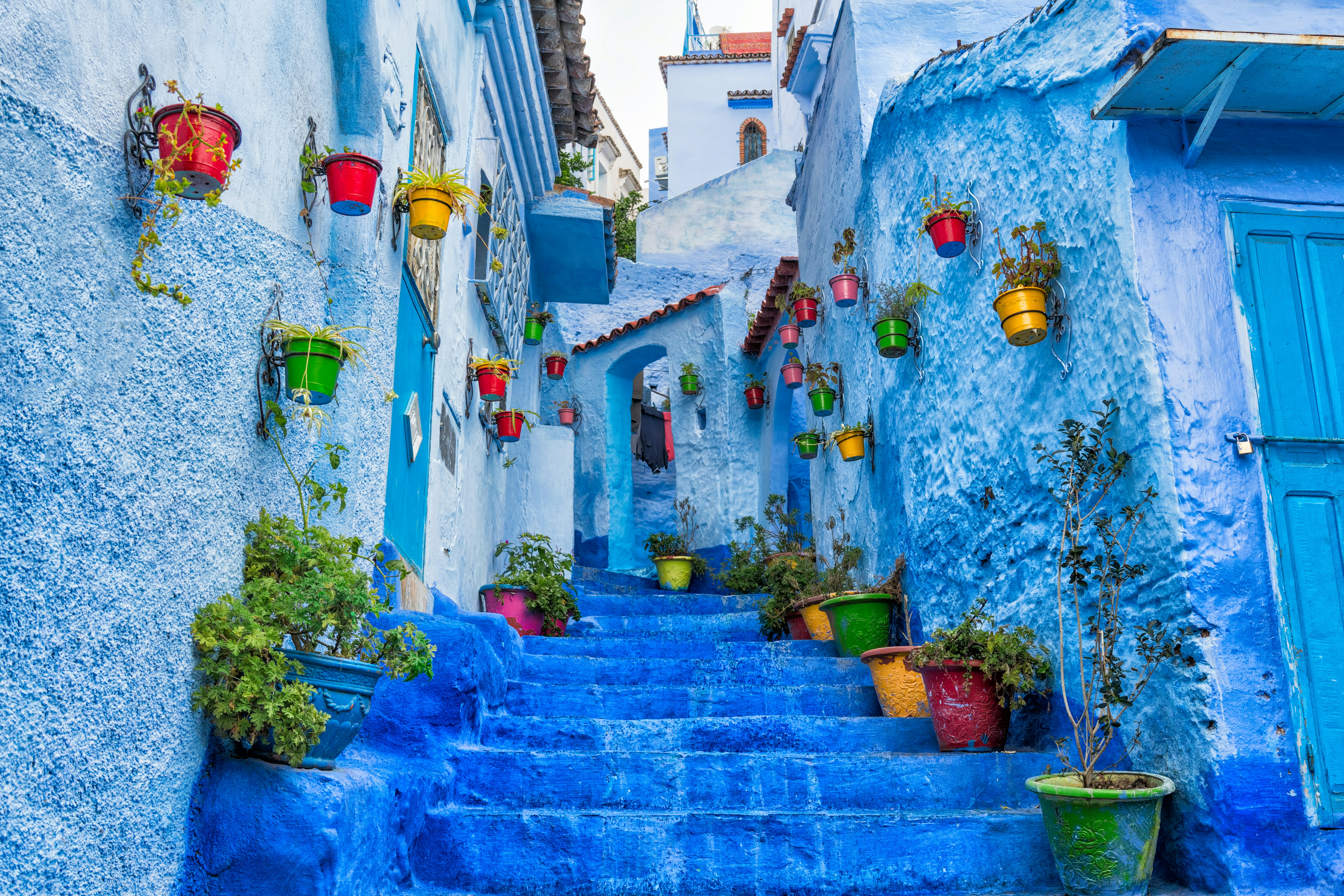
Any visit to Morocco has to include a few days in the famous blue city, Chefchaouen. It’s a photographer’s dream with eye-catching photo opportunities around every corner. Wander around, chat with friendly locals, eat some amazing food, and haggle over a handwoven carpet!
Drive Through the Drâa Valley
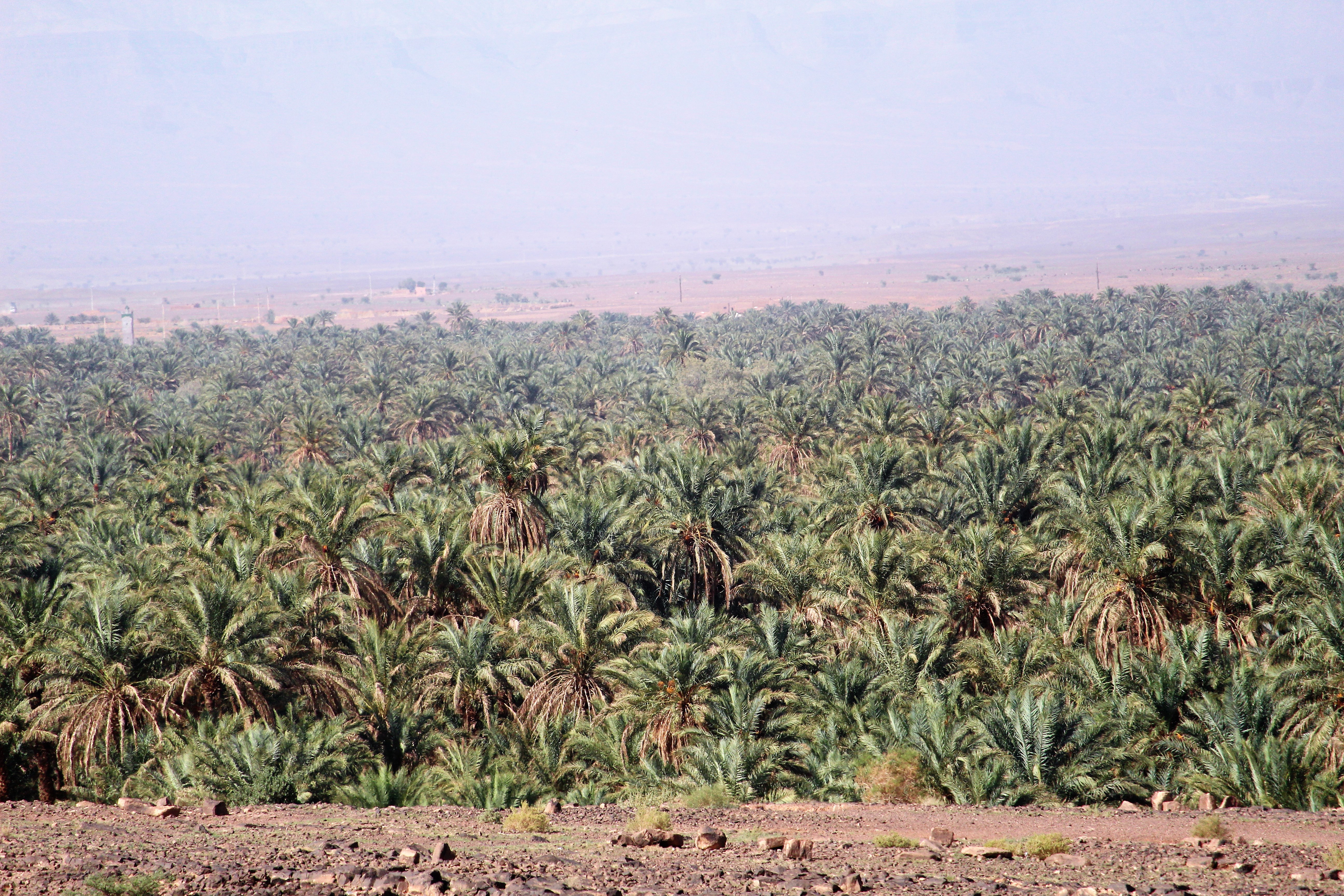
The Drâa Valley is known as the date basket of Morocco. 18 varieties are grown here. Lush oases and verdant date palm plantations can be seen on either side of the road as you drive the 190km from Ouarzazate, through Agdz and Zagora, to M’Hamid. The scenery is beautiful, and there are plenty of places en route to stock up with supplies or to enjoy a delicious lunch.
Stay with a Local Family
There is nothing like staying with a local family for learning about the culture, lifestyle, and cuisine of a place. During our tour around Morocco, we stayed with a family in Moulay Idriss and learned how to cook couscous properly. We also enjoyed an amazing dinner in the home of our driver’s sister in Tangier and had lunch in a family home in M’Hamid. These were amongst the top highlights of our four-week trip.
Do a Self-Guided Walking Tour in Rabat
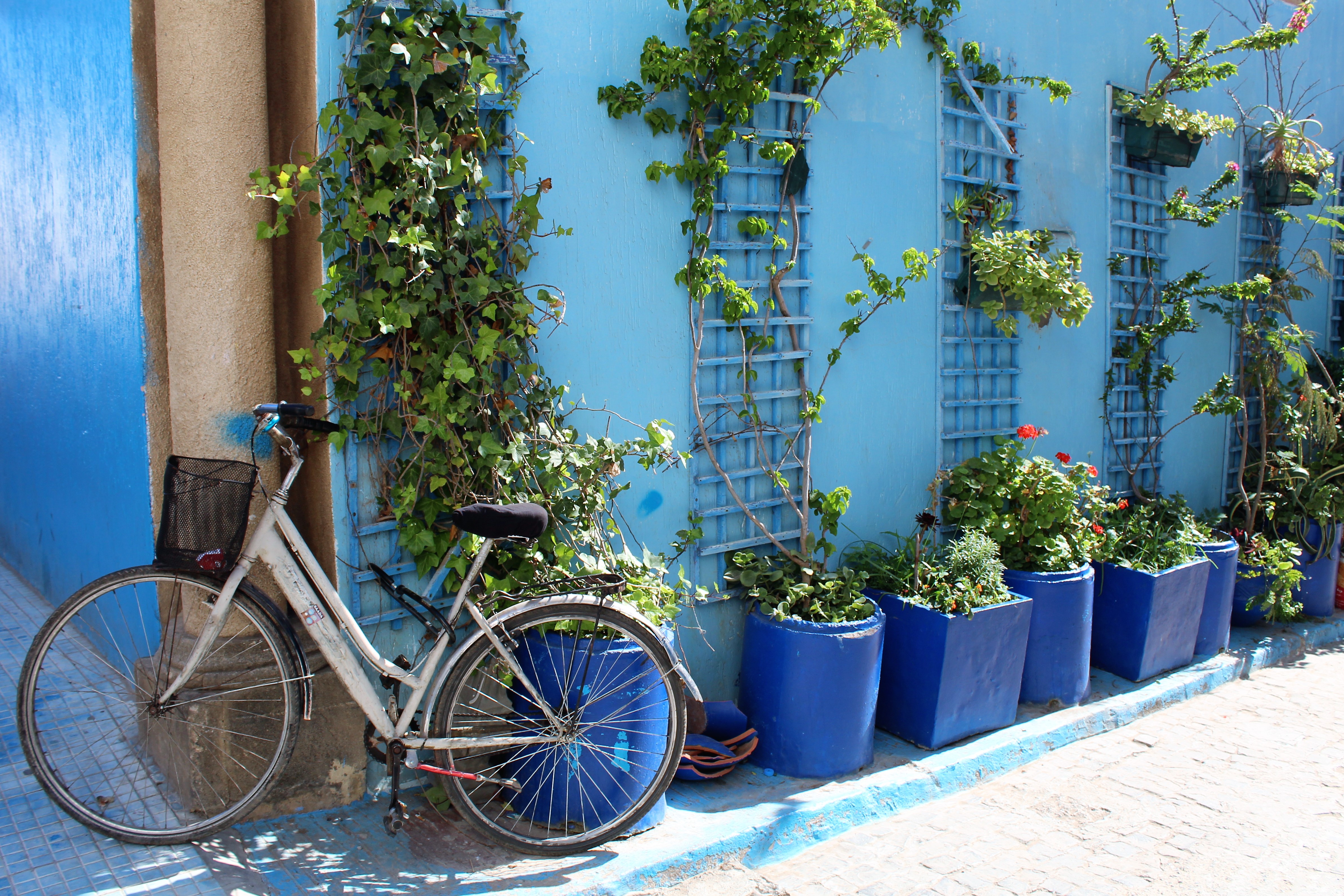
Morocco’s capital, Rabat, is often missed off Morocco itineraries, but that’s a real shame. The city’s architecture is an eclectic mix of ancient and modern. There are beaches and green spaces for relaxing. The kasbah forms its own mini blue city, not as famous or as large as Chefchaouen, but worth a visit nevertheless. Rabat is also home to one of the country’s most visited sites, the mausoleum of Mohammed V. The best thing about Rabat, though, is that it can easily be explored in a day.
Eat Fish in Essaouira
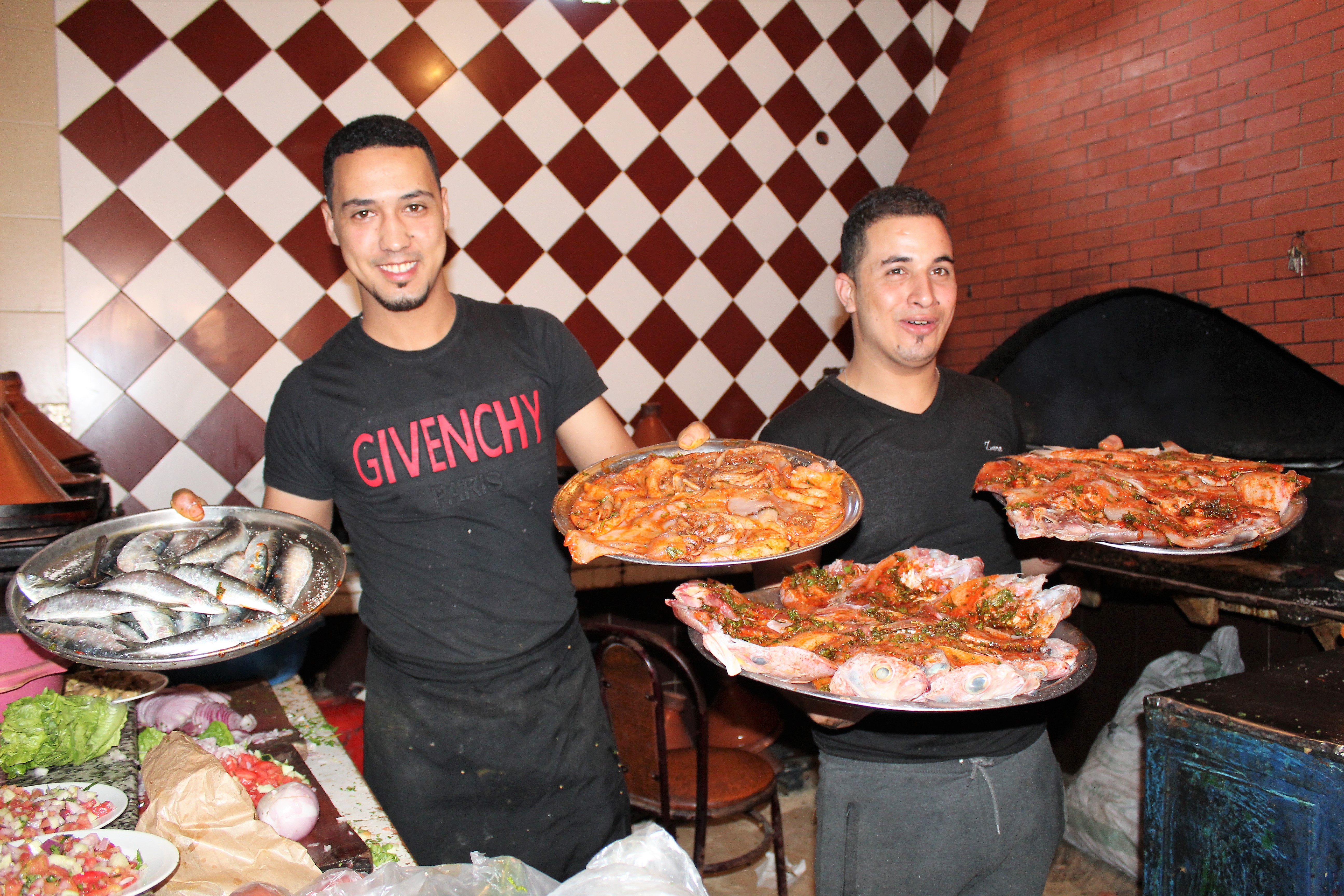
Essaouira is one of my favourite spots in Morocco. It has long stretches of white sandy beach, a thriving arts, crafts, and café culture, and a very busy fishing harbour. A real treat is to buy fresh fish straight off a boat and then have it cooked for you in a local restaurant.
Visit Volubilis
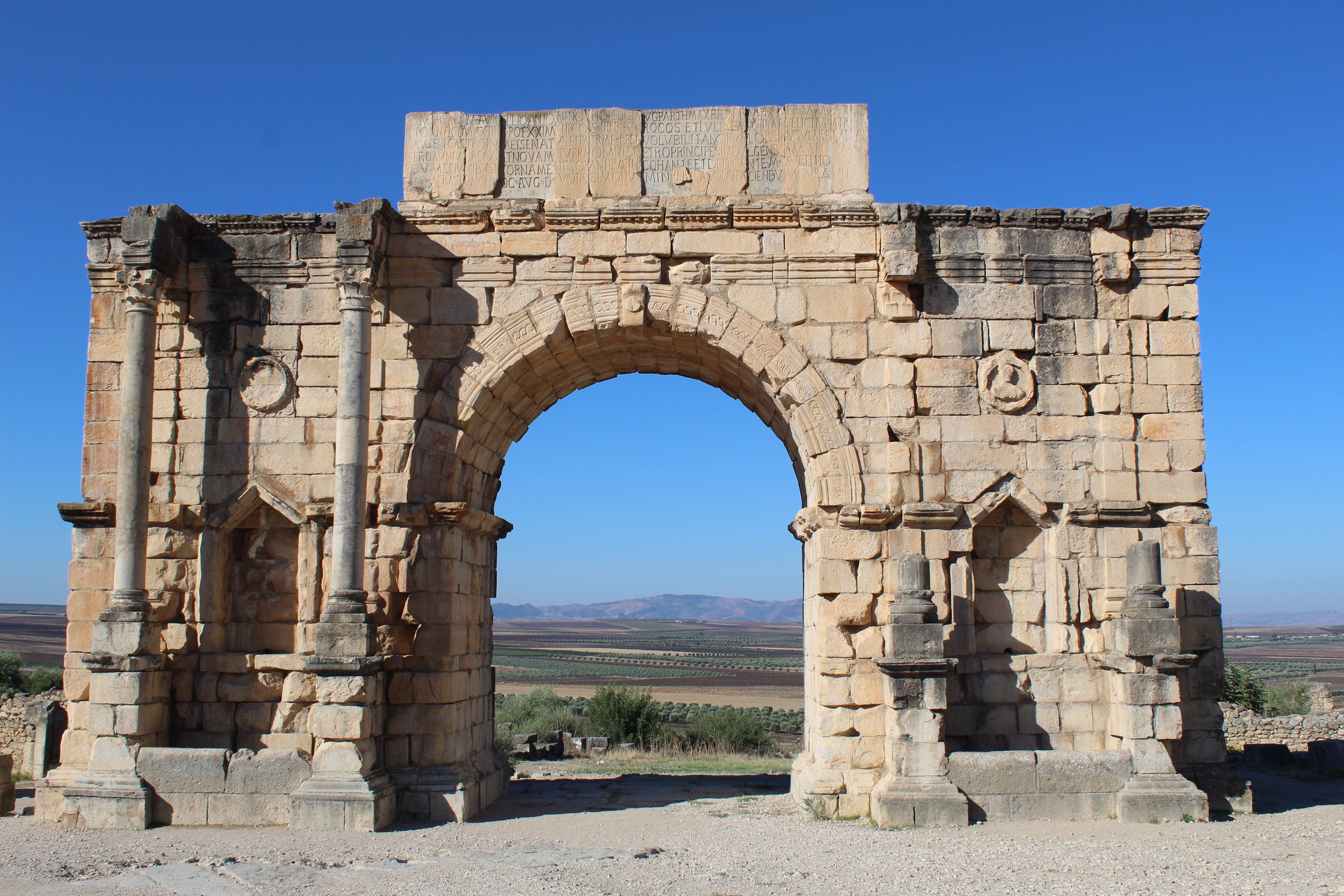
The Roman city of Volubilis in Morocco is surprisingly well-preserved and should be included in any itinerary of this diverse nation. Relatively few tourists make it here, so you’re likely to have the site largely to yourself. It’s incredible to see intricate, highly ornate mosaic floors still in their original location. Hire an official guide at the entrance so that you don’t miss any of the fascinating details about what you’re seeing.
Read my full account of our visit to Volubilis here.
Final Thoughts on Visiting Morocco
Morocco is a country of contrasts. One day you might be wandering through the maze-like alleys of an ancient medina, listening to the call to prayer echo across the rooftops. The next, you could be watching the sun rise over the Sahara Desert or hiking through snow-capped mountains in the High Atlas.
What makes Morocco so special isn't just its landscapes or historic sites. It's the warmth of the people, the generosity of Berber hospitality, the endless glasses of mint tea, and the sense that every corner of the country has a story to tell.
Whether you're drawn by the bustling souks of Marrakech, the blue streets of Chefchaouen, the Roman ruins of Volubilis, the beaches of Essaouira, or the silence of the desert, Morocco is a destination that rewards curiosity and slow travel.
We spent four unforgettable weeks travelling around Morocco and still left with a long list of places we wanted to return to. If you're planning your first trip, my advice is simple: don't try to see everything at once. Choose a few regions, allow time to wander, talk to people, and embrace the unexpected.
Morocco is not a country that reveals itself in a hurry.
I hope this Morocco travel guide has helped you plan your adventure. As more Morocco articles are republished on Happy Days Travel and Crafts, you'll find links throughout this guide to help you dive deeper into each destination.
Watch this Video for More About Morocco
If you’re travelling soon, please use these links!
Are you travelling soon? Use these links when making your bookings. These are the companies we use. It won’t cost you any extra, but we will earn a few pennies to help keep Happy Days Travel Blog going. Thank you!!
Make sure you take out travel insurance. If you are a digital nomad or long-term traveller, try the specialist provider SafetyWing. (Never leave home without protecting yourself, your trip and your belongings!)
Book your flightwith Skyscanner
Book your accommodation with Booking.com
Book a tourwith TourRadar
Book city toursand activities with Viator or GetYourGuide
Check out my Resource Page for more companies I recommend.
Disclosure:This post contains affiliate links. If you click through for more information, or to make a purchase, it may result in a small commission coming my way. Please note that there is no extra cost to you associated with this. Thank you so much for supporting my site.
