Visiting Kayaköy, Turkey: A Ghost Village of Quiet Loss
Last updated: March 2026 – This guide has been refreshed with the latest visitor information and travel tips
A Different Kind of Place
Not all places connected to difficult histories are defined by violence.
Some are quieter than that.
Some are places where life simply… stopped.
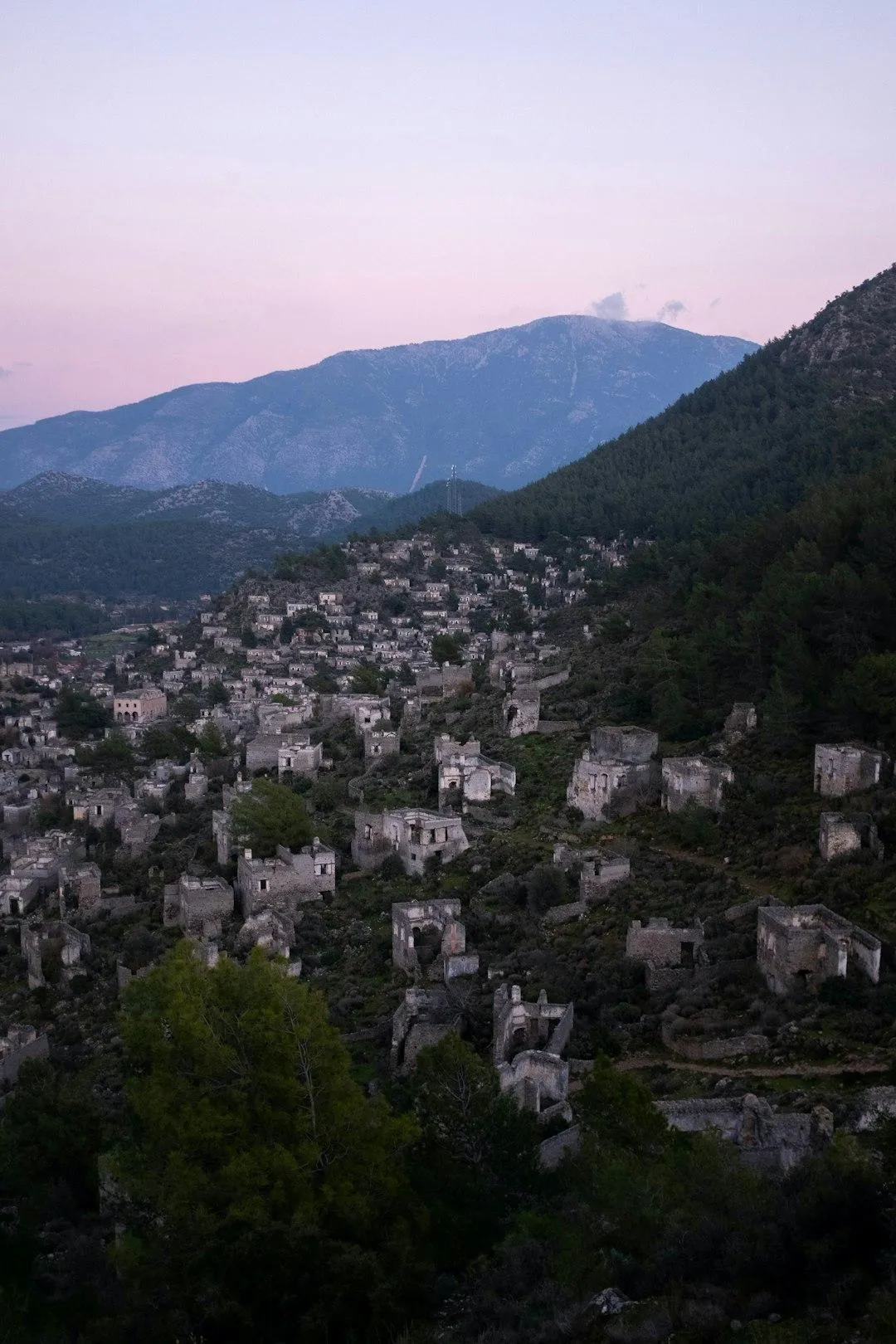
Kayaköy, a ghost village in southern Turkey, is one of those places.
If you want to skip to a particular section of this article, please use these links:
The Population Exchange of 1923
A Different Kind of Dark Tourism
Where Is Kayaköy?
Kayaköy lies in the Kaya Valley, just a few kilometres from the busy resort areas of Hisarönü and Fethiye.
It’s easy to reach by local dolmuş, or by taxi, but it feels a world away from the bustle of the coast.
Here, the landscape is quieter. Slower.
And, in many ways, unchanged.
A Village Once Shared
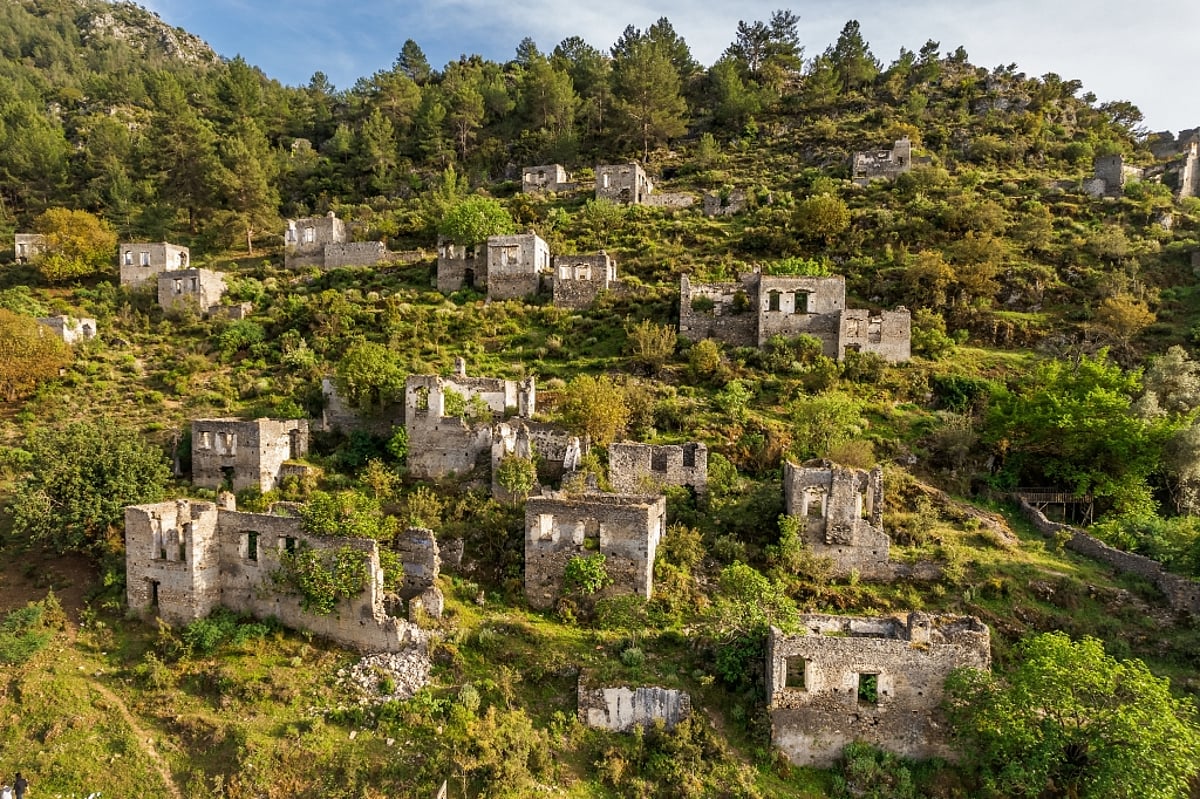
For centuries, this valley was home to both Greek and Turkish communities.
They lived side by side, their lives intertwined but distinct.
Turkish families worked the land on the valley floor
Greek families lived on the slopes, building homes, running businesses, and practising crafts
The village — then known as Levissi — was thriving.
By the early 20th century, it had:
around 1,000 houses
two large churches
multiple chapels
schools, fountains, and windmills
The houses were carefully built so that none blocked another’s light or view — a small detail that hints at the thought and care that went into this place.

The Population Exchange of 1923
Everything changed in 1923.
Following the end of the Greco-Turkish War, Greece and Turkey agreed to a compulsory population exchange.
Greek Orthodox communities in Turkey were forced to move to Greece.
Muslim communities in Greece were sent to Turkey.
In Kayaköy, this meant that the Greek population — who had lived here for generations — were required to leave.
They departed on 30th June 1923.
Their homes, their churches, their schools… all left behind.
Turkish families from Thrace were brought in to replace them.
But many found the village unfamiliar, unsuitable, or simply not home.
And so, slowly, it was abandoned.
Walking Through Kayaköy Today
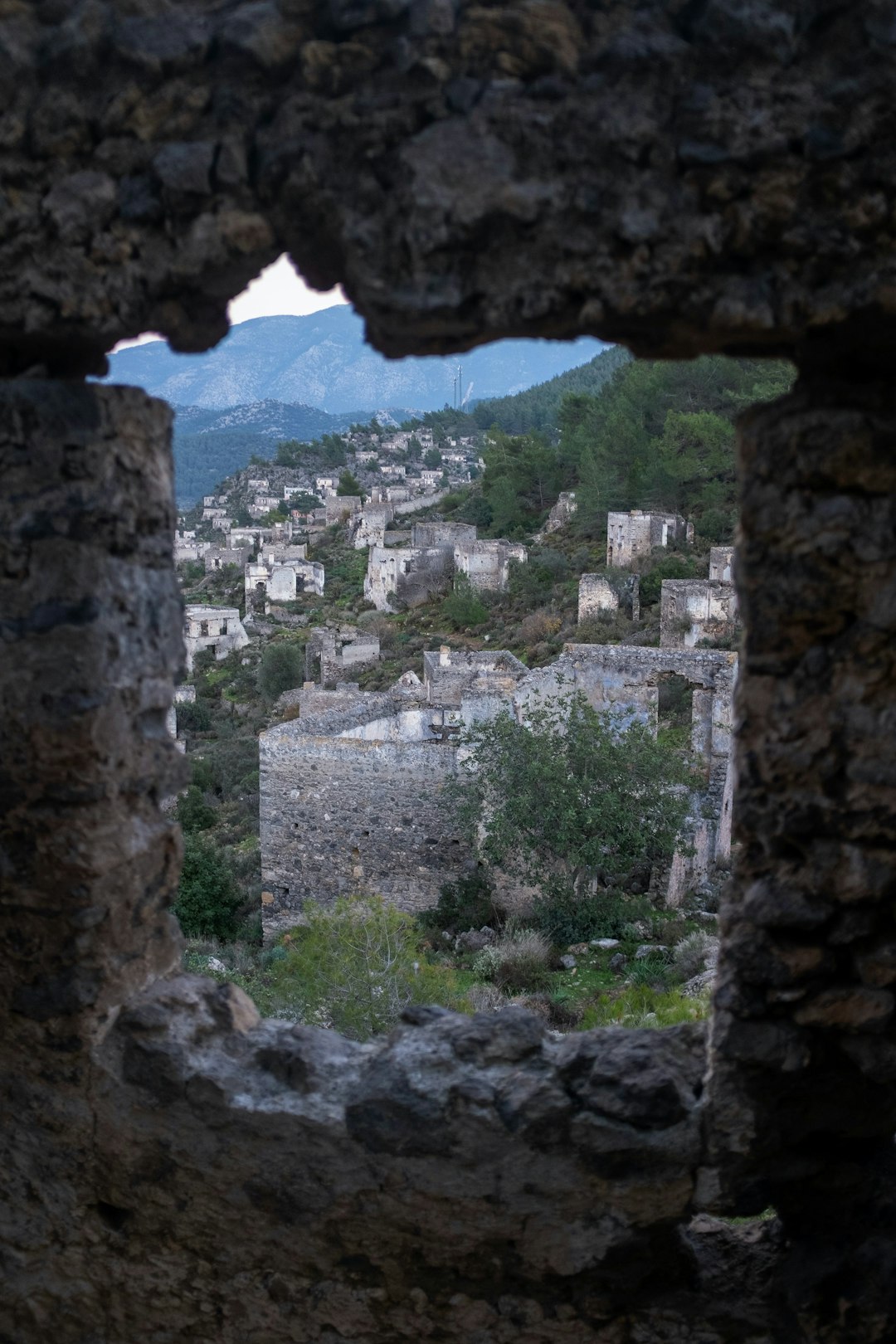
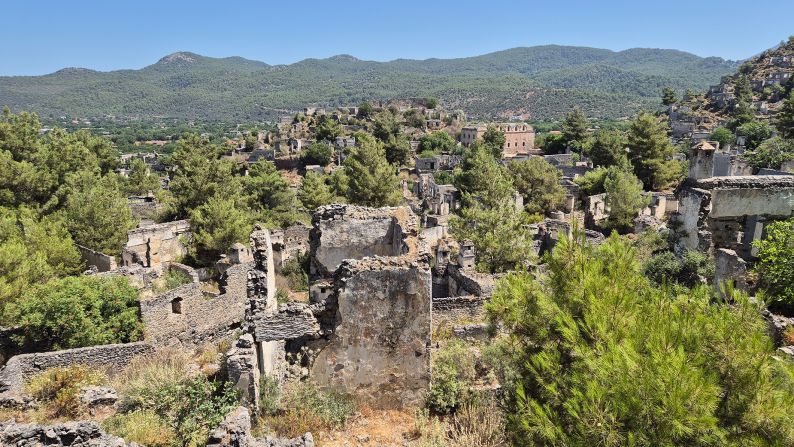
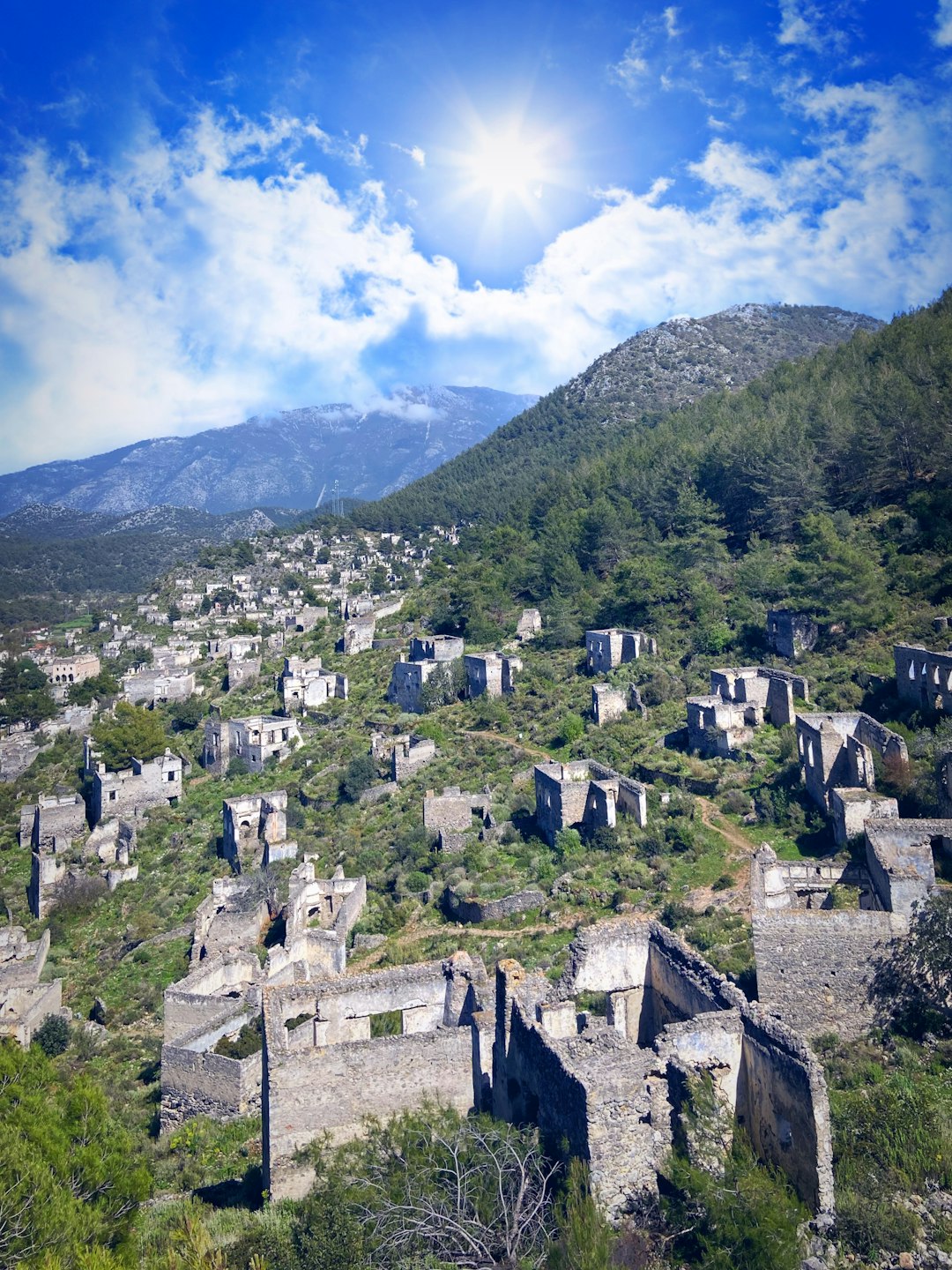
What remains today are the empty shells of those homes.
No roofs.
No doors.
No windows.
Just stone walls climbing the hillside.
As you walk through the village, you begin to notice small details:
traces of paint on the walls
fireplaces and shelves still in place
the curve of a staircase leading nowhere
even the occasional curtain rail
These are not ruins in the ancient sense.
They are the remains of relatively recent lives.
And that makes them feel closer.
More human.
The Atmosphere of Absence
When Mark and I were here, there was a stillness that is hard to describe.
The kind of silence that isn’t quite empty.
As you walk, the only sound might be the distant ringing of a goat’s bell, or the crunch of your own footsteps.
It feels… paused.
As though life could resume at any moment — but never will.
Unlike other places in this series, there are no displays here.
No photographs.
No explanations laid out for you.
You are left to walk.
To notice.
To imagine.
And, perhaps, to reflect.
A Different Kind of Dark Tourism
Kayaköy is sometimes described as a ghost village.
But that phrase doesn’t quite capture it.
This is not a place of sudden tragedy.
It is a place of displacement.
Of lives interrupted.
Of communities uprooted.
Of a shared history quietly undone.
And that, in its own way, is just as powerful.
Visiting Kayaköy Today
📍 Location: Near Fethiye, southern Turkey
🚌 Getting there: Dolmuş from Fethiye (via Hisarönü) or taxi
🎟️ Entry: Small fee (typically equivalent of €3–€5)
⏰ Time needed: 1–2 hours, longer if you wander deeper into the hillside
Tip:
Visit independently if you can. This is a place best experienced slowly, without time pressure.
Bring water, especially in hot weather — there is little shade as you climb the slopes.
A Quiet Reflection
Kayaköy is not dramatic.
It doesn’t confront you in the same way as other places in this series.
But it lingers.
Because it speaks of something quieter:
The loss of home.
The breaking of communities.
The silence left behind.
And sometimes, that silence says more than anything else.
Watch this Video for More About Kayaköy
➡️ Part of a Wider Journey
This visit forms part of a series exploring places that hold difficult histories.
👉 Read next:
👉 Or start here: Dark Tourism – Visiting Places That Hold Difficult Histories
If you’re travelling soon, please use these links!
Are you travelling soon? Use these links when making your bookings. These are the companies we use. It won’t cost you any extra, but we will earn a few pennies to help keep Happy Days Travel Blog going. Thank you!!
Make sure you take out travel insurance. If you are a digital nomad or long-term traveller, try the specialist provider SafetyWing. (Never leave home without protecting yourself, your trip and your belongings!)
Book your flight with Skyscanner
Book your accommodation with Booking.com
Book a tour with Tour Radar
Book city tours and activities with Viator or Get Your Guide
Check out our Resource Page for more companies we recommend.
Disclosure: This post contains affiliate links. If you click through for more information, or to make a purchase, it may result in a small commission coming my way. Please note that there is no extra cost to you associated with this. Thank you so much for supporting my site.
