Morocco Desert Tours: How to Plan an Unforgettable Sahara Adventure
Spending a night in the Sahara Desert was one of the highlights of the month Mark and I spent travelling around Morocco.
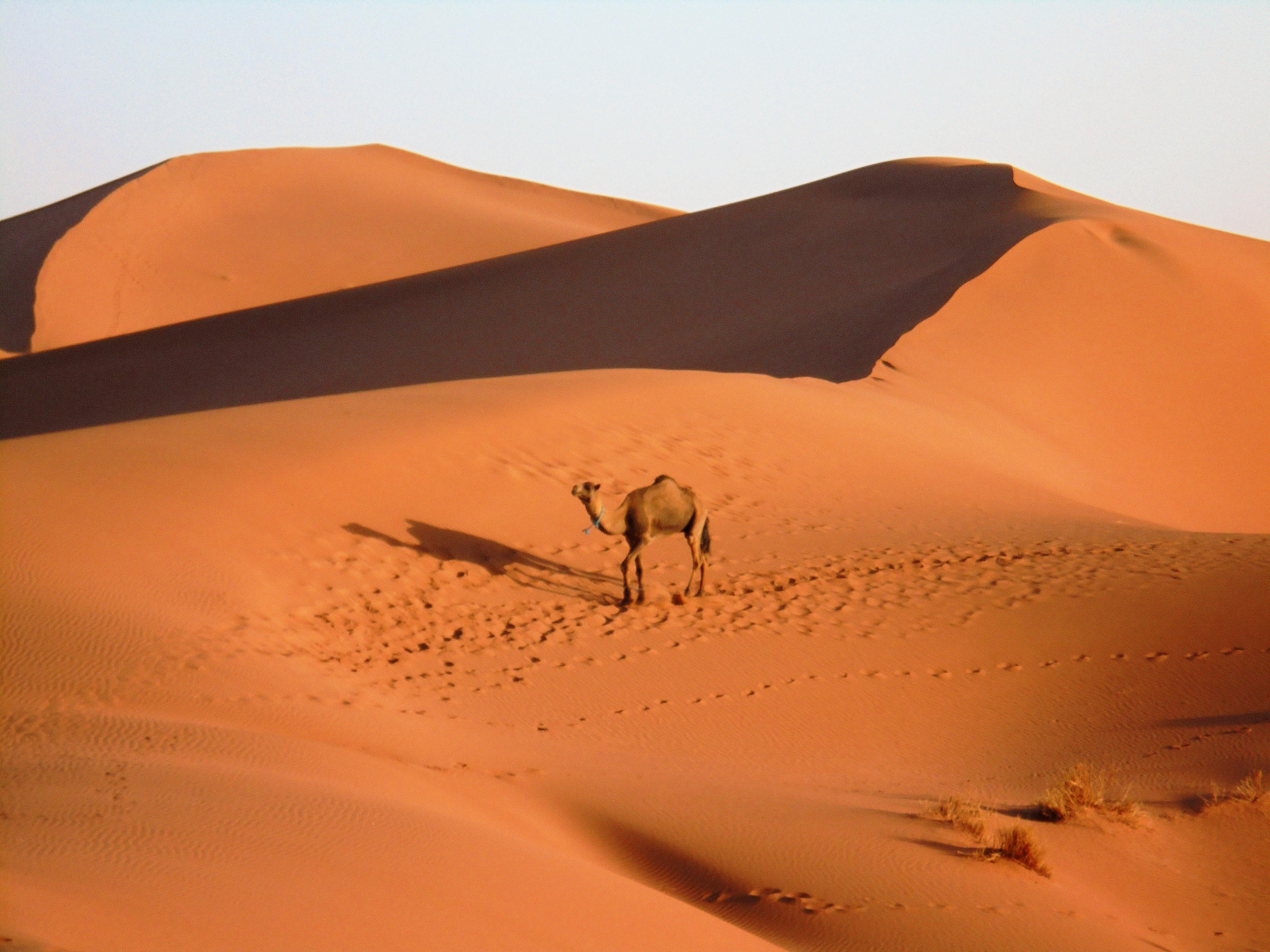
I'll never forget sitting on top of a sand dune, watching the sun disappear over an endless landscape of burnt-orange sand. Later, we enjoyed a wonderful dinner, listened to traditional music around a campfire, and gazed up at a sky filled with more stars than I could possibly count. It was magical.
Getting there was quite an adventure too. There were dusty roads, a rather uncomfortable camel ride, encounters with nomadic herders and an unexpected change of plans when heavy rain made our intended route impassable.
If your Morocco itinerary allows it, I'd highly recommend spending a night in the Sahara. But with so many different Morocco desert tours available, deciding where to go and which tour to choose can be confusing. Should you visit Erg Chebbi or Erg Chigaga? Can you reach the Sahara on a day trip from Marrakech? What is it really like to sleep in a desert camp?
In this guide, I'll explain the different options, how to plan your desert adventure and what to expect. I'll also share our own experience of travelling through Zagora and M'Hamid to spend an unforgettable night among the dunes of Erg Chigaga.
To jump to a particular section of this article, please use these links:
Are Morocco Desert Tours Worth It?
Where to Go on a Morocco Desert Tour
M'Hamid – The Gateway to Erg Chigaga
How Many Days Do You Need for a Morocco Desert Tour?
Where Do Morocco Desert Tours Start?
Our Morocco Desert Tour: An Unforgettable Night in the Sahara
Visiting Tamegroute – History, Markets and Green Pottery
Lunch and a Camel Ride in M'Hamid
The 4WD Journey into the Sahara
Arriving at Our Sahara Desert Camp
Watching the Sunset Over the Sahara
Dinner, Music and a Sky Full of Stars
Sunrise and an Unexpected Change of Plans
What to Expect at a Sahara Desert Camp
Electricity, Wi-Fi and Mobile Reception
How Cold Does the Sahara Get at Night?
How to Choose a Morocco Desert Tour
Which Desert Will You Actually Visit?
How Much Time Will You Spend Driving?
What Accommodation Is Included?
Are Meals and Activities Included?
Does the Operator Travel Responsibly?
What Happens if the Weather Changes?
Best Time to Take a Morocco Desert Tour
What to Pack for a Morocco Desert Tour
Is a Sahara Desert Tour Suitable for Solo Travellers or Older Travellers?
Final Thoughts: Is Spending a Night in the Sahara Worth It?
Are Morocco Desert Tours Worth It?
Absolutely – although I'd recommend choosing your tour carefully.
Morocco offers an extraordinary variety of landscapes, from the busy streets of Marrakech and Fez to the snow-capped High Atlas Mountains and the Atlantic coast.
But the Sahara is something else entirely. The desert has a special kind of peace. The landscape seems to stretch forever, the colours change throughout the day and, once you're away from towns and artificial lighting, the night sky can be spectacular.
For me, though, a desert tour is about much more than sand dunes.
It's also about the journey through southern Morocco, the oasis towns, traditional villages, dramatic mountain passes and the opportunity to learn something about life in this extraordinary environment.
We visited as part of a longer organised tour around Morocco, and our night in the Sahara was one of the experiences I most looked forward to.
It certainly didn't disappoint.
However, it's worth remembering that the Sahara is a considerable distance from Morocco's main tourist cities. If you want to experience the great sand dunes rather than simply visit a desert-like landscape, you'll need to allow enough travelling time.
Where to Go on a Morocco Desert Tour
One of the first decisions you'll need to make is which part of the Moroccan Sahara you want to visit.
The two best-known dune destinations are Erg Chebbi, near Merzouga, and Erg Chigaga, reached from M'Hamid.
An erg is a large area of wind-shaped sand dunes. Although we often imagine the Sahara as an endless sea of sand, much of the desert is actually rocky or gravel-covered.
Both dune destinations offer wonderful desert scenery and opportunities to spend a night under canvas, but the experiences are slightly different.
Erg Chebbi and Merzouga
Erg Chebbi lies near the village of Merzouga in eastern Morocco. It's one of the most popular destinations for Sahara desert tours, partly because the dunes are relatively accessible from the village. You can find everything from simple desert camps to luxurious accommodation with private bathrooms, comfortable beds and other facilities. Many tours include sunset or sunrise excursions, desert walks, traditional meals and optional camel rides.
Merzouga is a popular choice for travellers arriving from Fez or crossing southern Morocco from Marrakech.
I haven't personally visited Erg Chebbi, but it's certainly somewhere I'd consider if I returned to the Moroccan Sahara.
Erg Chigaga and M'Hamid
Erg Chigaga was our destination, and it offers a rather different experience.
The dunes lie beyond M'Hamid, at the end of the paved road through the Drâa Valley. Unlike Erg Chebbi, the main dunes of Erg Chigaga aren't immediately accessible from a village. Reaching them usually involves an off-road journey by 4WD, although longer camel treks are also possible.
This extra journey gives the area a more remote feel. Our drive from M'Hamid took around two hours, bouncing along dusty desert tracks through an ever-changing landscape. By the time we reached our camp, we really felt as though we'd left the rest of the world behind.
If you're looking for a quieter, more adventurous desert experience and don't mind a bumpy journey, Erg Chigaga is well worth considering.
What About Zagora?
Zagora is often advertised as a destination for short desert tours from Marrakech.
It's an important oasis town in the Drâa Valley and has a fascinating history as a stopping point on the old trans-Saharan caravan routes. The town is particularly famous for its Tombouctou 52 Jours sign, a reminder of the days when caravans travelled south towards Timbuktu. The original sign is no longer there, but reproductions have become a popular local landmark.
Zagora is also a useful base for travelling further south towards M'Hamid and Erg Chigaga.
However, there's an important distinction to understand when booking.
A short Zagora desert tour doesn't necessarily take you to the enormous dunes you might be imagining. Some overnight trips stay much closer to Zagora, where the landscape is different from the great sand seas of Erg Chebbi and Erg Chigaga. There's nothing wrong with that, but it's worth checking exactly where your camp is located before booking.
M'Hamid – The Gateway to Erg Chigaga
Around 90 kilometres south of Zagora lies M'Hamid El Ghizlane, usually shortened to M'Hamid.
This small desert-edge settlement is the starting point for many trips into Erg Chigaga. There are dunes close to the town itself, but reaching the larger dune fields involves travelling further into the desert.
M'Hamid was where our real Sahara adventure began. We enjoyed lunch with a local family, went for a camel ride and then climbed into 4WD vehicles for the journey to our overnight camp.
How Many Days Do You Need for a Morocco Desert Tour?
This depends on where you're starting and which desert destination you want to reach.
Two-Day Desert Tours
Two-day trips from Marrakech are widely advertised, particularly to the Zagora region. These can be useful if you're very short on time, but they involve a lot of driving.
It's important to check the exact location of the overnight camp because a two-day Zagora tour isn't the same as travelling all the way to Erg Chigaga or Erg Chebbi.
Three-Day Desert Tours
Three days is a common option for travellers heading from Marrakech towards Merzouga and Erg Chebbi.
These tours often include stops along the way, sometimes at Aït Benhaddou, the Dades Valley or other destinations in southern Morocco. However, even three days can involve long periods in a vehicle, particularly if you're returning to Marrakech afterwards.
Four Days or Longer
If you have the time, I'd recommend considering a longer trip.
Four or more days allows you to enjoy the journey rather than simply race towards the dunes and back. You may be able to include the High Atlas Mountains, Aït Benhaddou, Ouarzazate, the Drâa Valley and other fascinating places along the way.
Our Sahara experience formed part of a much longer journey around Morocco, which meant we could enjoy the different landscapes and communities without treating the desert as an isolated excursion.
Where Do Morocco Desert Tours Start?
Marrakech
Marrakech is one of the most popular starting points for desert tours.
Most journeys towards southern Morocco cross the High Atlas Mountains, often using the spectacular Tizi n'Tichka pass. If you're travelling towards Zagora or Erg Chigaga, the route usually continues through Ouarzazate and the Drâa Valley. For Erg Chebbi, tours commonly head further east towards the Dades or Todra valleys and Merzouga.
Fez
Fez is another popular starting point, particularly for trips to Merzouga and Erg Chebbi.
Some travellers choose to travel from Fez to Marrakech, spending a night in the desert along the way rather than returning to their starting city. This can be a good way to incorporate a Sahara experience into a wider Morocco itinerary.
Ouarzazate and Zagora
If you're already exploring southern Morocco, starting a desert tour from Ouarzazate or Zagora can reduce the amount of time spent driving.
Zagora is particularly convenient for journeys towards M'Hamid and Erg Chigaga.
M'Hamid
If you specifically want to visit Erg Chigaga, M'Hamid is one of the main places to arrange a 4WD excursion or a longer desert trek.
Whichever starting point you choose, make sure you understand the full itinerary, including how many hours you'll spend travelling and how much time you'll actually have in the dunes.
Our Morocco Desert Tour: An Unforgettable Night in the Sahara
Now for our own experience.
Mark and I visited the Sahara as part of our month-long journey around Morocco. We'd already crossed the High Atlas Mountains and travelled through some extraordinary scenery, but I was particularly excited about spending a night in the desert.
Our route took us through Zagora and Tamegroute to M'Hamid, where we continued by 4WD to our camp among the dunes of Erg Chigaga.
Our Overnight Stop in Zagora
Our first stop was Zagora, where we arrived in the late afternoon after a long, dusty driving day.
We stayed at Chez Ali, a hotel with a swimming pool and, rather importantly as far as our group was concerned, a bar! It was the first accommodation we'd stayed in with a bar for several days, so naturally that's where everyone congregated for a pre-dinner drink. The swimming pool was also very welcome after spending so many hours on the road.
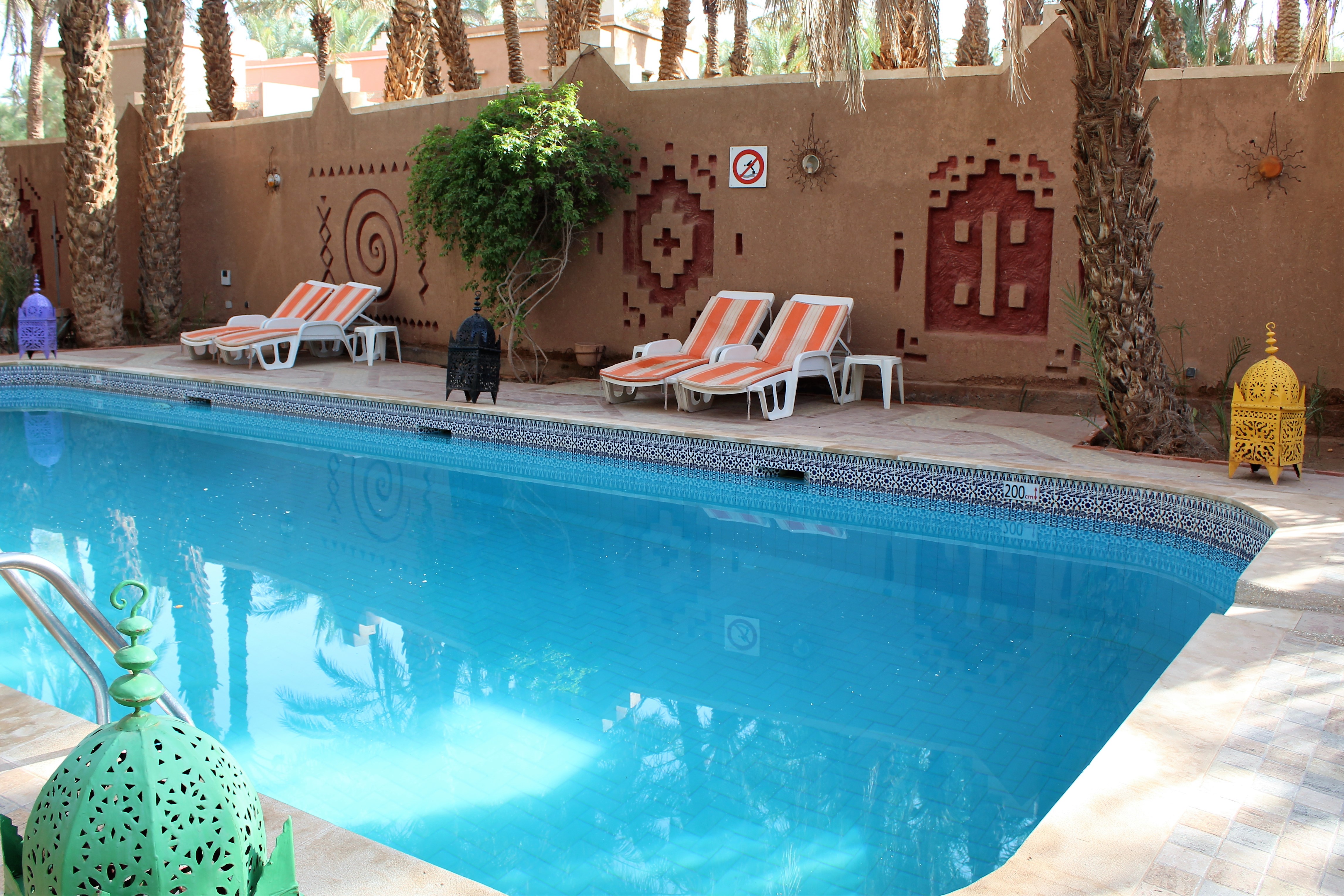
Zagora has a long association with desert travel. For centuries, caravans passed through this part of southern Morocco, transporting goods between the Moroccan trading centres and communities further south across the Sahara. Today, the town is a stopping point for travellers heading towards the desert.
For us, it was simply an overnight stay before continuing towards M'Hamid the following morning.
Visiting Tamegroute – History, Markets and Green Pottery
After breakfast, we left Zagora and continued south towards M'Hamid.
Our first stop was Tamegroute, a fascinating town with a long history of religious scholarship and traditional crafts.
Tamegroute became an important centre of Islamic learning through the Nasiriyya Sufi brotherhood, which developed here during the 17th century. Its historic library is famous for its collection of ancient manuscripts, including religious texts and works covering subjects such as mathematics, medicine and astronomy. Some manuscripts date back many centuries, and the collection includes beautifully decorated texts written on materials such as gazelle skin.
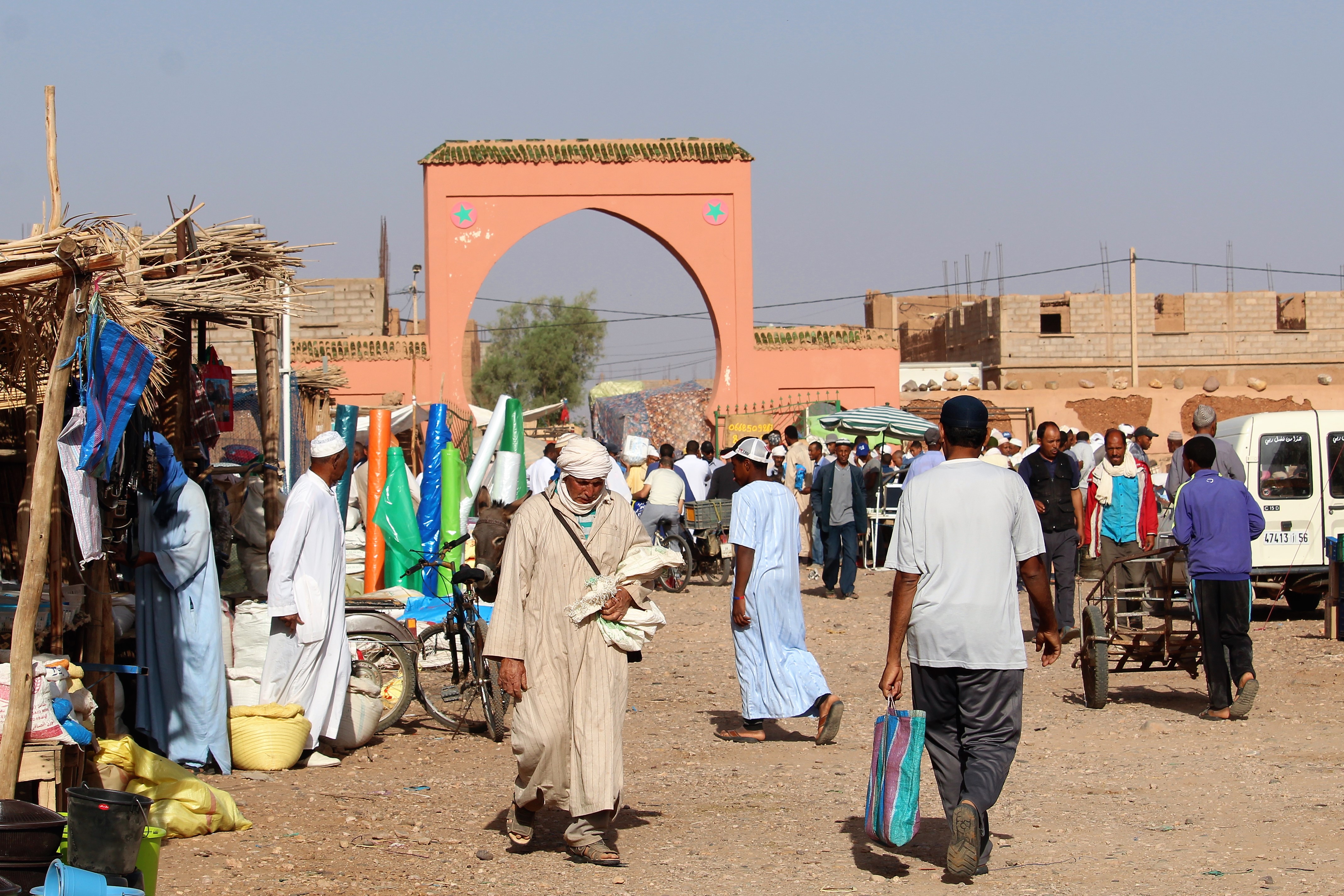
Unfortunately, the library was closed when we visited, so we weren't able to see the manuscripts for ourselves. We did, however, get to explore the lively local market. It was a wonderful place to observe everyday life, with people shopping, talking, and going about their business. Our guide also took us through the old underground passages of the kasbah. It was fascinating wandering through the dark, enclosed spaces before emerging into the brilliant sunshine beside the local pottery cooperative.
Tamegroute is particularly famous for its distinctive green-glazed pottery. The pottery is made using traditional methods and local materials, with mineral-based glazes producing the deep green colour for which the village is known. The finish is often beautifully irregular, with variations in colour and texture that make each piece slightly different. Watching the craftspeople at work gave us a real appreciation of the skill involved.
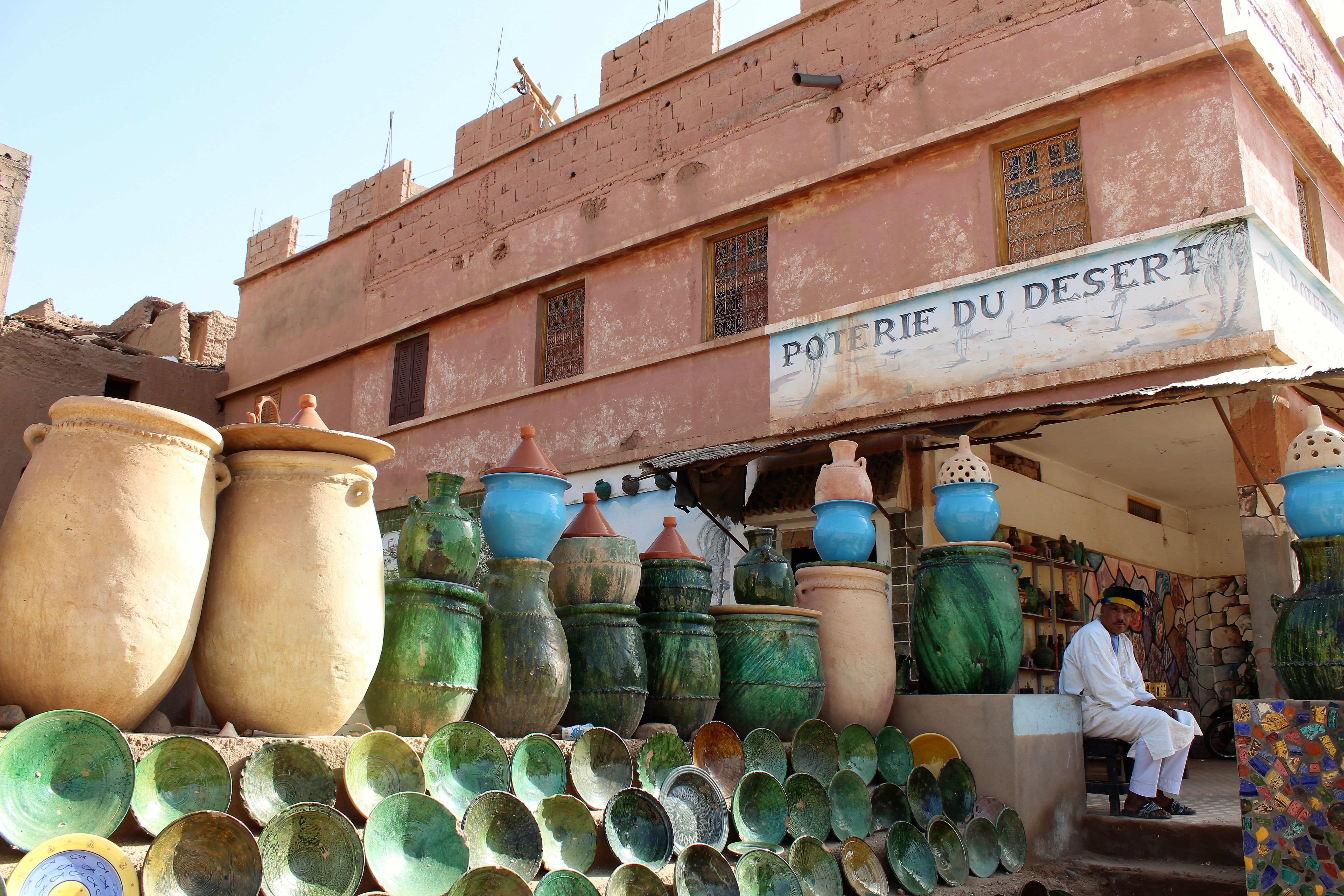
Even if you're mainly heading towards the Sahara, I'd recommend stopping at Tamegroute if your route allows it. There's much more to this part of Morocco than dunes.
Lunch and a Camel Ride in M'Hamid
From Tamegroute, we continued to M'Hamid.
Before setting off into the desert, we were welcomed into a local family home for lunch. We enjoyed delicious lamb tagine, Berber eggs and refreshing mint tea.
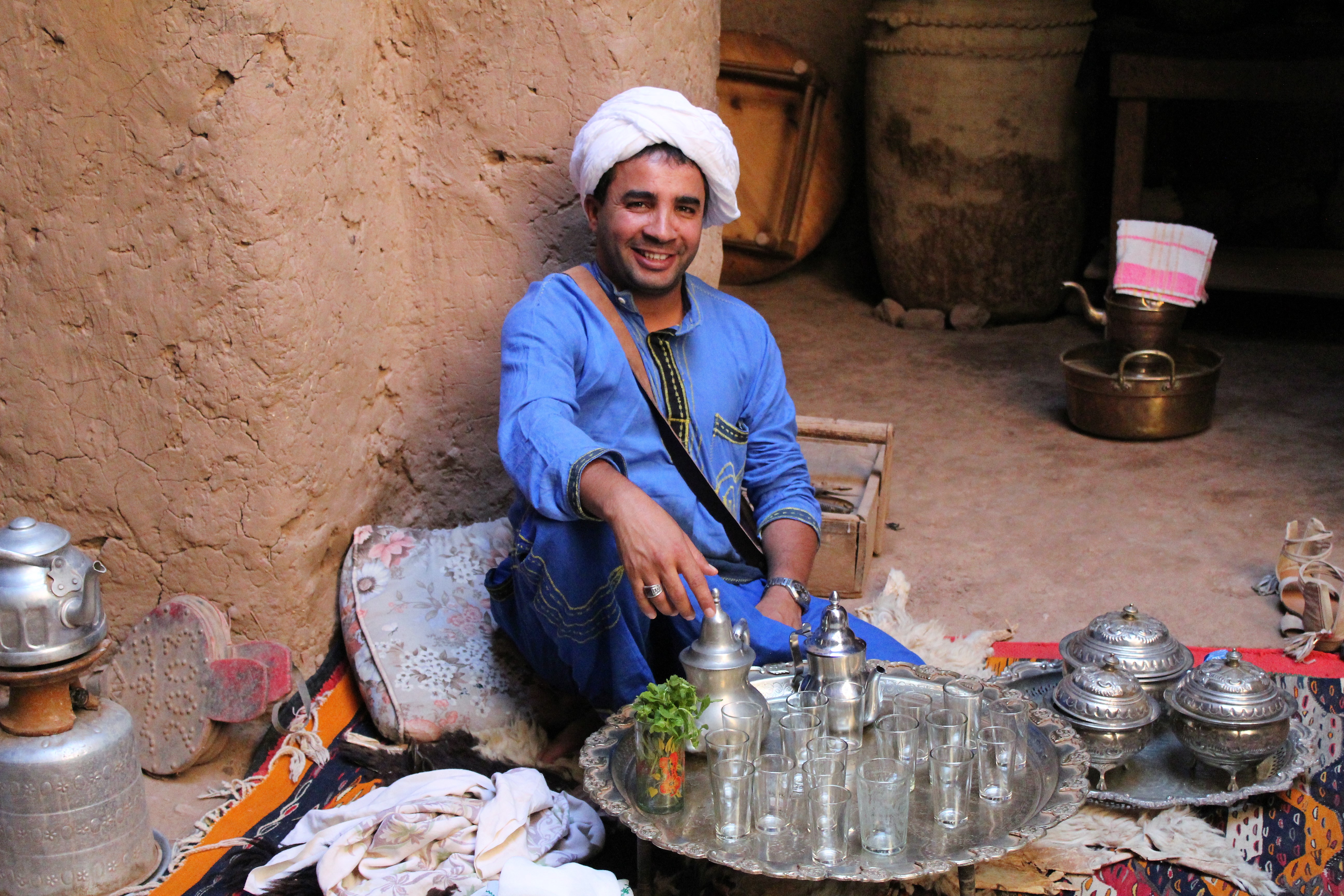
Then it was time to meet our camels.
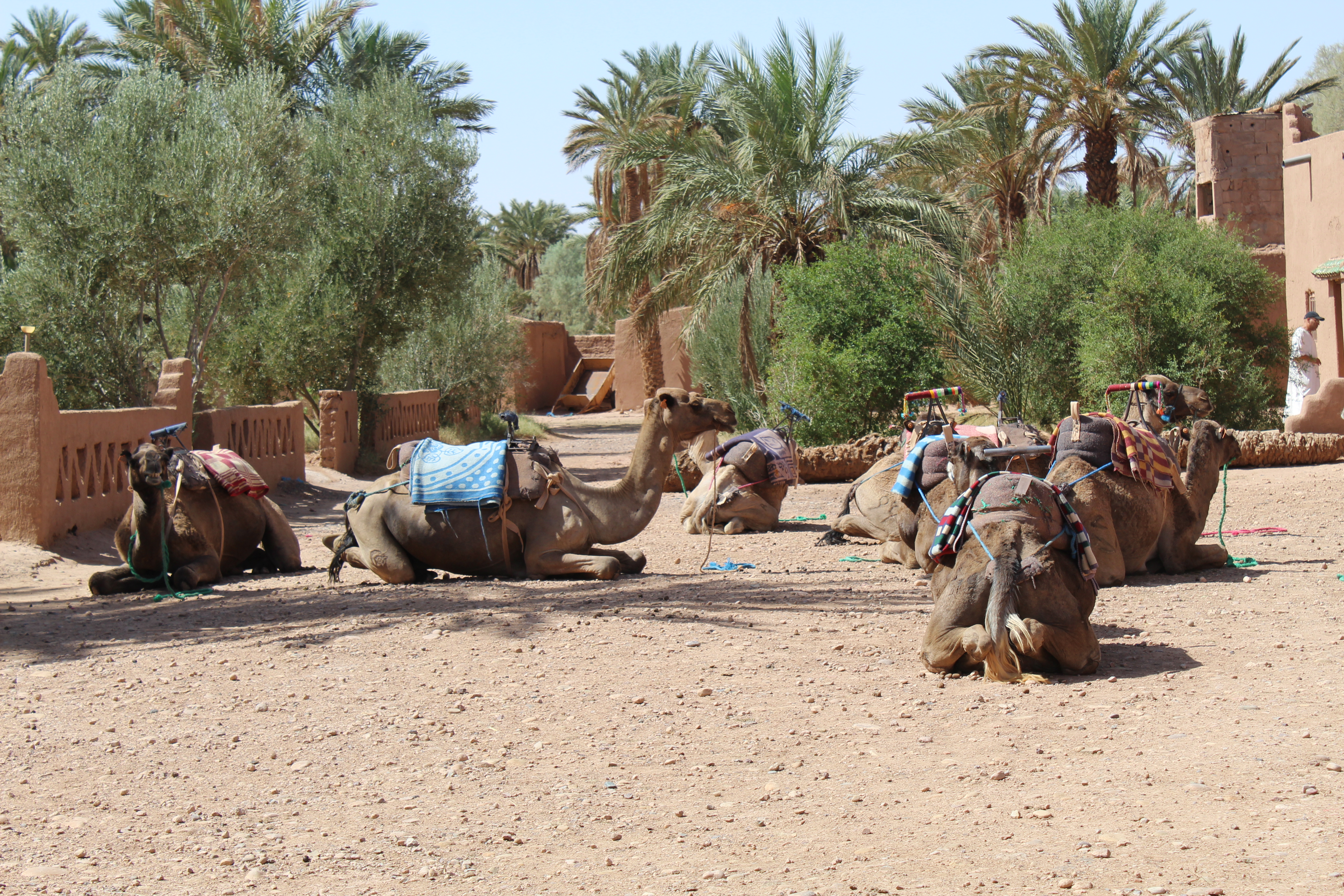
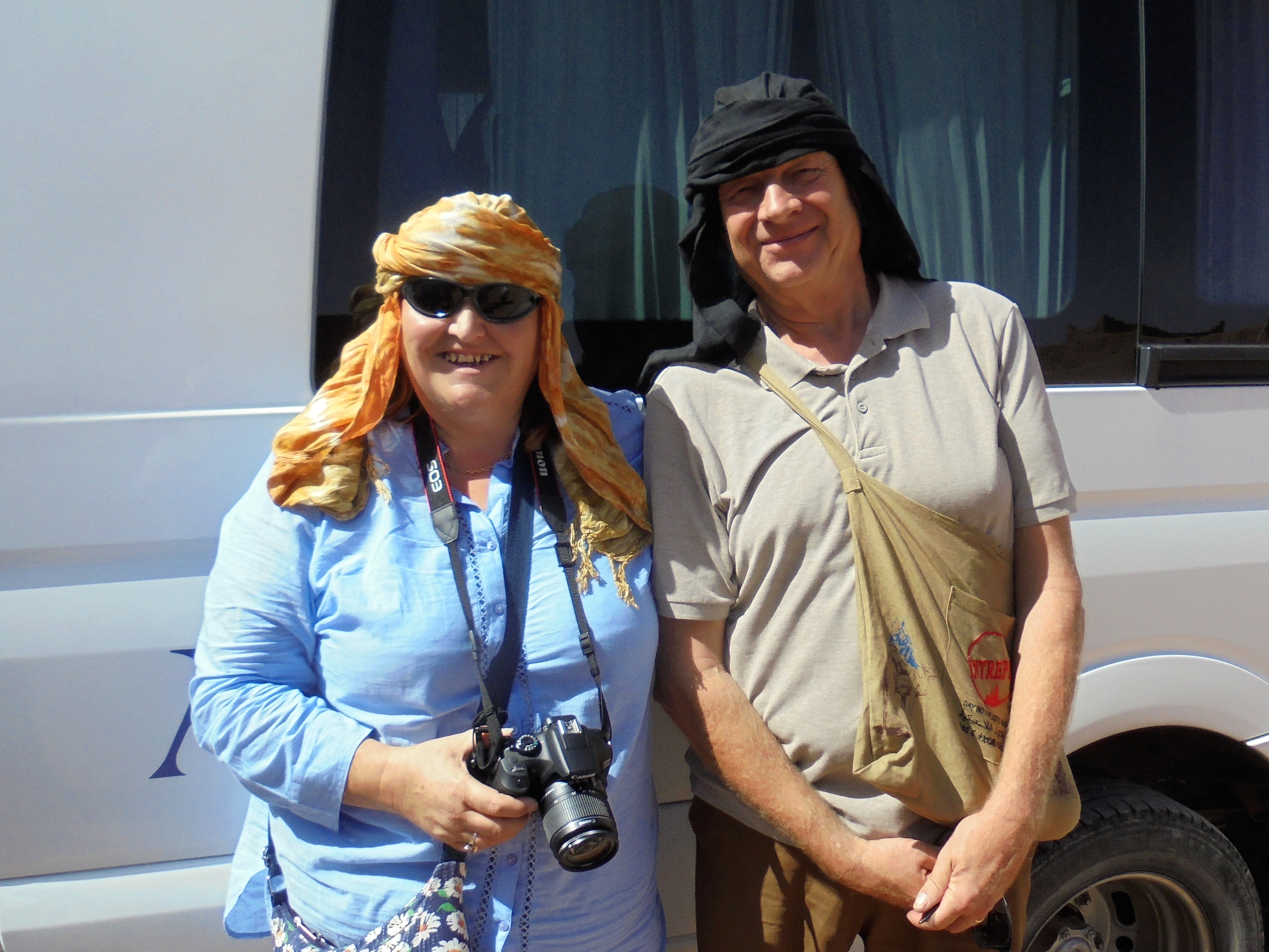
Our guide showed us how to wrap scarves around our heads to protect ourselves from the sun and blowing sand. Once everyone was suitably dressed, we climbed aboard for a two-hour round trip through the desert around M'Hamid.
Now, I should explain that this wasn't the first time Mark and I had ridden camels. Many years earlier, we'd had a rather memorable experience in Tunisia. Mark had refused to buy a scarf from his camel driver, who apparently wasn't impressed. The driver gave the camel a prod with a sharp stick, whereupon the animal took off across the desert with Mark clinging on for dear life! Not surprisingly, neither of us had particularly fond memories of camel riding.
Thankfully, nothing quite so dramatic happened in M'Hamid. Our camels behaved themselves, and the ride went according to plan. But was it comfortable? Not remotely! By the time we dismounted, we were both wondering why we'd decided to do it again. Still, it gave us another story to tell.
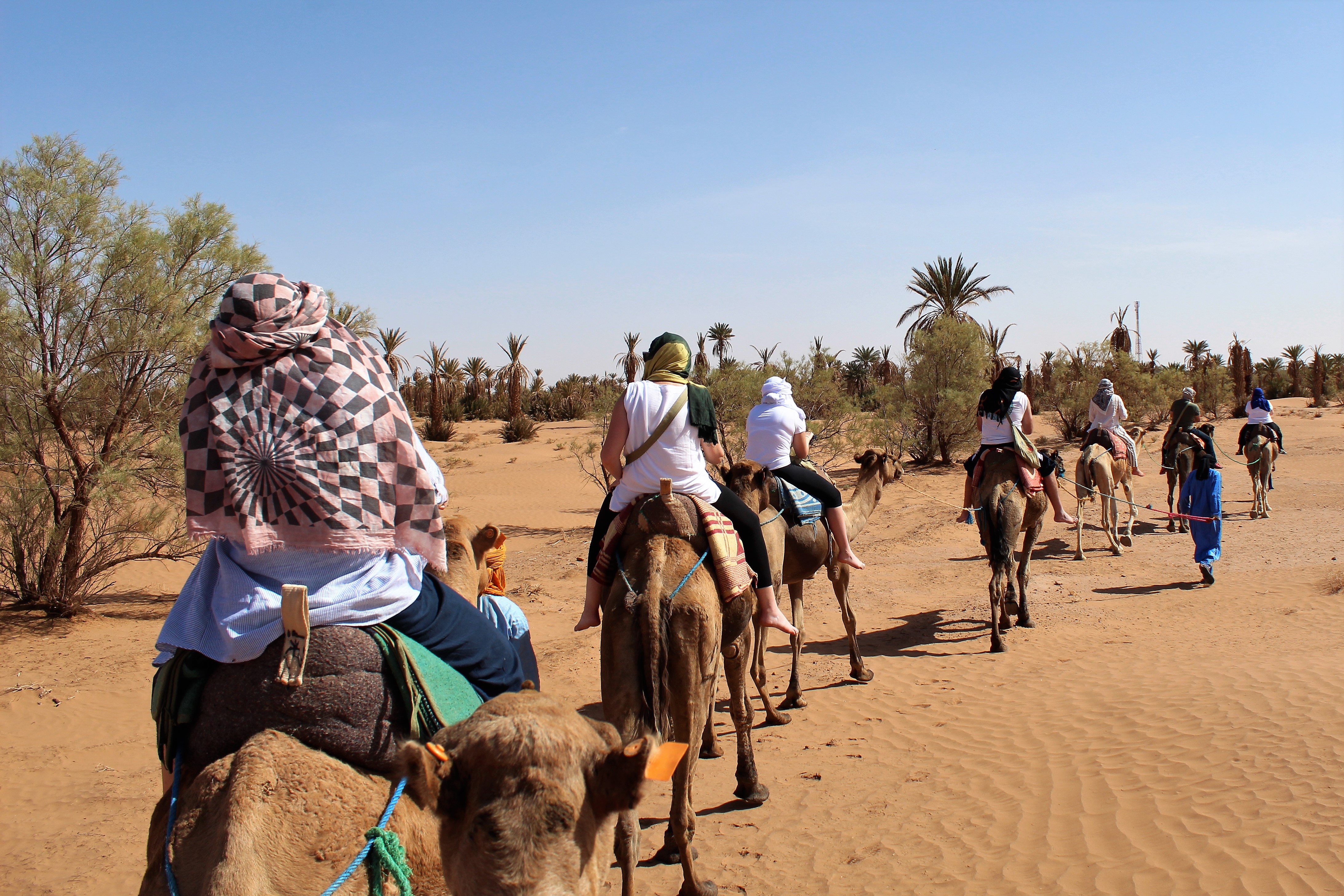
A note about camel rides: You don't have to ride a camel to enjoy the Sahara. If you're booking a desert tour, ask whether the ride is optional and whether you can travel directly to camp by vehicle instead. If you do choose to ride, look for animals that appear healthy, are treated gently and aren't overloaded.
The 4WD Journey into the Sahara
After our camel ride, it was time for the part of the trip I'd really been looking forward to.
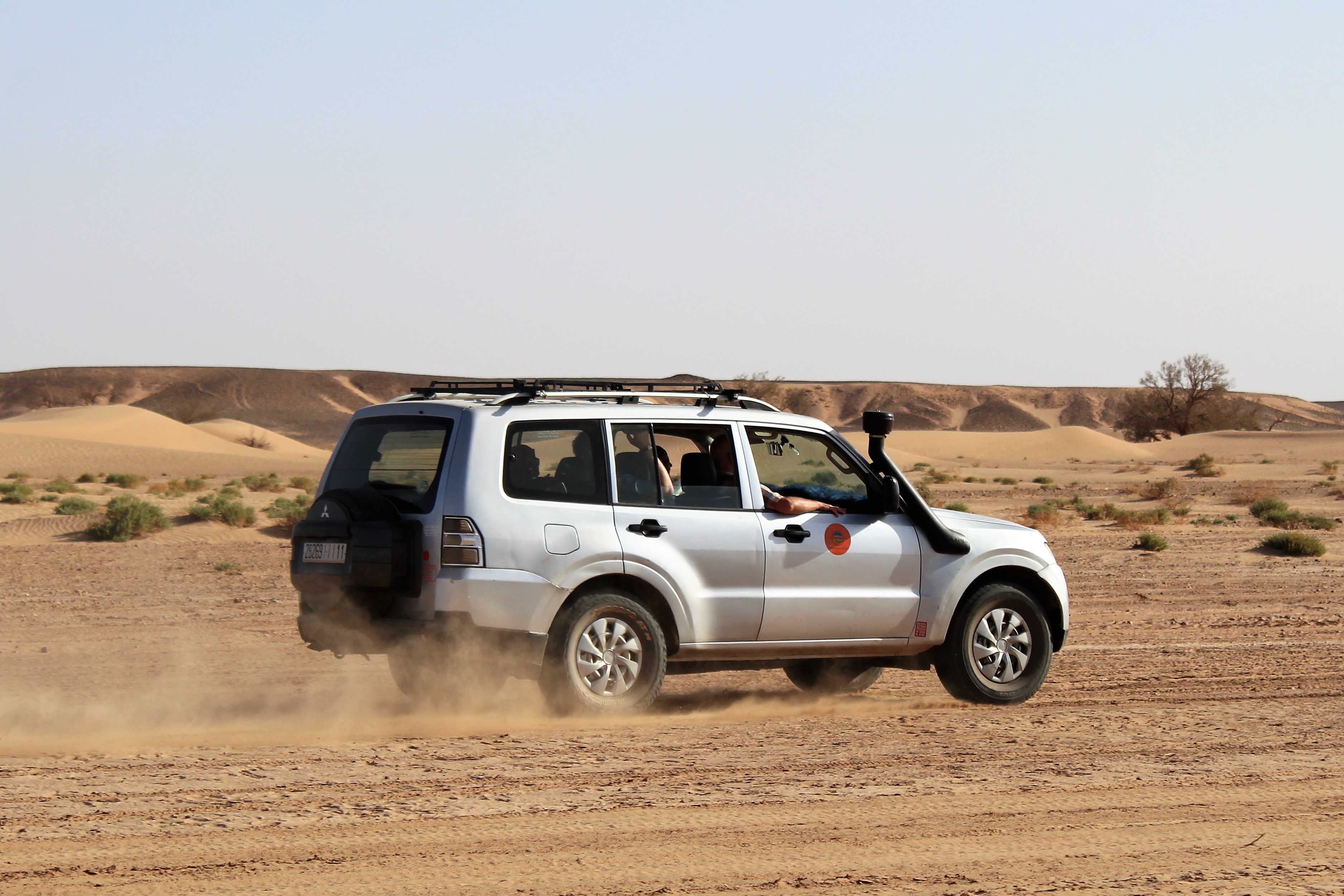
We climbed into 4WD vehicles for the journey towards our desert camp. The drive took around two hours. It was bumpy, dusty and occasionally uncomfortable, but I wouldn't have missed it for anything.
The landscape seemed to change constantly. At times we travelled across hard-packed, rocky ground. Elsewhere the sand became more prominent, and gradually we began to see the dunes we'd come so far to experience. We occasionally caught glimpses of nomadic herders with their camels, a reminder that the desert isn't simply an empty landscape created for tourists.
People have lived, travelled and worked in this environment for generations.
About halfway through the journey, we stopped beside a well to refill our water bottles. There had recently been heavy rain, and the well was full of cool, clear water. Hamid, our guide, told us he'd never seen it so full. At the time, it seemed like an interesting and rather unexpected detail. The significance of all that rain became much clearer the following morning.
Arriving at Our Sahara Desert Camp
Eventually we reached our camp among the dunes.
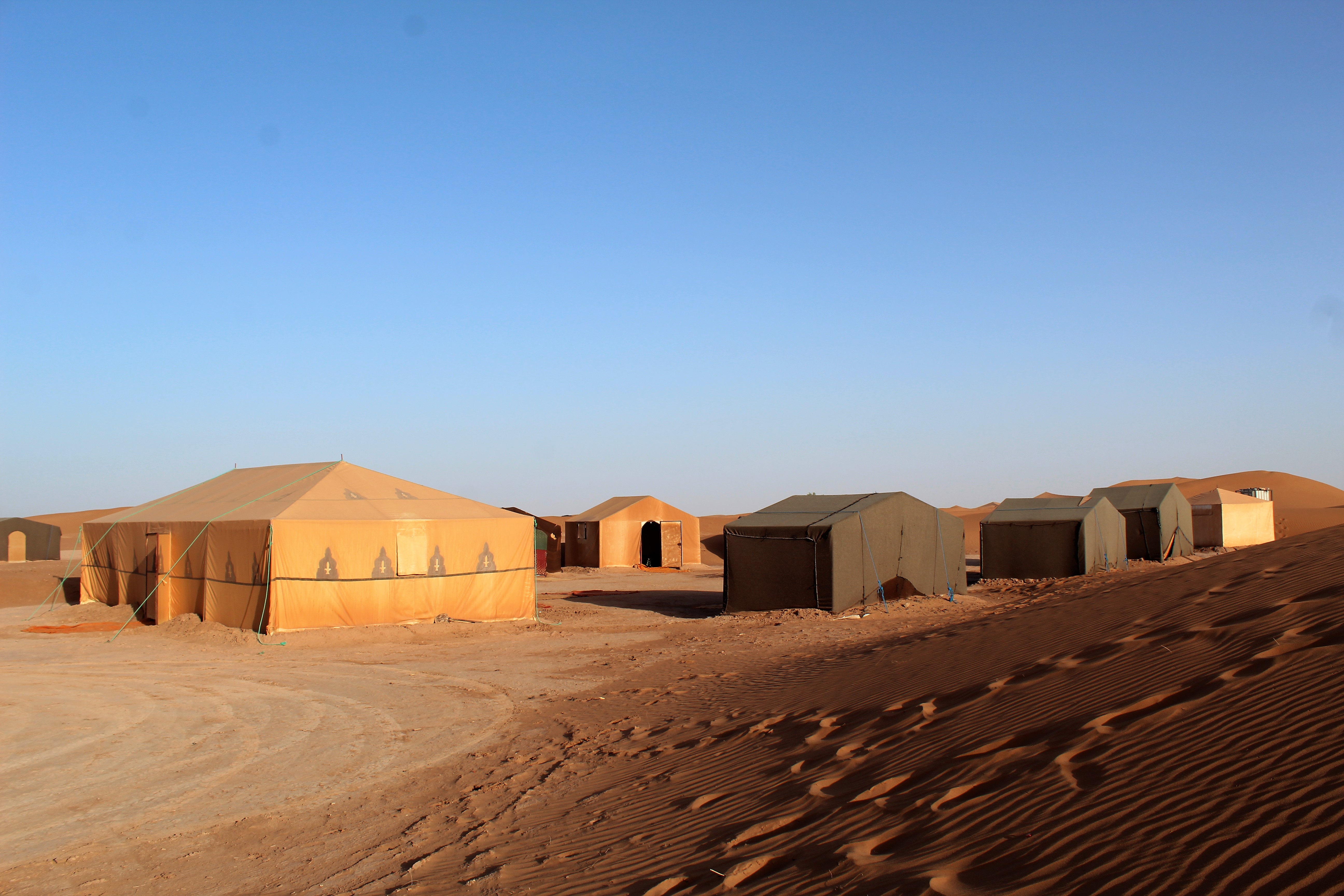
I think some members of our group had been expecting a fairly primitive experience, so they were pleasantly surprised by the accommodation. Our tents were large, with proper beds and beautiful rugs covering the floors. We even had electricity, although it was only enough to power a single small light bulb.
There was, however, no running water for showers. This caused a little consternation among some of our fellow travellers. My advice? Don't expect a hot shower in every desert camp, and make sure you know what facilities are included before booking. Always carry wet wipes for times when there is no running water available!
We were perfectly happy with our accommodation. It was comfortable enough for a good night's sleep, and we were surrounded by some of the most extraordinary scenery we'd encountered anywhere in Morocco.
Watching the Sunset Over the Sahara
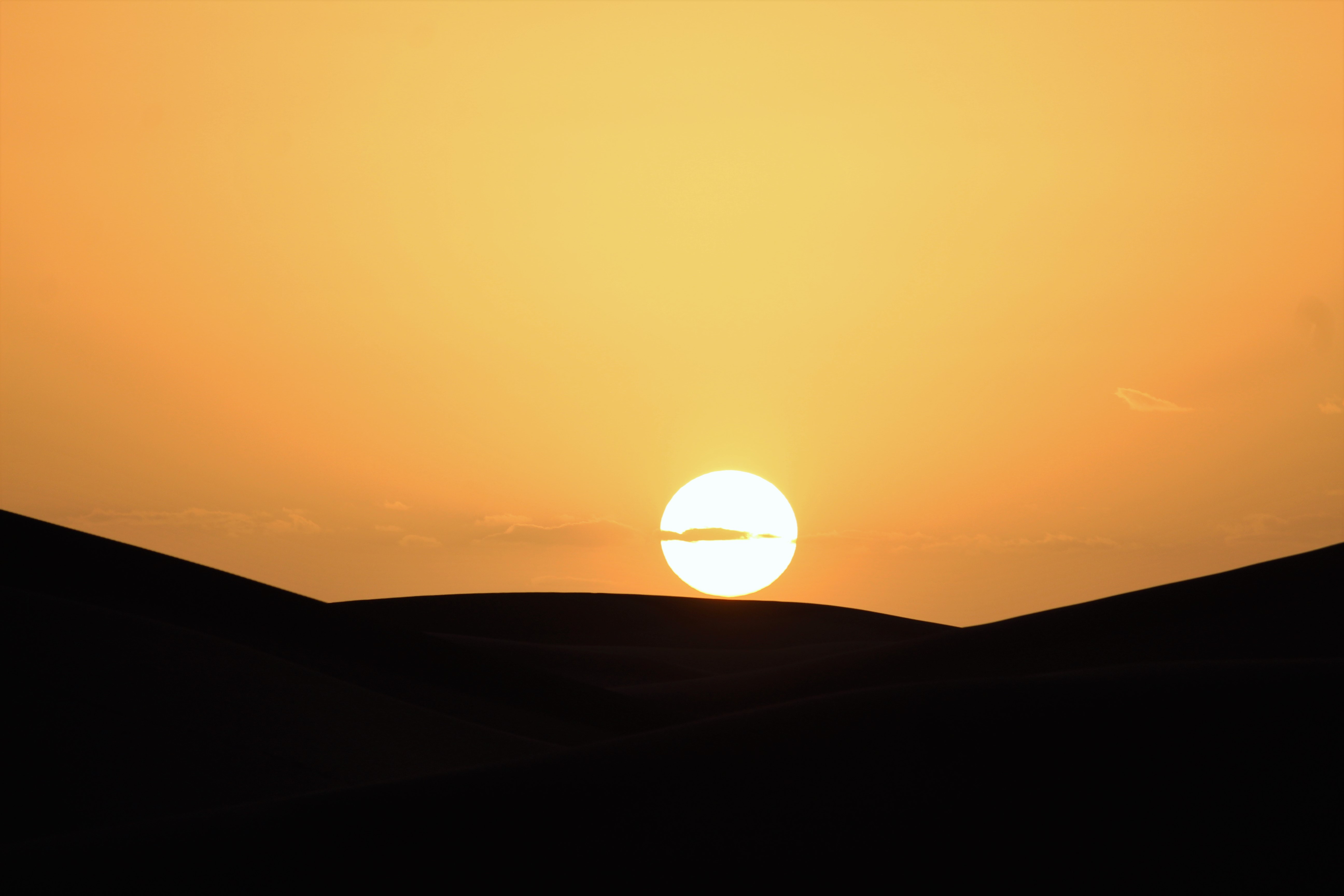
Once we'd settled into camp, we headed towards the nearest dune to watch the sunset.
Several members of our group had brought drinks with them, so we sat together enjoying a little sundowner as the light began to change. The desert was beautiful. As the sun sank towards the horizon, the sand seemed to glow in shades of gold, orange and deep red. There was an extraordinary stillness. The peace was interrupted only by the appearance of a couple of donkeys and a camel wandering through the landscape.
I could have stayed there for hours. It was one of those travel moments when you don't feel the need to do anything at all. Just sit, look around and appreciate where you are.
Dinner, Music and a Sky Full of Stars
After sunset, we returned to camp for dinner in the communal dining tent. The cooks had prepared a magnificent meal. In fact, the tagine we ate that evening was one of the best we enjoyed during our entire month in Morocco. And we'd eaten an awful lot of tagines by then!
Later, a fire was lit, and Hamid and our drivers entertained us with traditional Amazigh music, singing and drumming. It was a wonderful atmosphere.
But perhaps the most memorable part of the evening came when we moved away from the light of the fire and looked up. The sky was filled with stars. Millions of them, or so it seemed. Without the artificial light we're so accustomed to at home, the night sky was absolutely mesmerising.
Several members of our group decided to drag their beds outside and sleep beneath the stars. Mark and I stayed up for a while, simply enjoying the experience, before eventually deciding that our tent and its proper beds were a more comfortable option.
It was an evening I'll never forget.
Sunrise and an Unexpected Change of Plans
We set our alarm early the following morning, hoping to watch the sun rise over the dunes. Unfortunately, the weather had other ideas. The sky was cloudy, and the actual sunrise happened without us seeing it.
A little later, the clouds lifted, and we finally caught sight of the sun.
After breakfast, we packed up and prepared to leave camp before eight o'clock. Our original plan had been to continue across the desert on a different route. However, we were told that heavy rain further along had made the track impassable. Instead, we had to retrace our journey all the way back towards Zagora. It took around three and a half hours.
It was a useful reminder that the Sahara isn't always the dry, predictable landscape we imagine. Heavy rain can create dangerous conditions, particularly on desert tracks and in normally dry riverbeds. We were disappointed not to follow the original route, but safety had to come first.
And, after the extraordinary night we'd experienced, I certainly wasn't complaining.
What to Expect at a Sahara Desert Camp
One of the biggest decisions when booking a Morocco desert tour is the type of accommodation you want.
Desert camps vary enormously.
Standard Desert Camps
Basic or standard camps may offer traditional tents with beds, blankets and shared facilities. Some have limited electricity, and bathroom facilities can be simple.
Our own camp fell broadly into this category, although we were pleasantly surprised by how comfortable it was.
Luxury Desert Camps
If you prefer more comfort, there are also luxury desert camps offering larger tents, private bathrooms, proper furniture and sometimes hot showers.
Facilities vary, so check exactly what's included rather than relying on the word luxury.
Food at Desert Camps
Many overnight tours include dinner and breakfast. Meals are often traditional Moroccan dishes such as tagine, couscous, soup, and bread. Our own desert dinner was one of the culinary highlights of the trip.
If you have dietary requirements, let the operator know when booking.
Electricity, Wi-Fi and Mobile Reception
Don't assume you'll have reliable electricity or internet access in a remote camp. Some camps provide charging points and Wi-Fi, while others have very limited facilities.
I'd recommend charging your phone and camera before leaving your hotel and carrying a power bank.
How Cold Does the Sahara Get at Night?
The desert can be surprisingly cold after sunset, particularly during winter. Even if you've spent the day in warm sunshine, you'll probably appreciate an extra layer once darkness falls.
Check the forecast for the exact location and time of year, and ask your operator what bedding is provided.
How to Choose a Morocco Desert Tour
There are plenty of companies offering Morocco desert tours, but they don't all provide the same experience.
Before booking, I'd recommend checking the following.
Which Desert Will You Actually Visit?
This is probably the most important question.
A tour advertised as a Sahara desert experience may visit Zagora, Erg Chebbi or Erg Chigaga. Make sure you know exactly where you're going and what the landscape will be like.
How Much Time Will You Spend Driving?
Morocco is a big country, and some desert itineraries involve very long driving days. Check the journey times and how much time you'll actually spend at the dunes.
A slightly longer tour may be much more enjoyable than trying to squeeze everything into two days.
What Accommodation Is Included?
Ask whether the camp has private or shared bathrooms, hot water, electricity and proper beds.
Also check whether you're booking a standard or luxury camp.
Are Meals and Activities Included?
Find out whether the price covers meals, drinks, transport, guides, camel rides and any additional excursions. A cheaper tour may not be such good value if you have to pay extra for everything.
How Large Is the Group?
Some people enjoy travelling with a group, while others prefer a private tour.
We had a wonderful time with our fellow travellers, but a private excursion may suit you better if you want more flexibility.
Does the Operator Travel Responsibly?
Look for companies that employ local guides and drivers, support local communities and treat animals responsibly.
In a fragile desert environment, it's also worth asking how camps manage water, waste and rubbish. And don't assume that a luxury camp is necessarily more environmentally responsible than a simple one.
What Happens if the Weather Changes?
Our own experience demonstrated just how important this can be. Ask what happens if heavy rain, flooding, sandstorms or other conditions affect your planned route.
A responsible operator should be prepared to change the itinerary when necessary.
Best Time to Take a Morocco Desert Tour
The Sahara can be visited at different times of year, but the experience varies considerably with the seasons.
Spring
Spring is generally a good time to visit, with more manageable daytime temperatures than the height of summer. However, windy conditions and blowing sand can occur, so don't assume the weather will always be perfect.
Autumn
Autumn is another popular season for desert travel. Temperatures are often more comfortable for sightseeing and spending time outdoors.
As our own experience showed, though, rain can occasionally affect routes through southern Morocco.
Winter
Winter can be a lovely time to visit the Sahara, particularly if you prefer cooler weather. However, desert nights can become very cold.
Pack warm clothing and check what bedding your camp provides.
Summer
Summer temperatures in the Sahara can be extreme. If you're considering a desert tour at this time of year, think carefully about the heat, particularly if you're planning long walks or outdoor activities.
For most visitors, I'd favour spring or autumn.
What to Pack for a Morocco Desert Tour
You probably won't need a huge amount of luggage for one night in the Sahara, but a few items will make the experience much more comfortable.
I'd recommend packing:
Lightweight, comfortable clothing for the daytime.
Warm layers for evenings and early mornings, especially outside summer.
A scarf or buff to protect your face from blowing sand.
Sunglasses and a sunhat for the strong desert sun.
High-factor sunscreen and lip balm.
Comfortable closed shoes for walking over sand and rocky ground.
A refillable water bottle, with drinking water arrangements confirmed in advance.
Toiletries and a small towel, depending on the facilities at your camp.
A head torch or small torch for moving around after dark.
A power bank for charging your phone or camera.
Any medication you need, kept with you rather than in luggage left elsewhere.
A small overnight bag so you don't have to take your main suitcase into the desert.
And, of course, take your camera. Sunset, sunrise and the changing colours of the dunes provide wonderful photographic opportunities. If you're interested in photographing the stars, a tripod can also be useful.
Is a Sahara Desert Tour Suitable for Solo Travellers or Older Travellers?
Yes, absolutely – provided you choose an itinerary that suits your interests, mobility and comfort level. You don't have to be particularly young or adventurous to enjoy a night in the Sahara. Nor do you have to ride a camel.
Many tours can take you to camp by 4WD, and accommodation ranges from basic shared facilities to comfortable tents with private bathrooms.
If you're travelling alone, joining a small-group tour can be a good way to experience the desert without arranging every detail independently.
It's also worth considering the physical demands of the journey. Getting in and out of a 4WD vehicle, travelling along bumpy tracks, and walking over soft sand can be tiring. If you have any mobility concerns, discuss them with the operator before booking.
For me, the best part of our desert experience wasn't the camel ride or any particularly strenuous activity. It was sitting quietly on a dune at sunset, enjoying a wonderful meal and looking up at the stars.
Those are experiences that can appeal to travellers of all ages.
Final Thoughts: Is Spending a Night in the Sahara Worth It?
When I think back to our month travelling around Morocco, there are so many wonderful memories. The imperial cities, the High Atlas Mountains, the ancient kasbahs, the bustling markets and the extraordinary food all made their impression.
But our night in the Sahara stands out.
I remember the dusty journey into the desert, the uncomfortable camel ride that reminded us why we'd never particularly enjoyed riding camels in the first place, and the excitement of finally arriving at our camp.
I remember sitting on a dune with Mark, watching the sun sink towards the horizon as the sand turned the most beautiful shades of orange and red.
I remember the wonderful tagine, the sound of drums around the fire and the incredible sky filled with stars.
And I remember waking early the following morning, hoping for a spectacular sunrise, only to discover that the clouds had other ideas.
Not everything went exactly to plan. But that's travel, isn't it? Sometimes the unexpected moments become as memorable as the ones you've spent months looking forward to.
Our Sahara adventure was one of the highlights of our Morocco trip, and I'm so glad we made the time to experience it.
If you're planning your own journey around Morocco, I'd encourage you to consider spending a night in the desert. Choose your destination carefully, allow enough time to enjoy the journey and don't worry too much about having every luxury. Sometimes all you really need is a comfortable bed, a good meal, a beautiful sunset and a sky full of stars.
Watch this Video for More About Taking a Desert Tour
If you’re travelling soon, please use these links!
Are you travelling soon? Use these links when making your bookings. These are the companies we use. It won’t cost you any extra, but we will earn a few pennies to help keep Happy Days Travel Blog going. Thank you!!
Make sure you take out travel insurance. If you are a digital nomad or long-term traveller, try the specialist provider SafetyWing. (Never leave home without protecting yourself, your trip and your belongings!)
Book your flight with Skyscanner
Book your accommodation with Booking.com
Book a tour with TourRadar
Book city tours and activities with Viator or GetYourGuide
Check out my Resource Page for more companies I recommend.
Disclosure: This post contains affiliate links. If you click through for more information, or to make a purchase, it may result in a small commission coming my way. Please note that there is no extra cost to you associated with this. Thank you so much for supporting my site.
