The Best Things to do in Rabat, Morocco – a Self-Guided Walking Tour
Rabat wasn't a city we expected to fall in love with.
Morocco's capital is often overshadowed by Marrakech, Fez and Casablanca, and we only had half a day to explore it. But by the time we left, Mark and I were wondering why Rabat doesn't feature on more Morocco itineraries.
Whenever we arrived in a new city, we usually took a walking tour with a local guide. Rabat was different. Hamid, our guide for our journey through Morocco, gave us a route to follow and sent us off to explore by ourselves.
It turned out to be the perfect way to see the city.
Our self-guided walking tour covered around 8.5 kilometres – roughly 11,000 steps – and took us from Rabat Ville station through the elegant Ville Nouvelle and lively medina, along the Atlantic coast and into the beautiful Kasbah of the Oudayas before continuing to some of Rabat's most important historic monuments.
Best of all, we could do it entirely at our own pace.
If you only have half a day or a day in Morocco's often-overlooked capital, this walking route is a wonderful introduction to the best things to do in Rabat.
To jump to a particular section of this article, please use these links:
How Long Do You Need in Rabat?
Self-Guided Walking Tour of Rabat
Starting Point - Rabat Ville Station
Explore the Blue-and-White Kasbah of the Oudayas
Explore the Ancient Ruins of Chellah
If You Have More Time in Rabat
Spend More Time in the Kasbah and Medina
Rabat Medina – Best for Atmosphere
Hassan and the City Centre – Best for Sightseeing
Agdal – Best for a More Modern Stay
Near the Kasbah of the Oudayas – Best for Character
Final Thoughts: Is Rabat Worth Adding to Your Morocco Itinerary?
Rabat's History
It was the French who moved Morocco’s capital from the traditional chaotic choices of Fez and Marrakech. They shifted power to coastal Rabat in 1912. It was a strategic decision as they could control supply and defence more easily from there. The city has remained the seat of government and the official home of Morocco’s royal family ever since.
Rabat has been a UNESCO World Heritage Site since 2012 under the title “Rabat, Modern Capital and Historic City: a Shared Heritage.” UNESCO specifically recognises the combination of the French-planned 20th-century new town and much older sites including the medina, Kasbah of the Oudayas, Chellah, Hassan Mosque, and Almohad walls and gates.
Is Rabat Worth Visiting?
Yes – and Rabat was one of the surprises of our trip through Morocco.
It doesn't have the intensity of Marrakech, the enormous medieval medina of Fez or the frenetic energy of Casablanca. Instead, Rabat felt spacious, calm and remarkably easy to explore.
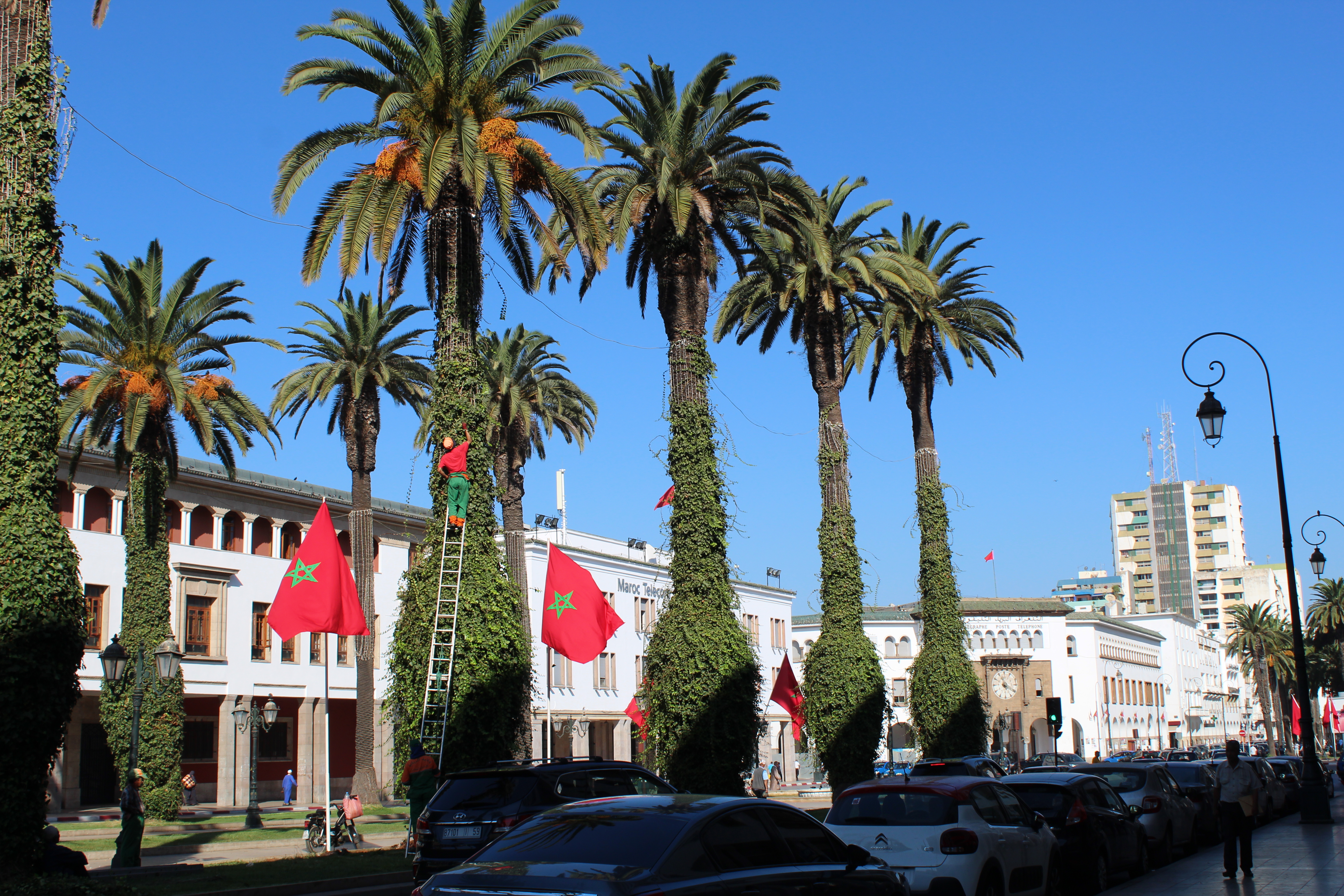
After arriving from Casablanca, we immediately noticed the difference. There were broad palm-lined avenues, attractive architecture, plenty of green space and a medina that felt much less overwhelming than some we'd already experienced.
What makes Rabat particularly interesting is the way different periods of Moroccan history sit alongside one another. On a single walk, you can move from the elegant streets of the 20th-century Ville Nouvelle into the old medina, through the blue-and-white Kasbah of the Oudayas and on to centuries-old Islamic and Roman sites.
We only had half a day in Rabat, but it was enough to make us very glad we'd stopped.
If you're travelling between Casablanca and Meknès or Fez, I certainly wouldn't automatically pass Morocco's capital by.
How Long Do You Need in Rabat?
You can see a surprising amount of Rabat in half a day, particularly if you're happy to explore on foot.
That's exactly what we did. We arrived by train from Casablanca in the morning, left our luggage near Rabat Ville station and followed the self-guided walking route Hamid had given us before continuing our journey to Meknès later that day.
Our walk covered around 8.5 kilometres – approximately 11,000 steps – and took us through the Ville Nouvelle and medina, along the seafront and into the Kasbah of the Oudayas before continuing to Chellah, Hassan Tower and the Mausoleum of Mohammed V.
It was a brilliant introduction to the city, but we certainly weren't exploring at a leisurely pace.
If you have one full day in Rabat, you'll be able to follow a similar route with more time to stop for lunch, linger in the medina and gardens and perhaps visit one of the city's museums.
With two days, you could slow things down considerably, spend more time at places such as Chellah and the Kasbah of the Oudayas, visit the museums and explore beyond the main sights.
So, while I wouldn't hesitate to recommend Rabat if you only have half a day between trains, I'd allow at least a full day if your Morocco itinerary gives you the choice.
Self-Guided Walking Tour of Rabat
Starting Point - Rabat Ville Station
Begin at the Rabat Ville train station in the centre of Rabat’s ville nouvelle (new town). If, like us, you are just visiting Rabat for the day as part of a tour of Morocco, you can leave your luggage in one of the nearby cafés while you go off on your walk. There’s no charge for this service, although they do expect you to buy at least a drink, if not lunch!
We arrived by train from Casablanca in the morning and left for Meknes in the evening. In between, we left our bags at Le Petit Beur, where we enjoyed a delicious lunch of salad and brochettes.
Ville Nouvelle
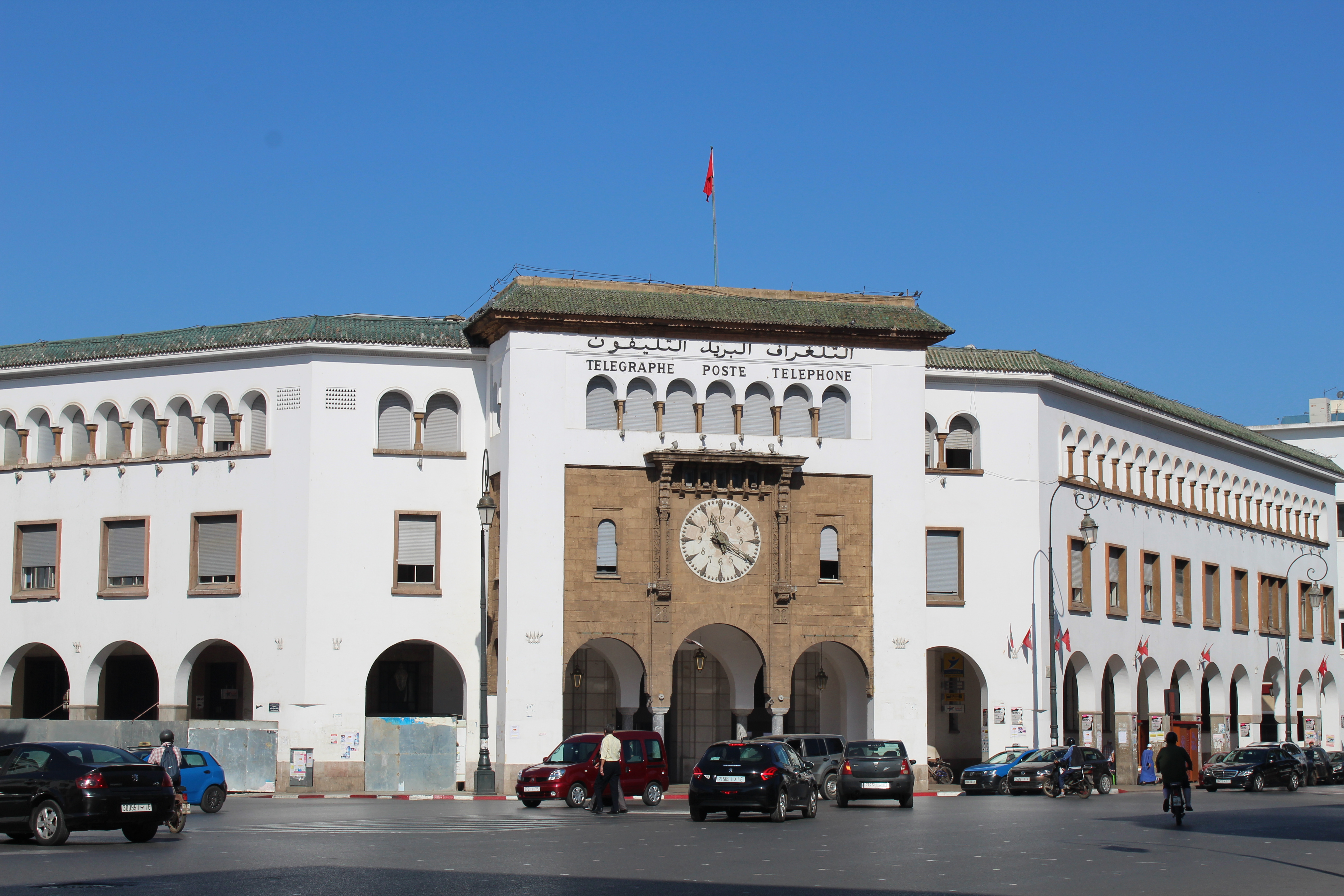
From the station, head down Avenue Mohammed V. Notice the French Art Deco-style architecture on both sides of the road. This is particularly striking in the post office building at the junction with Rue Soékarno.
This is also the area where you will find the city’s museums. The Mohammed VI Museum of Modern and Contemporary Art, inaugurated in 2014, is a major cultural attraction and currently holds more than 500 paintings, plus sculptures and temporary exhibitions. The Museum of History and Civilisations covers Morocco from prehistory through Punic, Roman, and Islamic periods. Both are worth a visit if you have time.
Rabat Medina
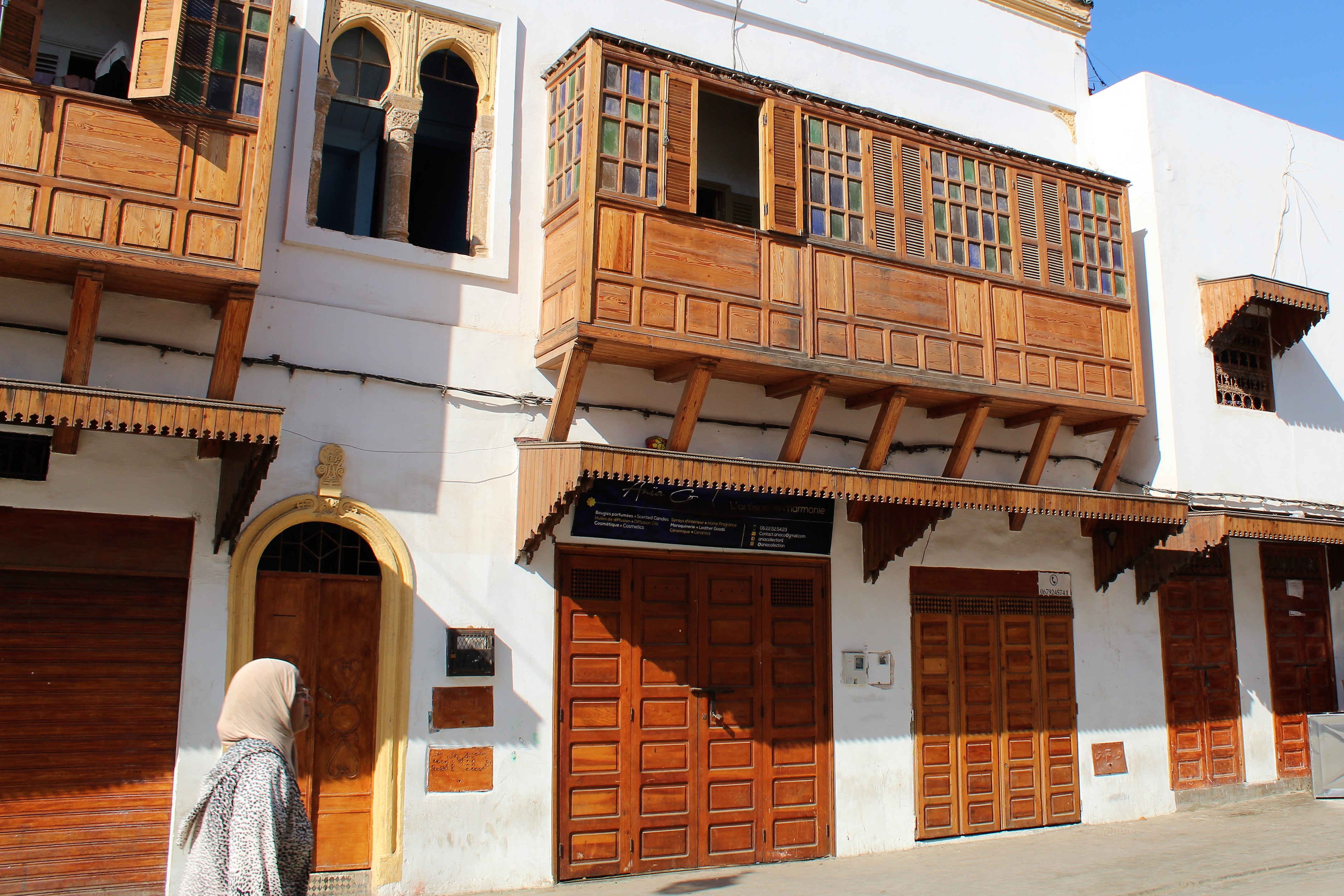
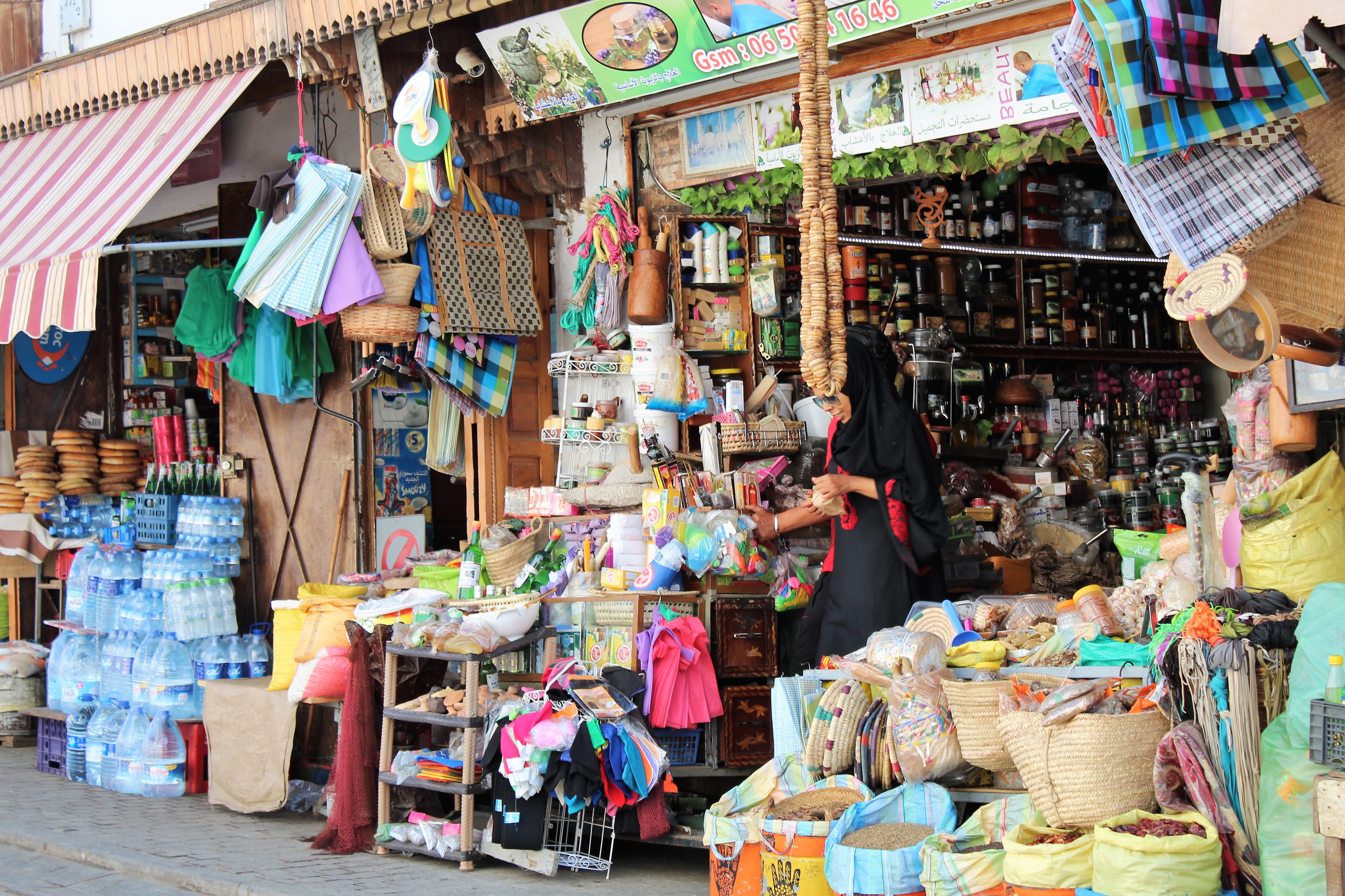
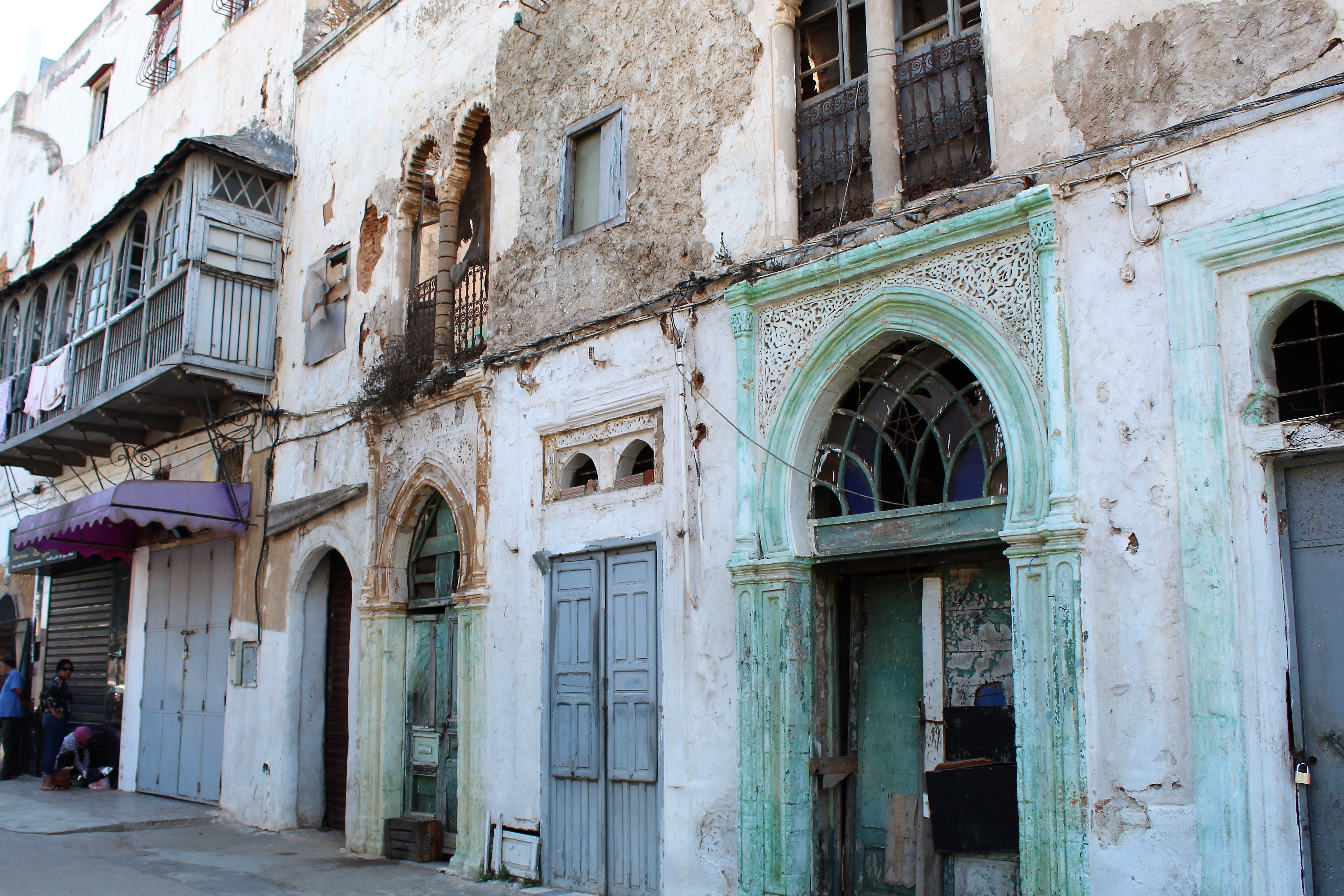
The route will take you through the medina. Exploring the streets here is one of the best things to do in Rabat.
When the French arrived in Rabat in the early twentieth century, this walled medina by the sea was the full extent of the city. It was built in the 17th century on a grid design, making it fairly easy to navigate. The medina is busy with local shoppers every day and is far less touristy than those in other Moroccan cities. For me, this makes it more appealing. There are photo opportunities around every corner, particularly for those of us with a penchant for an attractive door or window!!
The Seafront
Emerge from the medina and make your way to the seafront. Apart from the beaches, huge cemeteries overlook the Atlantic Ocean on both sides of the river estuary. All of the graves are oriented to face Mecca. Apparently, there is no significance, religious or otherwise, to the fact that the graveyards are by the ocean. It merely stems from the fact that originally cemeteries were always sited away from cities and built-up areas.
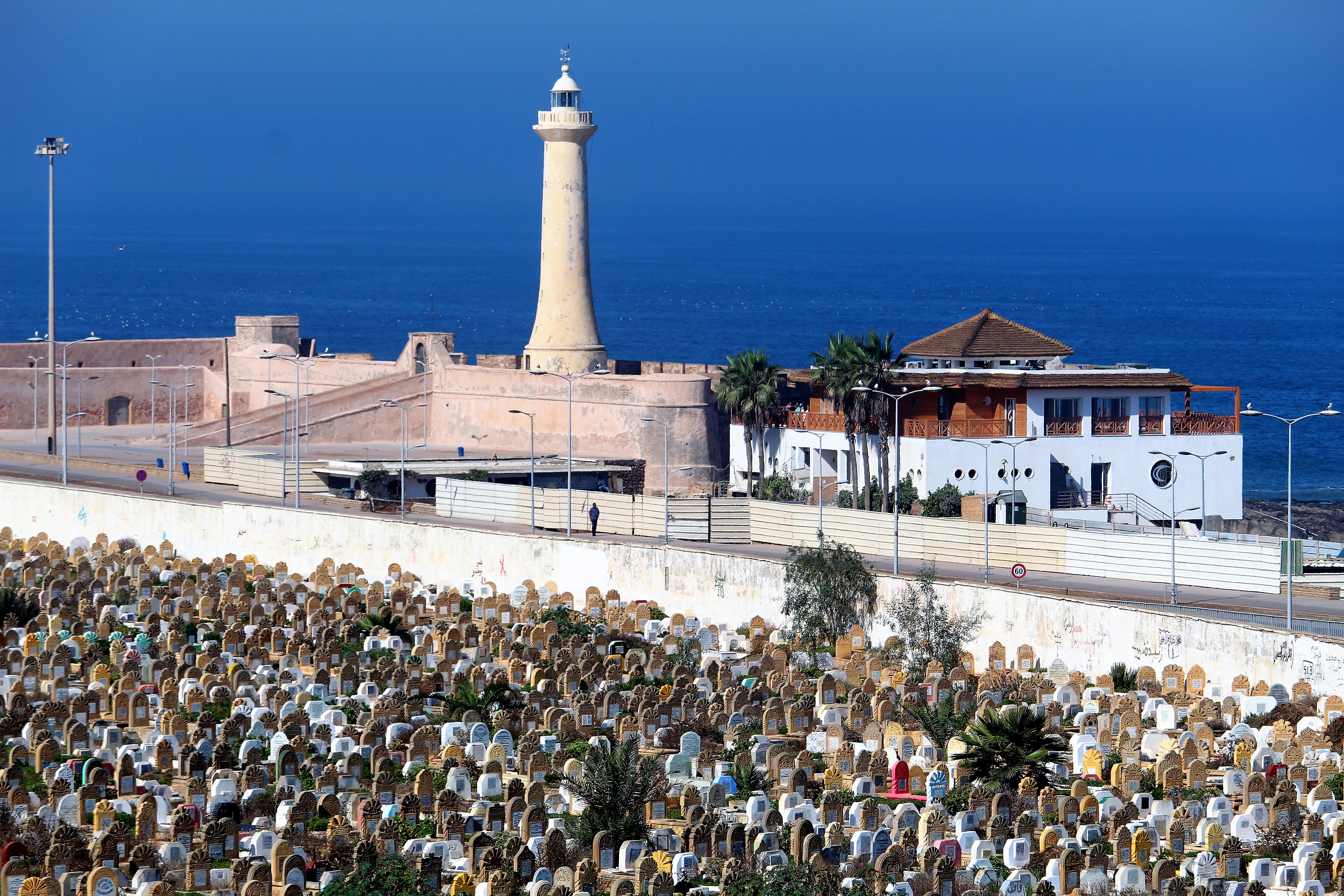
Follow the road to the Fort de la Calette Lighthouse and then turn right towards the kasbah.
Explore the Blue-and-White Kasbah of the Oudayas
Don't miss the Kasbah of the Oudayas, one of my favourite stops on our walk through Rabat. Sitting above the mouth of the Bou Regreg river where it meets the Atlantic, this historic fortified quarter feels wonderfully removed from the more modern city surrounding it.
Enter through the impressive Bab Oudaia, a monumental gateway dating from the Almohad period in the late 12th century. Its richly carved stonework makes it worth seeking out even before you step inside the kasbah itself.
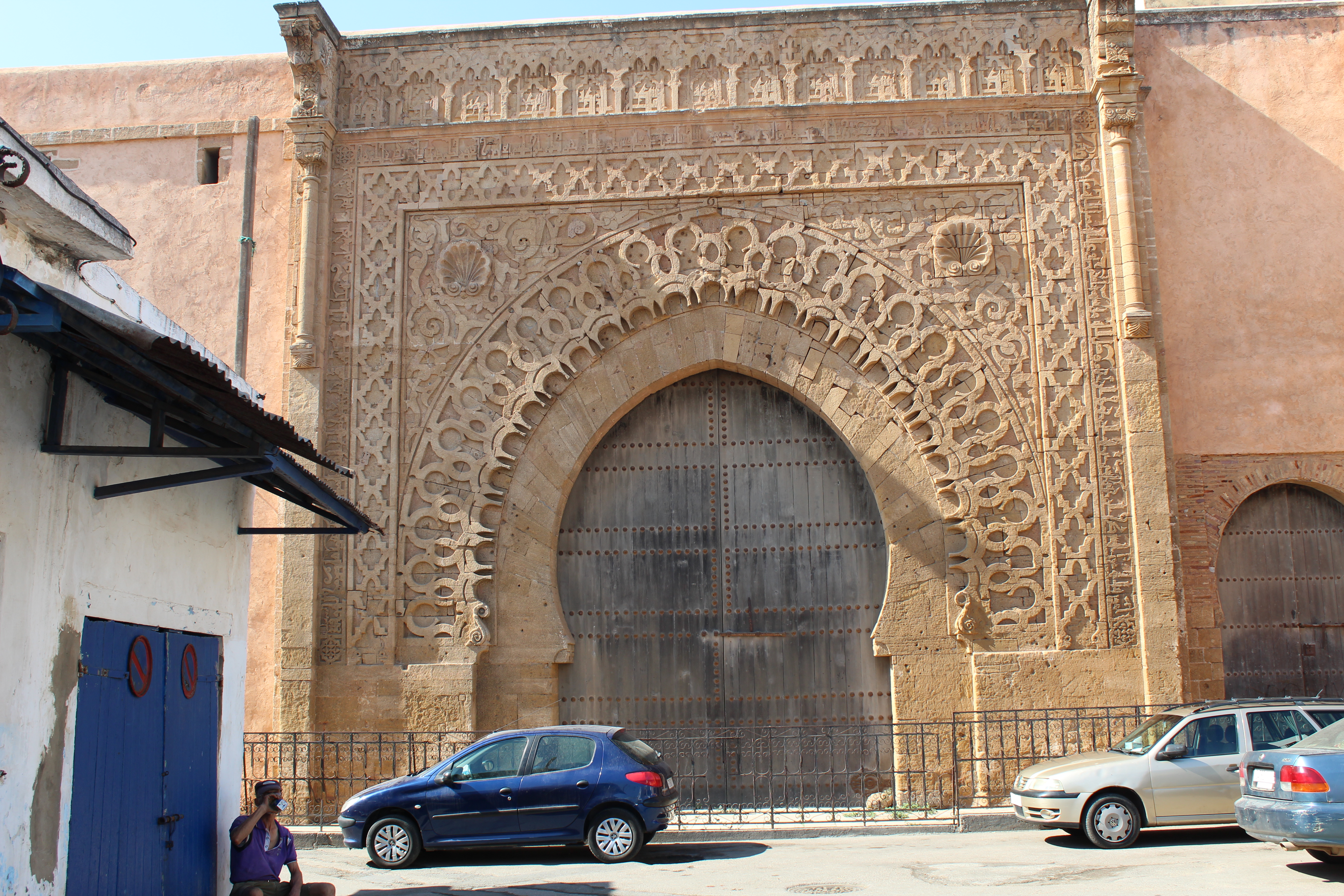
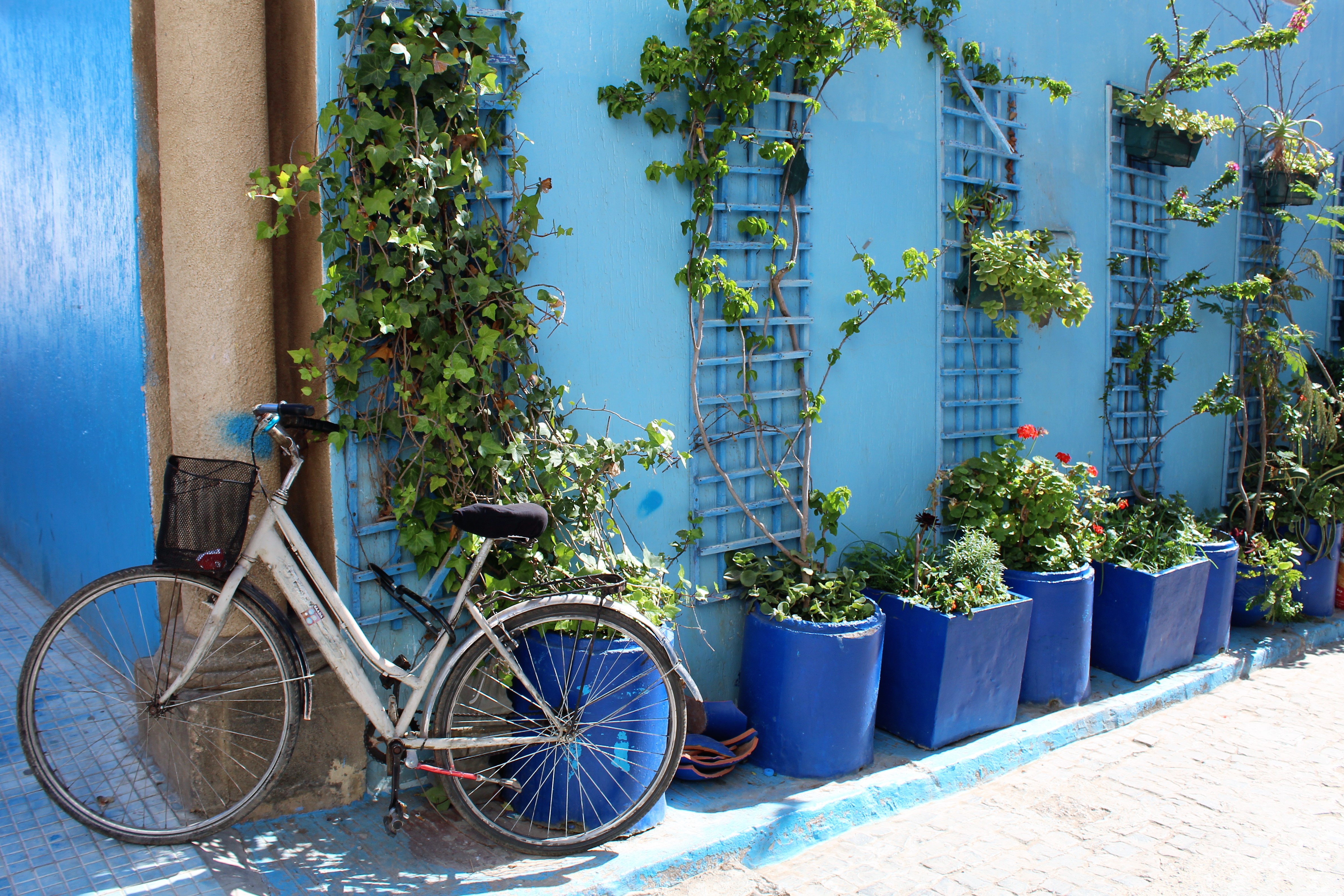
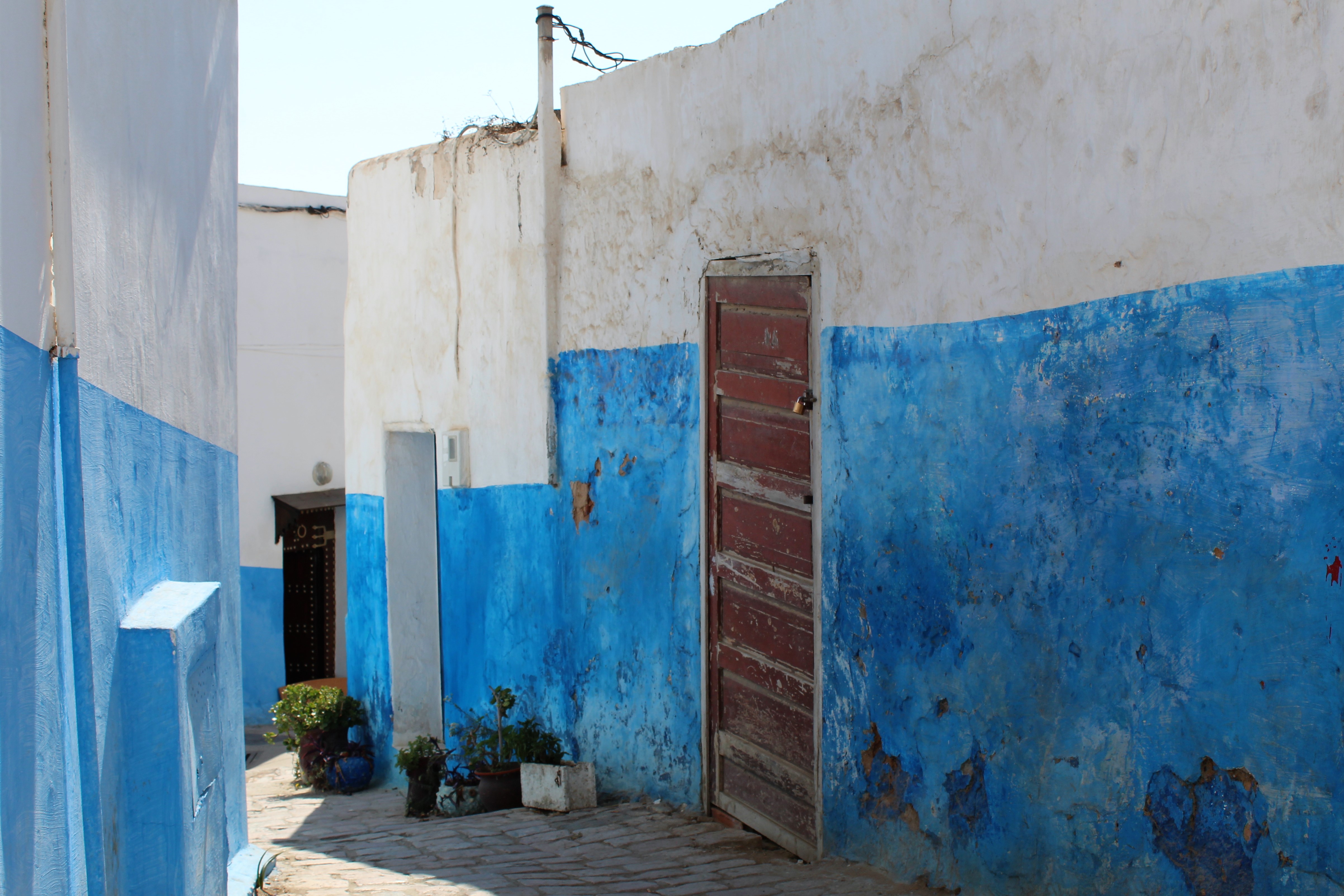
Once through the walls, the atmosphere changes completely. Narrow lanes wind between houses painted brilliant white and blue, inevitably reminding us of Chefchaouen, although on a much smaller scale. It's the kind of place where the best thing to do is forget about following a precise route and simply wander, stopping to admire colourful doors, little alleyways and glimpses of everyday life.
Rue Jamaa runs through the kasbah towards the Plateforme du Sémaphore, where you're rewarded with wonderful views across the Bou Regreg estuary, neighbouring Salé, the beach and the Atlantic Ocean.
As you explore, look out for Mosque el-Atiqa, the oldest mosque within the kasbah. Non-Muslims cannot enter, but it's another reminder of the long history contained within these walls.
We only had half a day in Rabat, but I was very glad we'd made time for the Kasbah of the Oudayas. After the wide boulevards of the Ville Nouvelle and the bustle of the medina, wandering through its peaceful blue-and-white streets felt like discovering yet another completely different side of Morocco's capital.
Andalusian Gardens
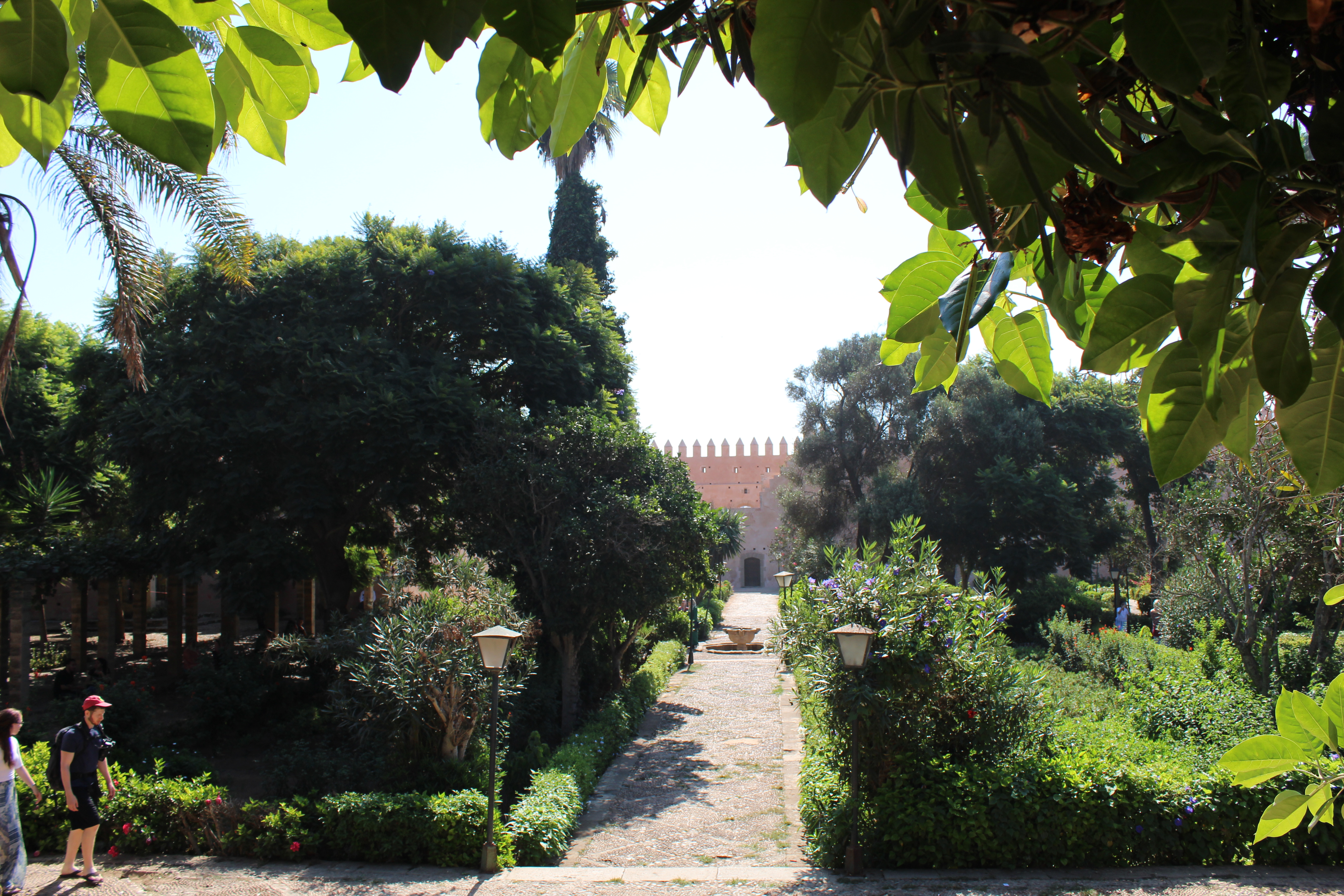
Retrace your steps and exit the kasbah the same way you entered. Turn left and make your way down Boulevard Tariq al-Marsa towards the river. On the way, call in at the attractive Andalusian Gardens. These are open every day from sunrise to sunset and are free to visit. The gardens are a popular relaxation and meeting point for locals and provide a welcome oasis of calm and shade away from the heat of the city.
Explore the Ancient Ruins of Chellah
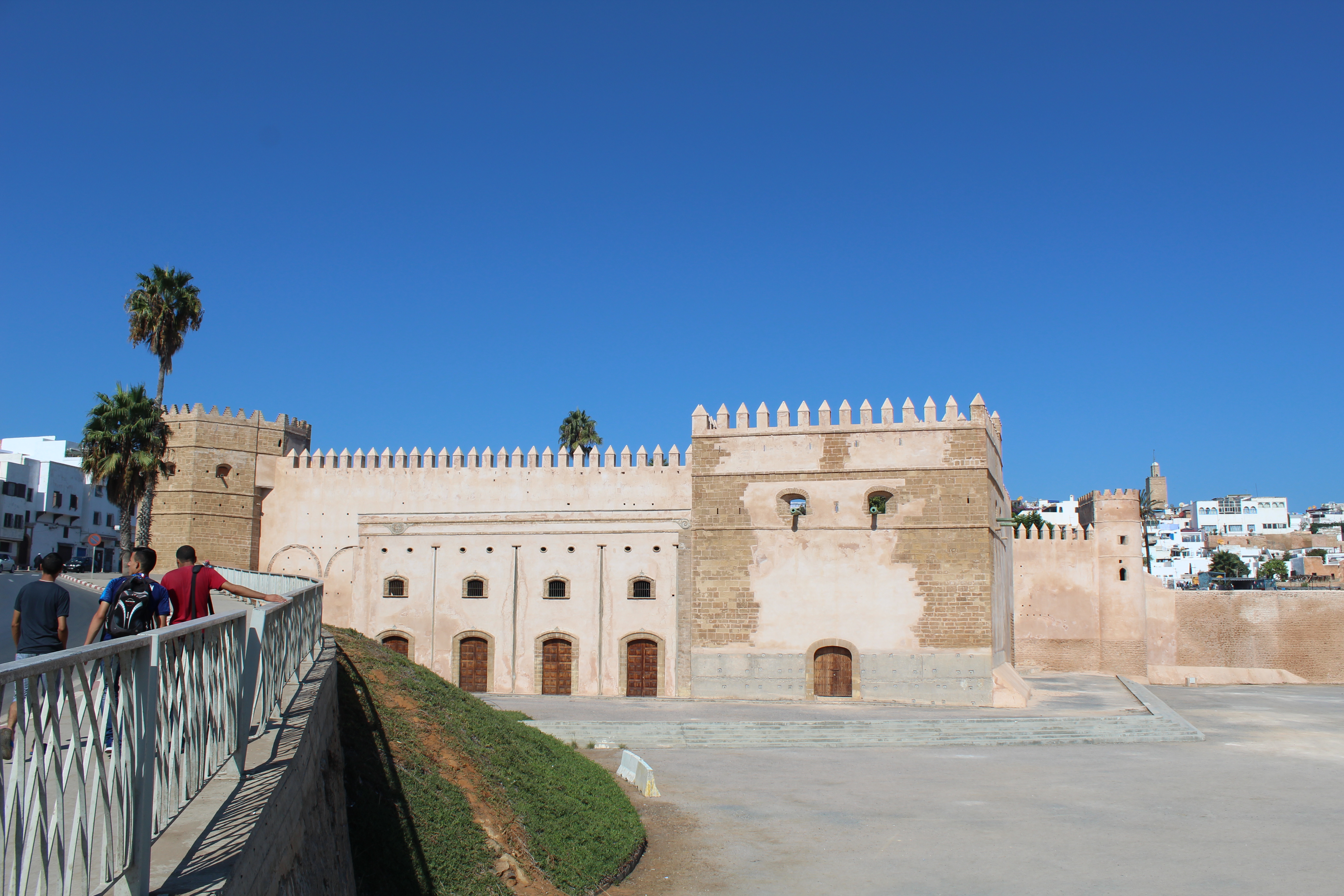
One of the most fascinating stops on our walk was Chellah, an atmospheric archaeological site surrounded by high walls just outside the centre of Rabat.
What makes Chellah particularly interesting is the number of different periods of history contained within one relatively compact site.
The area was settled long before the Romans arrived. Archaeological evidence points to a pre-Roman settlement dating back as far as the 7th or 6th century BC, with Phoenician influences reflecting its early importance as a trading point close to the Bou Regreg river. The Romans later developed a town here known as Sala, and today you can still see remains including parts of the forum, a triumphal arch, temples and other public buildings.
Centuries later, the site took on a completely different role.
During the 13th and 14th centuries, the Marinid dynasty transformed Chellah into a fortified royal necropolis. Much of what you see surrounding the site today dates from this period, including the impressive defensive walls and monumental gateway.
Inside, the Roman ruins sit alongside the remains of the later Islamic complex, including a mosque, minaret, religious school and royal tombs. The combination makes Chellah feel rather different from a conventional Roman archaeological site – you're effectively walking through several layers of Moroccan history in the same place.
Chellah is now part of Rabat's UNESCO World Heritage Site, which recognises the extraordinary mixture of ancient, Islamic and more modern heritage found throughout Morocco's capital.
We only had a short time here because we were trying to fit so much into our half-day walk, but if you're spending a full day or longer in Rabat, I'd allow yourself more time to explore the ruins properly.
Opening arrangements and admission prices can change, so I'd recommend checking the latest visitor information before you go rather than relying on prices quoted in older guidebooks.
Le Tour Hassan
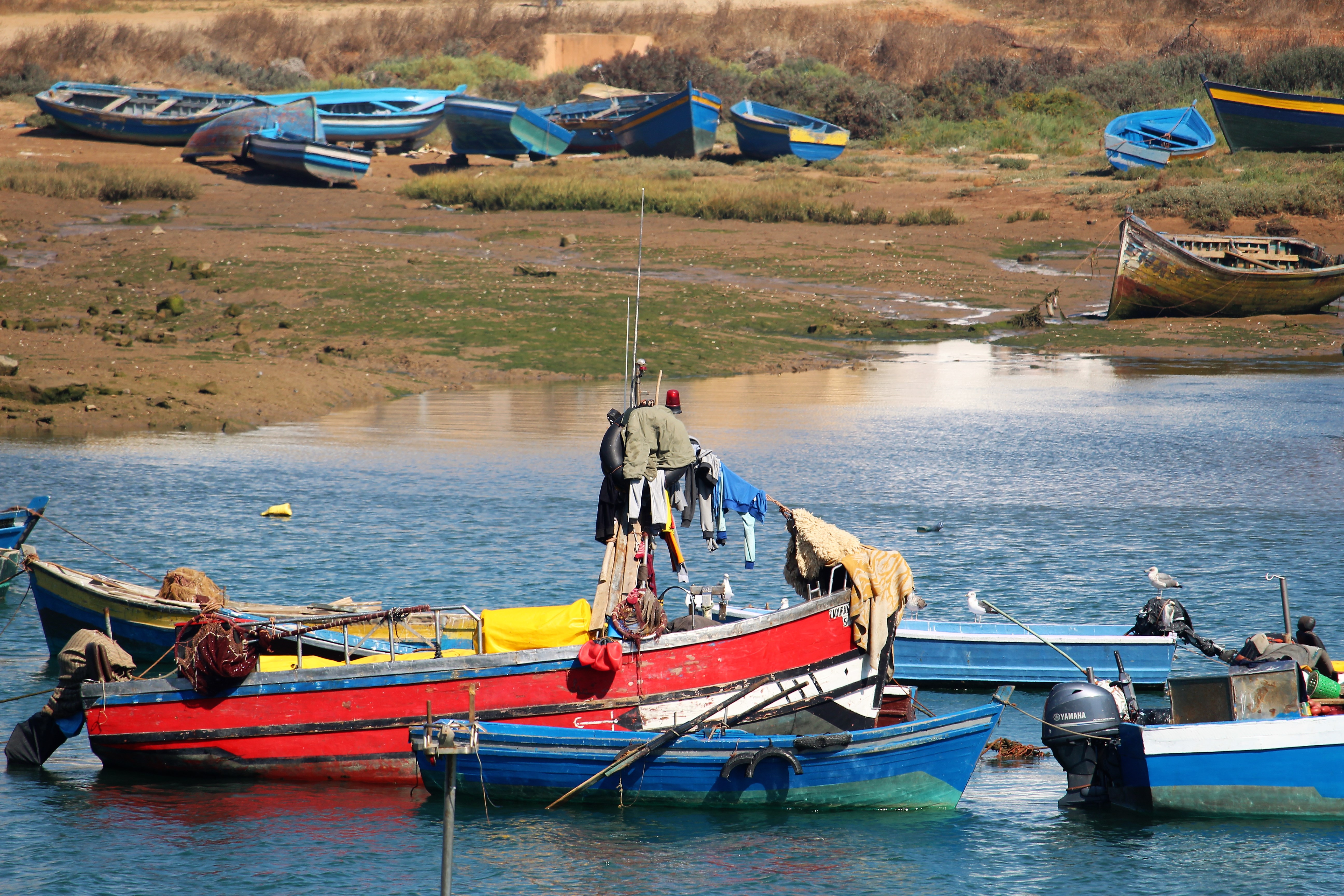
Continue along the river and watch the fishermen mending their nets before turning inland and heading to Place 16 Novembre. This square commemorates the date in 1955 when King Mohammed V returned to Morocco from his exile in France and Madagascar.
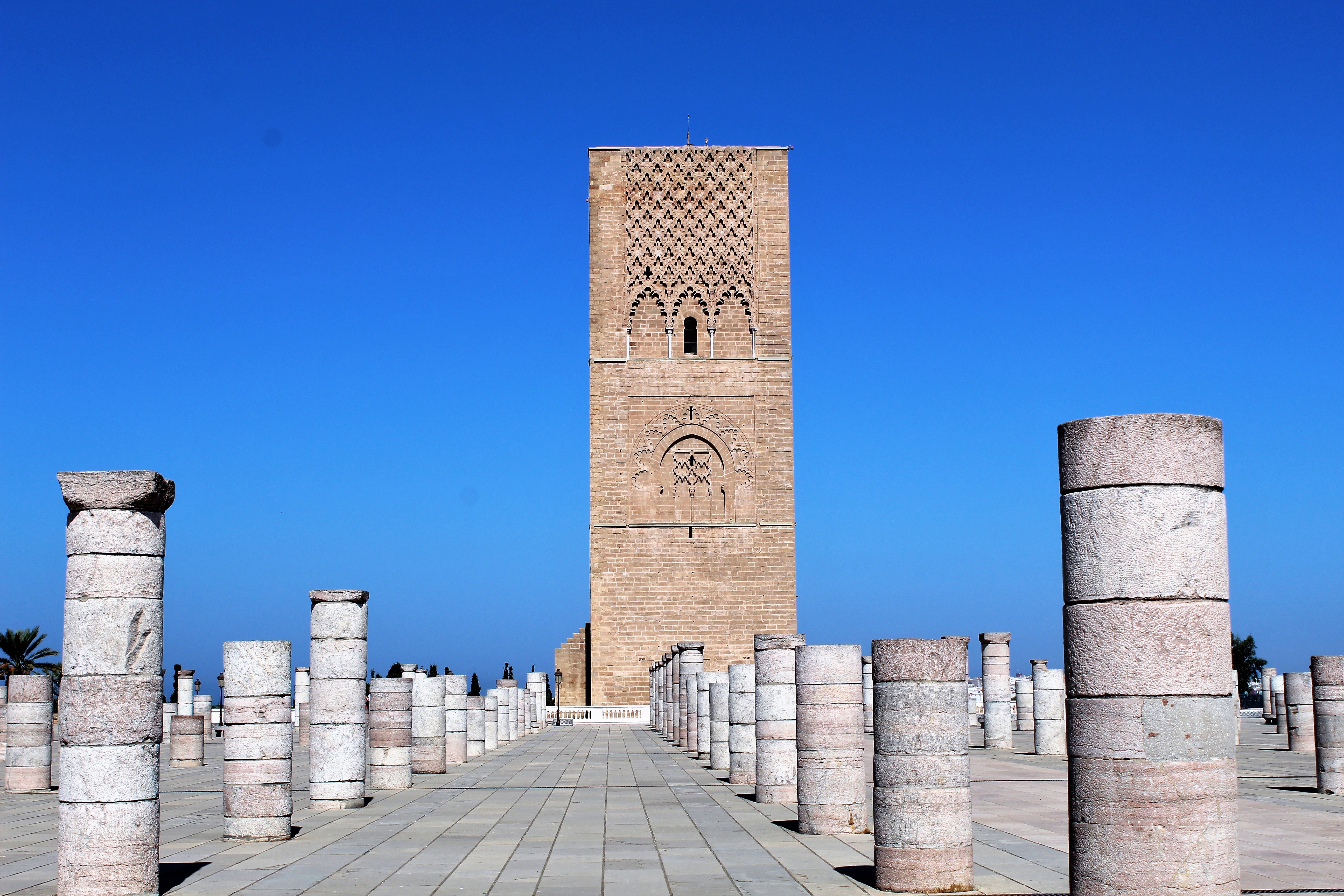
From there, follow the signs to Le Tour Hassan. This 44-metre-tall tower overlooking the Bou Regreg estuary is Rabat’s most prominent landmark. Sultan Yacoub al-Mansour began an extraordinarily ambitious mosque here in the late 12th century, but the project was never completed following his death. What had been completed was destroyed by an earthquake in 1755. The tower is all that remains.
Today, it is surrounded by well-kept shady gardens, the perfect place for a rest stop at this stage of the walk!
Mausoleum of Mohammed V
The mausoleum contains the tombs of King Mohammed V and his two sons, King Hassan II and Prince Moulay Abdallah. It is the main tourist attraction in Rabat. It’s a short walk from Le Tour Hassan, but the entrance gate is not easy to find. It's located on Boulevard Mohammed Lyazidi. If you can’t find it, do what we did and ask a local for directions!
The mausoleum is free to enter, but make sure you behave respectfully and are dressed appropriately. Mounted soldiers in elaborate uniforms guard the entrance to the site. It’s OK to take their photo, but, just as with the busby-wearing guards in London, don’t expect them to smile for you!
The site is filled with striking pillars and obelisks. The tombs themselves are found inside an elaborate marble mausoleum which is richly decorated with patterned tiles and carved plaster. The cedar roof is covered in gold leaf. Visitors are directed around a raised gallery from where you can look down on the caskets below.
Back to Rabat Ville Station
From the mausoleum, follow the tram route along Rue al Forat back to Rabat Ville train station, passing St. Pierre Cathedral on the way.
If You Have More Time in Rabat
Our half-day walking tour fitted an amazing amount into a few hours, but if you have a full day or two in Rabat, there are several places you could add to your itinerary.
Visit St Peter's Cathedral
We walked past St Peter's Cathedral (Cathédrale Saint-Pierre) as we made our way back towards Rabat Ville station, but didn't have time to explore it properly.
The striking white cathedral is one of the landmarks of Rabat's Ville Nouvelle and dates from the period of the French Protectorate. Its architecture is quite a contrast to the historic Islamic buildings we'd seen earlier in the day, making it another interesting piece of Rabat's architectural story.
If you have more time than we did, it's worth stopping for a closer look. Visitor access and opening arrangements can vary, so check locally if you'd particularly like to see the interior.
Explore Rabat's Museums
Rabat also has several museums that we simply didn't have time to visit.
Art lovers could head to the Mohammed VI Museum of Modern and Contemporary Art, which is dedicated to modern and contemporary Moroccan art and also hosts temporary exhibitions.
For more of the history we'd encountered during our walk, the Museum of History and Civilisations would be particularly interesting. Its archaeological collections take you through Morocco's history from prehistoric times through the Punic and Roman periods to the Islamic era.
There's also the National Museum of Adornment within the Kasbah of the Oudayas, which explores Moroccan jewellery, clothing and adornment.
Spend More Time in the Kasbah and Medina
If museums aren't your thing, I'd be equally tempted simply to slow down.
With more time, you could linger over mint tea, wander deeper into Rabat's medina, return to the beautiful blue-and-white streets of the Kasbah of the Oudayas or spend longer enjoying the views across the Bou Regreg river and Atlantic coast.
Cross the River to Salé
You could also cross the Bou Regreg to Salé, Rabat's neighbouring city. Salé has its own historic medina and heritage and would be an easy way to extend your exploration beyond Rabat itself.
We didn't manage any of these on our brief visit, but having enjoyed Rabat so much, they're exactly the sort of things I'd add if I returned with more time.
Getting to Rabat
Rabat is easy to include in a longer journey through Morocco, particularly if, like us, you're travelling around the country by train.
By Train
We travelled to Rabat by train from Casablanca, arriving at Rabat Ville station in the morning. We left our luggage nearby, spent the day exploring on foot and returned to the station later to continue our journey to Meknès.
If you're following a similar route through Morocco, the train is one of the easiest ways to reach Rabat. Rail services connect the capital with Casablanca, Tangier, Kenitra, Meknès and Fez, making Rabat a straightforward stop rather than somewhere requiring a major detour.
Rabat has two principal railway stations: Rabat Ville, which is the most convenient for the historic centre and the walking route described in this article, and Rabat Agdal, a larger station served by Morocco's Al Boraq high-speed trains as well as other rail services.
If you only have a few hours in Rabat, I'd choose your train carefully and check which station it uses. Arriving at Rabat Ville worked perfectly for us because we could step off the train and begin exploring the city almost immediately.
By Air
Rabat is also served by Rabat-Salé Airport, across the Bou Regreg river from the city.
Depending on where you're flying from, it's worth comparing flights into Rabat with those into Casablanca. Casablanca has a much larger international airport and excellent onward rail connections, so flying there and continuing to Rabat by train can also work very well as part of a wider Morocco itinerary.
By Car
If you're travelling around Morocco independently by car, Rabat is well connected by major roads and motorways.
However, you don't really need a car to explore the sights covered in this article. Once we'd arrived at Rabat Ville, we explored almost everything on foot, which turned out to be one of my favourite things about our brief visit.
Where to Stay in Rabat
We didn't actually stay overnight in Rabat. We arrived from Casablanca in the morning and continued to Meknès later the same day, so I can't recommend a particular hotel or riad from personal experience.
However, if I returned – and after discovering how much we liked Rabat, I'd certainly be tempted to stay longer – there are several areas I'd consider.
Rabat Medina – Best for Atmosphere
If you'd like to stay somewhere with a distinctly Moroccan feel, look for accommodation in or around Rabat's medina.
Unlike the huge medinas of Fez and Marrakech, we found Rabat's old city much easier and less overwhelming to explore. Staying here would put you amongst its shops and narrow streets while also giving you easy access to the Kasbah of the Oudayas and the Atlantic coast.
You'll find traditional riads and smaller guesthouses within the medina, making this probably the area I'd choose if atmosphere and character were more important to me than modern hotel facilities.
Bear in mind that some streets within the medina are pedestrianised or inaccessible to cars, so if you're travelling with heavy luggage, check exactly how far you'll need to carry it from the nearest drop-off point.
Hassan and the City Centre – Best for Sightseeing
The Hassan district and central Rabat would be a particularly practical choice for a first visit.
You'll be well placed for several of the city's major sights, including Hassan Tower and the Mausoleum of Mohammed V, while still being within reach of the medina and Kasbah.
This part of Rabat has more conventional hotels than the medina and is a good option if you'd rather have modern accommodation while remaining relatively central.
If you're only staying for one or two nights and want to spend most of your time sightseeing, this would probably be my other choice.
Agdal – Best for a More Modern Stay
For a more contemporary side of Rabat, consider Agdal.
This largely residential and commercial district has plenty of cafés, restaurants and shops, along with a good choice of modern hotels and apartments. Rabat Agdal railway station is also here, making it convenient if you're travelling around Morocco by train.
The trade-off is that you won't step outside your accommodation straight into historic Rabat. You'll need to use the tram or a taxi for some of the main sights, so I'd personally favour the medina or Hassan for a short sightseeing visit.
Near the Kasbah of the Oudayas – Best for Character
Another option is to look for somewhere close to the Kasbah of the Oudayas and the edge of the medina.
This would put you near the blue-and-white streets we loved so much, as well as the Andalusian Gardens, river and Atlantic coast. If I were returning for a couple of leisurely days rather than racing around Rabat in half a day, this area would definitely appeal to me.
Which Area Would I Choose?
For a first visit, I'd narrow it down to the medina or Hassan.
I'd choose the medina for a traditional riad, atmosphere and easy access to the Kasbah, or Hassan for convenience, transport connections and straightforward access to many of Rabat's main sights.
Whichever you choose, check the exact location of your accommodation rather than relying solely on the neighbourhood name. Rabat is very walkable in places, but choosing the right base can make a big difference to how much time you spend getting around.
Final Thoughts: Is Rabat Worth Adding to Your Morocco Itinerary?
Rabat was never going to be one of the headline destinations of our Morocco trip.
We arrived in the morning, left our bags behind, followed the walking route Hamid had given us and caught another train later that day.
Yet it became one of those unexpected places that reminded us why we loved travelling the way we did.
There was no rushing between must-see attractions and no guide hurrying us along. We simply walked.
We wandered through the medina, stopped to photograph beautiful doors and windows, looked out across the Atlantic from the Kasbah of the Oudayas, rested in gardens and gradually made our way through centuries of Moroccan history before eventually arriving back at the station.
Around 11,000 steps and 8.5 kilometres later, we'd seen an extraordinary amount of Morocco's often-forgotten capital.
Would I recommend squeezing Rabat into half a day? Absolutely, if that's all the time you have.
But having discovered how much we enjoyed it, next time I'd stay longer.
Watch this Video for More About Rabat
If you’re travelling soon, please use these links!
Are you travelling soon? Use these links when making your bookings. These are the companies we use. It won’t cost you any extra, but we will earn a few pennies to help keep Happy Days Travel Blog going. Thank you!!
Make sure you take out travel insurance. If you are a digital nomad or long-term traveller, try the specialist provider SafetyWing. (Never leave home without protecting yourself, your trip and your belongings!)
Book your flight with Skyscanner
Book your accommodation with Booking.com
Book a tour with TourRadar
Book city tours and activities with Viator or GetYourGuide
Check out my Resource Page for more companies I recommend.
Disclosure: This post contains affiliate links. If you click through for more information, or to make a purchase, it may result in a small commission coming my way. Please note that there is no extra cost to you associated with this. Thank you so much for supporting my site.
